Puente del Inca
A natural rock arch over a mountain river, stained brilliant orange and yellow by the hot springs that formed it.
Updated 18 October 2026
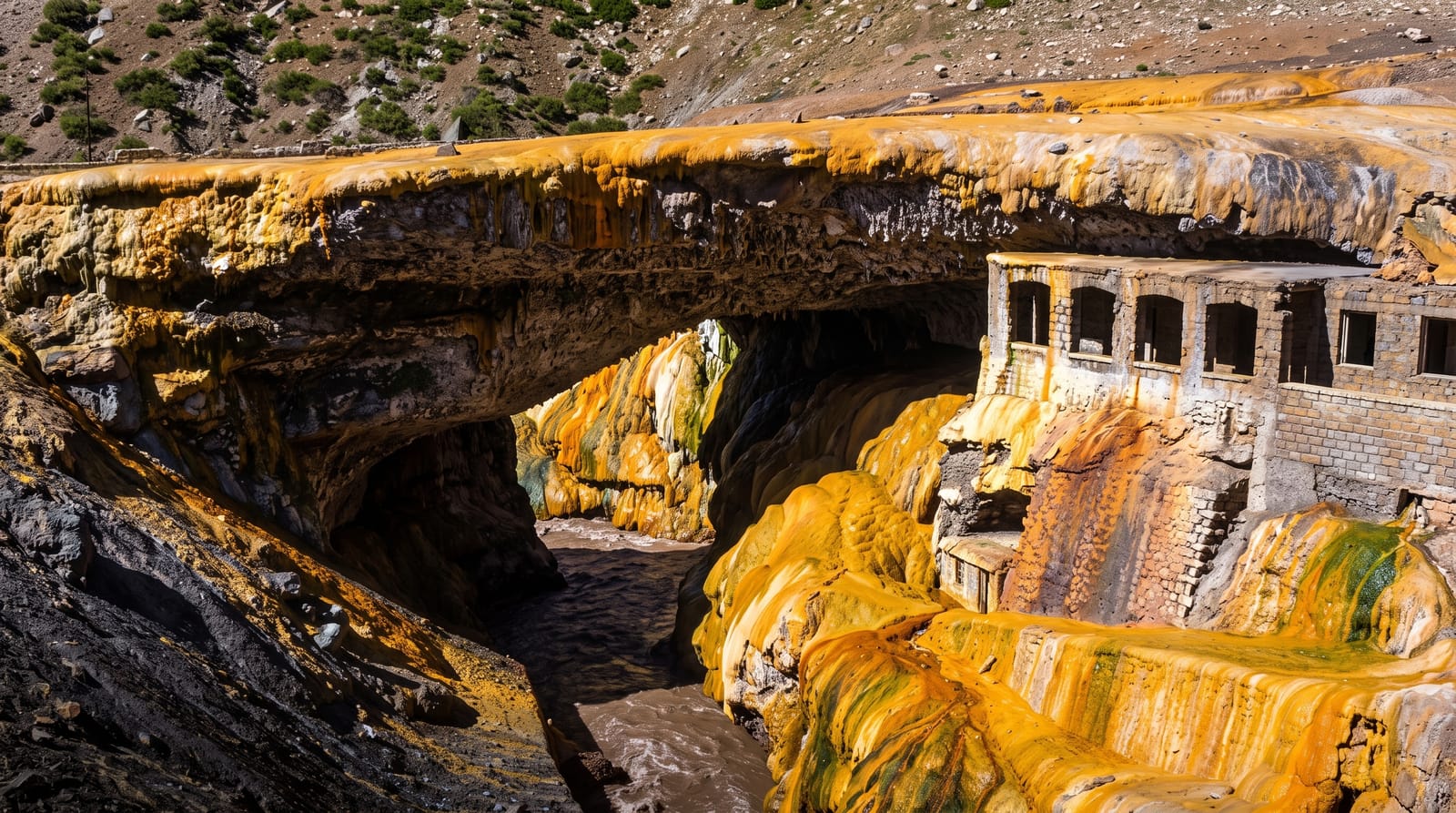
AI illustration
Puente del Inca is a natural bridge spanning the Río de las Cuevas at around 2,700 metres, formed where mineral-rich thermal water deposited layer upon layer of sulphur, iron and calcium over ice and rock until a solid arch remained. The result is unmistakable: a span roughly forty-eight metres long coated in vivid orange, ochre and yellow crusts, with the river running through beneath. A spa hotel was built here in the 1920s to use the hot springs; an avalanche destroyed it in 1965, and its ruins sit fossilising under the same mineral coating below the bridge. Walking on the bridge itself is prohibited to protect it, and it is viewed from platforms on the bank.
History
Charles Darwin visited the arch in March 1835 and drew it hung with large stalactites. In the early 20th century a large thermal resort used the hot springs to treat illnesses, its guests arriving by the Transandine Railway, whose station here was one of the last in Argentina before the line ran through a long tunnel under the Andes into Chile; the station, long abandoned, still stands, and climbers from Rosario turned it into a mountaineering museum, the Museo del Andinista (Wikipedia, Puente del Inca).
Highlights
- The mineral arch - the natural bridge coated in orange and yellow deposits.
- The ruined spa - the 1920s hotel remains encrusted by the same springs.
- The hot springs - thermal water still emerging and staining the rock.
- The high valley - the Río de las Cuevas and peaks on the road to Chile.
When to go
November to April, when the pass road is most reliable; snow and closures affect the RN7 in winter, sometimes for days. Mornings are clearest. The site is at altitude and cold even in summer.
Before you go
The visit is short, essentially a viewpoint and a walk of a few minutes. Access onto the bridge and into the ruins is closed for conservation and safety. There are stalls and a small settlement but few services, and the altitude is noticeable.
Nearby
The Aconcagua park entrance is minutes west; Las Cuevas and the Cristo Redentor pass lie beyond.
Key facts
Source: Wikidata, item Q54126, read on 18 October 2026.
What to pack for Puente del Inca
Chosen from what this place is for. Tap a kit for the full checklist.
- Broken-in walking shoes or boots - Grip and ankle support matter more than looks; never hike in brand-new boots. Find on Amazon
- Warm base layers - Merino or synthetic against the skin - never cotton, which chills when damp. Find on Amazon
- Swimwear - Needed at most public thermal pools; some traditional baths are nude and single-sex. Find on Amazon
- Layers + a waterproof shell - Mountain weather turns fast; a packable rain jacket saves the day. Find on Amazon
Some links on this page are Amazon affiliate links - if you buy through them we may earn a small commission at no extra cost to you.
All packing kitsPlan your trip
Where to start if Puente del Inca is going on the list.
Booking links on this page are affiliate links - if you book through them we may earn a small commission at no extra cost to you. It never changes what we write about a place.
Opening times, ticket prices and seasonal closures change - check the official source before you go: official site.

