Cristo Redentor de los Andes
A bronze Christ raised on the Chilean border in 1904 to mark the peaceful settlement of a boundary dispute.
Updated 18 October 2026
AI illustration
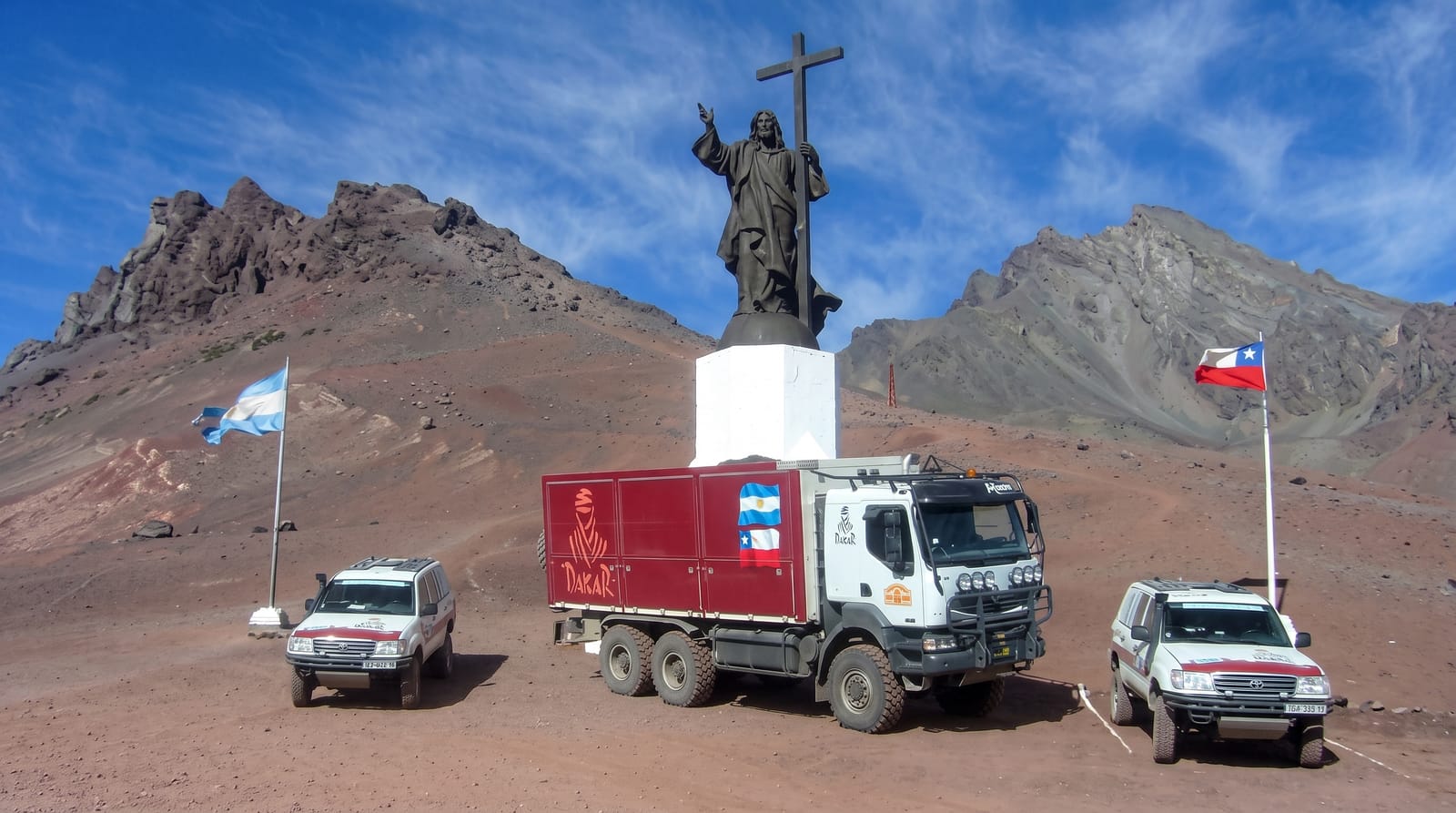
At the end of the nineteenth century Argentina and Chile came close to war over where exactly the border ran through the Andes. Arbitration settled it, and in 1904 a bronze figure of Christ, said to be cast partly from melted-down cannon, though some historians doubt it, was hauled by mule and rail to the Bermejo pass at around 3,800 metres and set on the line itself, with an inscription declaring that the mountains would fall to dust before the two peoples broke the peace sworn at its feet. The statue still stands there in wind-blasted isolation, reached by a steep unsealed road that switchbacks up from the tunnel road below and is open only in the summer months.
History
At the start of the 20th century, as Argentina and Chile came close to war over their border, the Bishop of Cuyo, Marcelino del Carmen Benavente, promised a statue of Christ the Redeemer as a reminder of peace, and the sculptor Mateo Alonso made a seven-metre bronze figure, shown for a time in the courtyard of the Lacordaire School in Buenos Aires. Ángela Oliveira Cézar de Costa, a friend of President Julio Roca whose brother was an army general preparing for war, proposed taking it to the Andes if peace came, and after the diplomatic breakthroughs of May 1902 it was carried in pieces 1,200 kilometres by train and then by mule to the pass that San Martín had crossed in 1817, and unveiled on 13 March 1904. It is often said to be cast from war cannons, though some historians doubt it (Wikipedia, Christ the Redeemer of the Andes).
What's there
- The bronze Christ - the 1904 statue standing on the border line itself.
- The peace inscription - the plaque recording the settlement between the two countries.
- The pass - the old road summit at around 3,800 metres.
- The high Andes - bare peaks and the frontier ridge in both directions.
When to go
January to March, the only period the pass road is reliably open; snow closes it for most of the year and the opening dates shift annually. Weather at the top changes fast, and cloud often hides everything.
What to expect
The access road is steep gravel with tight bends and no barriers, unsuitable for low cars and unpleasant for nervous drivers. At 3,800 metres, altitude is felt immediately and the wind is fierce and cold even in January. There are no facilities at the top.
Nearby
Las Cuevas is the last village below; Puente del Inca and Aconcagua lie east on the RN7.
Key facts
Source: Wikidata, item Q69992, read on 18 October 2026.
What to pack for Cristo Redentor de los Andes
Chosen from what this place is for. Tap a kit for the full checklist.
- Warm base layers - Merino or synthetic against the skin - never cotton, which chills when damp. Find on Amazon
- Layers for big temperature swings - Warm sun by day, near-freezing at night, even near the equator. Find on Amazon
- Comfortable walking shoes - Sightseeing means kilometres of pavement and cobbles daily. Find on Amazon
- An insulated + windproof jacket - A down or synthetic layer under a hard shell handles most cold. Find on Amazon
Some links on this page are Amazon affiliate links - if you buy through them we may earn a small commission at no extra cost to you.
All packing kitsPlan your trip
Where to start if Cristo Redentor de los Andes is going on the list.
Booking links on this page are affiliate links - if you book through them we may earn a small commission at no extra cost to you. It never changes what we write about a place.
Opening times, ticket prices and seasonal closures change - check the official source before you go: official site.