Buenos Aires Japanese Garden
One of the largest Japanese gardens outside Japan, a quiet enclosure of koi ponds, arched bridges and clipped pines in Palermo.
Updated 12 October 2026
AI illustration
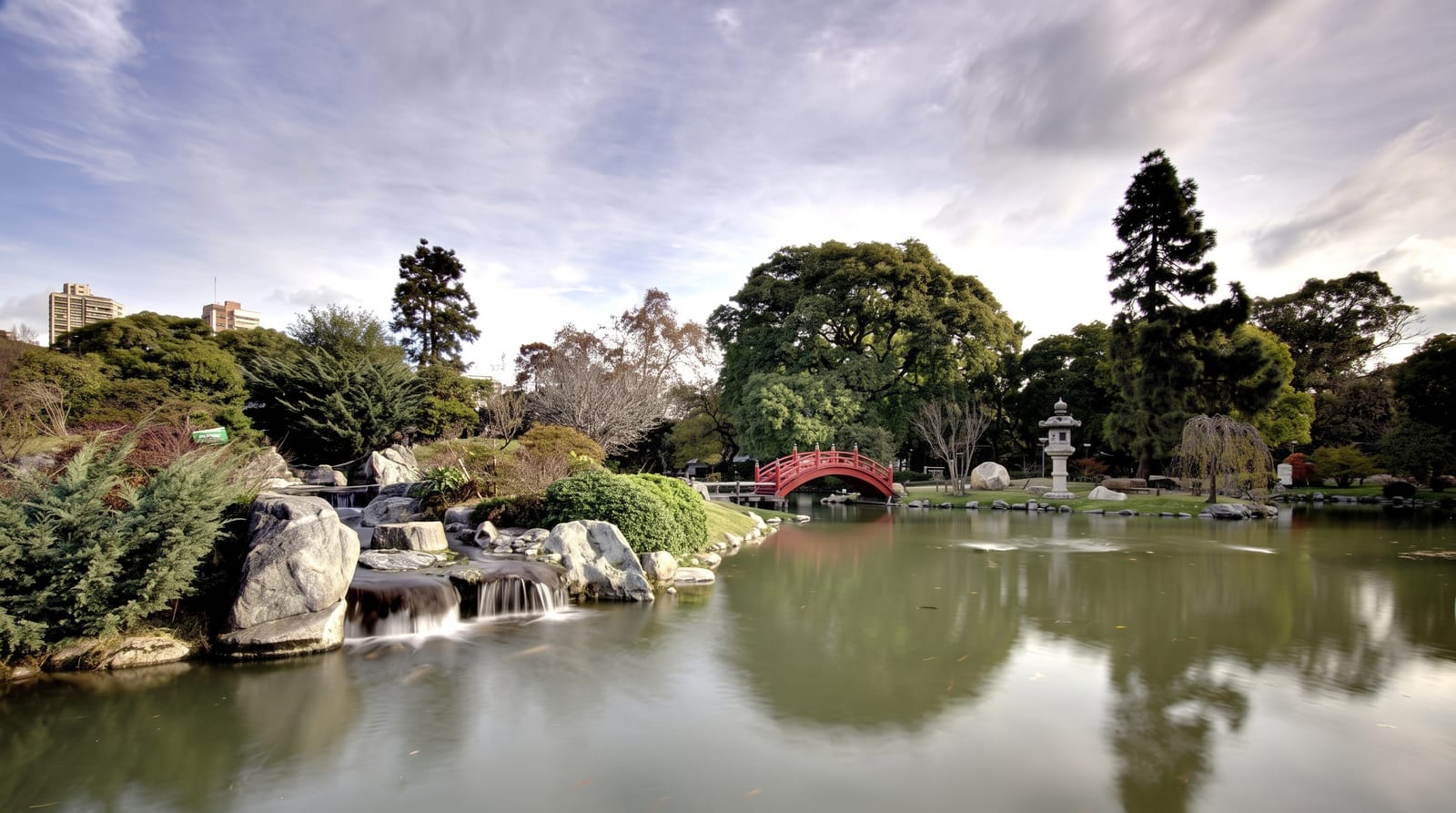
The Jardín Japonés was created in 1967 for a state visit by the Japanese crown prince and later gifted to the city by the Japanese-Argentine community, and it has been maintained ever since as one of the largest gardens of its kind outside Japan. Within a walled enclosure in Palermo it holds a central lake full of large koi, crossed by an arched red bridge and a zigzag one, with stone lanterns, a bonsai display, clipped pines, azaleas and cherry trees, and paths that turn to hide and reveal views in the traditional manner. A cultural centre runs classes and exhibitions, and a restaurant serves Japanese food. The contrast with the traffic outside is the point, and it works.
What's there
- The koi lake - the central pond with large carp and arched bridges.
- The bonsai and lanterns - the collection and stone ornaments along the paths.
- The blossom - cherry and azalea flowering in the southern spring.
- The cultural centre - exhibitions, classes and a Japanese restaurant.
When to go
September to November for cherry and azalea blossom, which is when the garden is loveliest and busiest. It is open year-round, and weekday mornings are the calmest. Rain leaves the paths slippery but empties the garden.
What to expect
The garden is compact and can be walked in half an hour, and the entry fee strikes some visitors as high for the size. Weekends are crowded and the koi feeding areas get boisterous with families. Traffic noise reaches parts of the enclosure.
Nearby
The Palermo rose garden and MALBA are within walking distance.
Key facts
Source: Wikidata, item Q604930, read on 18 October 2026.
What to pack for Buenos Aires Japanese Garden
Chosen from what this place is for. Tap a kit for the full checklist.
- Comfortable walking shoes - Sightseeing means kilometres of pavement and cobbles daily. Find on Amazon
- A slim anti-theft daypack - Zips that close properly; keep it in front in crowds and on transit. Find on Amazon
- A refillable water bottle - Many cities have public fountains; save money and plastic. Find on Amazon
- A light layer + compact umbrella - For museum air-con and a sudden shower. Find on Amazon
Some links on this page are Amazon affiliate links - if you buy through them we may earn a small commission at no extra cost to you.
All packing kitsPlan your trip
Where to start if Buenos Aires Japanese Garden is going on the list.
Booking links on this page are affiliate links - if you book through them we may earn a small commission at no extra cost to you. It never changes what we write about a place.
Opening times, ticket prices and seasonal closures change - check the official source before you go: official site.