Kumbira Forest
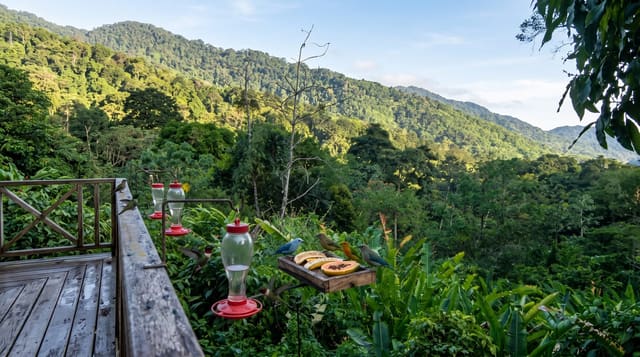
Escarpment forest near Gabela holding several birds found only on this narrow strip of Angolan scarp.
Updated 2 September 2026
Kumbira is a patch of forest on the Angolan escarpment near Gabela, and it matters far beyond its size because it holds species restricted to this thin belt of scarp forest: Gabela akalat, Gabela bushshrike, Pulitzer's longbill and Monteiro's bushshrike, all of them found nowhere else and all in trouble. The forest is being cleared for coffee and subsistence farming, so what remains is fragmented across a hilly landscape and shrinking. Birders come from a long way for exactly these few species.
What's there
- The escarpment endemics - Gabela akalat, bushshrike and Pulitzer's longbill, restricted to this scarp.
- The forest fragments - remaining patches scattered across the hills above Gabela.
- The coffee shade - old shade-coffee plantings holding some of the surviving canopy.
- The escarpment - the steep transition from coastal plain to the interior plateau.
When to go
June to September is the dry season and easiest for travel, though birds call more in the wet months. Early morning is essential for the endemics. The rains from November to March make tracks difficult.
What to expect
The forest is fragmented and finding the key birds usually takes two or three mornings with a local guide who knows the patches. There is no accommodation nearby beyond basic rooms in Gabela. Clearance is continuing and the situation gets worse rather than better.
Nearby
Gabela is the base town, and Sumbe is on the coast southwest.
What to pack for Kumbira Forest
Chosen from what this place is for. Tap a kit for the full checklist.
- Broken-in walking shoes or boots - Grip and ankle support matter more than looks; never hike in brand-new boots. Find on Amazon
- Layers + a waterproof shell - Mountain weather turns fast; a packable rain jacket saves the day. Find on Amazon
- Daypack with rain cover - 20-30 litres holds water, snacks, layers and a first-aid kit. Find on Amazon
- Offline maps + a power bank - Download the trail before you lose signal; carry backup charge. Find on Amazon
Some links on this page are Amazon affiliate links - if you buy through them we may earn a small commission at no extra cost to you.
All packing kitsPlan your trip
Where to start if Kumbira Forest is going on the list.
Booking links on this page are affiliate links - if you book through them we may earn a small commission at no extra cost to you. It never changes what we write about a place.
Opening times, ticket prices and seasonal closures change - check the official source before you go: official site.