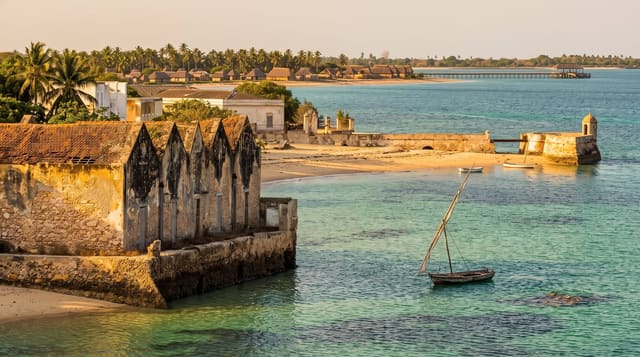
Casbah of Bejaia
The old walled quarter of a Hammadid capital, above a Mediterranean port.
Updated 31 August 2026
Bejaia was made a capital by the Hammadids in the eleventh century and became one of the major ports of the western Mediterranean, a centre of shipbuilding, wax export and learning where, among others, the mathematician Fibonacci learned the numerals he took back to Italy. The old quarter climbs the slope above the harbour with fragments of that history embedded in it: the Bab el Bahr sea gate, stretches of the medieval walls running up the hillside, the Casbah fort rebuilt in the Spanish and Ottoman periods, and the Bordj Moussa fort, which now houses the city museum. The lanes are steep, lived-in and largely undeveloped for visitors.
What to look for
- The Bab el Bahr sea gate - the medieval gate above the harbour.
- Walls climbing the hillside - the surviving medieval circuit.
- The Casbah fort - rebuilt in the Spanish and Ottoman periods.
- Bordj Moussa and the city museum - the fort holding the collections.
When to go
April to October. Half a day. Museums keep irregular hours. A local guide helps with orientation and with the history, which is not explained on site.
Practical notes
Much of the old quarter is in poor repair and some buildings are unsafe. There is almost no interpretation. Lanes are steep and confusing. The forts open irregularly and are sometimes closed without notice.
Nearby
Gouraya park rises behind; Cap Carbon lies west.
What to pack for Casbah of Bejaia
Chosen from what this place is for. Tap a kit for the full checklist.
- Comfortable walking shoes - Sightseeing means kilometres of pavement and cobbles daily. Find on Amazon
- A slim anti-theft daypack - Zips that close properly; keep it in front in crowds and on transit. Find on Amazon
- A refillable water bottle - Many cities have public fountains; save money and plastic. Find on Amazon
- A light layer + compact umbrella - For museum air-con and a sudden shower. Find on Amazon
Some links on this page are Amazon affiliate links - if you buy through them we may earn a small commission at no extra cost to you.
All packing kitsPlan your trip
Where to start if Casbah of Bejaia is going on the list.
Booking links on this page are affiliate links - if you book through them we may earn a small commission at no extra cost to you. It never changes what we write about a place.
Opening times, ticket prices and seasonal closures change - check the official source before you go: official site.