Vjosa River
One of the last large wild rivers in Europe, undammed from the Greek border to the Adriatic and now a national park.
Updated 1 September 2026
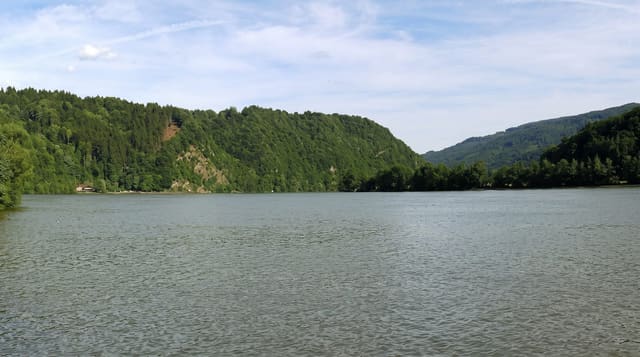
The Vjosa runs about two hundred and seventy kilometres from the Pindus in Greece, where it is the Aoos, to the Adriatic near Vlora, and it is one of the last large rivers in Europe that run their whole length without a dam, which is why it became the subject of a long campaign and was declared a national park in 2023, the first wild river national park in Europe. What that protects is a braided gravel-bed river that moves across a wide floodplain, splitting and rejoining, with islands, side channels and gravel banks that shift each year, together with its tributaries. It supports a large number of species, some found nowhere else. The valley road follows much of it, and rafting and kayaking run on several sections.
The landscape
- A braided undammed river - channels and gravel islands that move each year.
- Europe's first wild river national park - declared in 2023.
- The valley from the Greek border - the road following the river north-west.
- Rafting and kayaking sections - the descents run from Permet and Tepelene.
When to go
April to June for high water and rafting; July to September for low water and easier access to the gravel banks. A day for a section, several to follow the valley. Spring snowmelt makes it dramatic.
What to expect
The national park designation is recent and infrastructure is minimal, with no visitor centres and little signage. Tributary dams and gravel extraction remain live issues. Access to much of the riverbed is on rough tracks. Rafting operators vary in quality.
Nearby
Permet and Lengarica are upstream; Tepelene lies downstream.
Key facts
Source: Wikidata, item Q81503, read on 18 October 2026.
What to pack for Vjosa River
Chosen from what this place is for. Tap a kit for the full checklist.
- Broken-in walking shoes or boots - Grip and ankle support matter more than looks; never hike in brand-new boots. Find on Amazon
- Quick-dry clothing - Board shorts or synthetics that shrug off spray and dry fast. Find on Amazon
- Layers + a waterproof shell - Mountain weather turns fast; a packable rain jacket saves the day. Find on Amazon
- Secure water shoes or reef boots - Grip on slippery launches and protection on rocky shores. Find on Amazon
Some links on this page are Amazon affiliate links - if you buy through them we may earn a small commission at no extra cost to you.
All packing kitsPlan your trip
Where to start if Vjosa River is going on the list.
Booking links on this page are affiliate links - if you book through them we may earn a small commission at no extra cost to you. It never changes what we write about a place.
Opening times, ticket prices and seasonal closures change - check the official source before you go: official site.