Butrint
An ancient city in a lagoon wilderness - a beautifully sited UNESCO archaeological site layering Greek, Roman, Byzantine and Venetian ruins amid lush greenery and water near the southern coast.
Updated 18 October 2026

AI illustration
UNESCO World Heritage
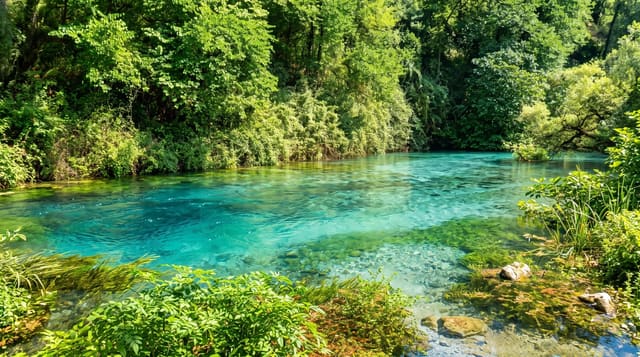
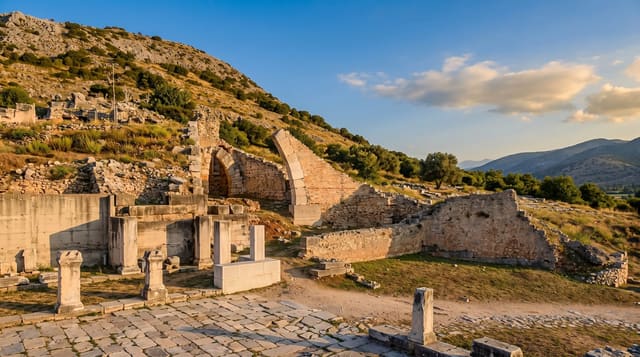
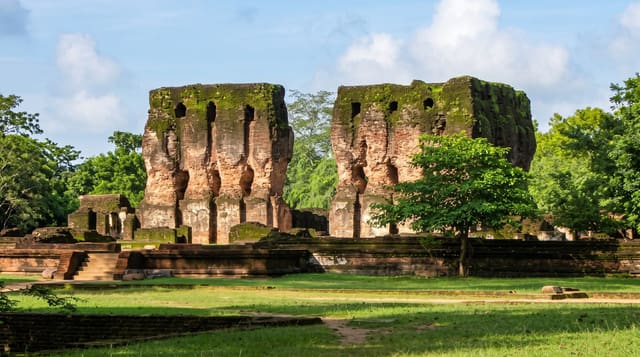
Butrint, on a peninsula amid a lush, watery landscape near Albania's southern coast, is one of the most beautiful and evocative archaeological sites in the Balkans, a UNESCO World Heritage Site. Inhabited for millennia, it layers the remains of successive civilisations, a Greek theatre, Roman baths and villas, an early Christian baptistery with fine mosaics, a Byzantine basilica and a Venetian castle, all wrapped in the greenery, wildflowers and birdsong of a national park beside a tranquil lagoon, where nature and ancient history entwine.
History
Legend made the Trojan seer Helenus, son of King Priam, the founder of Butrint, while the earliest archaeological evidence of settled life dates from the 10th to 8th centuries BC. The Chaonian settlement grew into a Greek city with a theatre, an agora and a sanctuary of Asclepius, and in 44 BC Julius Caesar named it a colony for soldiers who had fought for him against Pompey, a plan Augustus renewed. An earthquake in the 3rd century brought down much of the town, though it lived on into late antiquity. Venice bought the area, with Corfu, from the Angevins in 1386, and after the Venetian-Ottoman wars the ruined acropolis was abandoned by 1572. Modern excavation began in 1928 under the Italian archaeologist Luigi Maria Ugolini; Butrint joined the UNESCO World Heritage List in 1992, became a national park in 2000 and a Ramsar wetland on 28 March 2003 (Wikipedia, Butrint).
What's there
- The Greek theatre - the well-preserved ancient theatre.
- The baptistery mosaics - the early Christian floor mosaics.
- The Venetian castle - the hilltop castle and its museum.
- The lagoon setting - the ruins amid the greenery and water.
When to go
Spring and autumn for the mildest weather and the site's greenery and wildflowers at their best; go early to enjoy the ruins in the cool morning. It is an easy trip from Sarande and pairs perfectly with the Riviera beaches and Gjirokaster.
Things to know
It is a compact site, seen in a couple of hours, though a genuinely beautiful and atmospheric one, its charm as much the lush natural setting as the ruins themselves. Some of the finest mosaics are kept covered to protect them and only occasionally revealed. It is an easy trip from Sarande. The blend of layered history and tranquil lagoon nature is its distinctive appeal.
Nearby
Sarande, the Ksamil islands and the town of Gjirokaster are within reach.
Key facts
Source: Wikidata, item Q188694, read on 18 October 2026.
What to pack for Butrint
Chosen from what this place is for. Tap a kit for the full checklist.
- Reef-safe sunscreen - High SPF that will not bleach the coral you are swimming over. Find on Amazon
- Comfortable walking shoes - Sightseeing means kilometres of pavement and cobbles daily. Find on Amazon
- Modest clothing - Shoulders and knees covered - the single most common requirement. Find on Amazon
- Quick-dry towel - A microfibre towel packs small and dries in minutes. Find on Amazon
Some links on this page are Amazon affiliate links - if you buy through them we may earn a small commission at no extra cost to you.
All packing kitsPlan your trip
Where to start if Butrint is going on the list.
Booking links on this page are affiliate links - if you book through them we may earn a small commission at no extra cost to you. It never changes what we write about a place.
Opening times, ticket prices and seasonal closures change - check the official source before you go: official site.