The Bamyan Valley
The valley of the great niches - a UNESCO World Heritage landscape in the Hindu Kush where colossal Buddha statues were once carved into the cliffs, an ancient Silk Road crossroads of caves, monasteries and dramatic mountain scenery.
Updated 7 August 2026
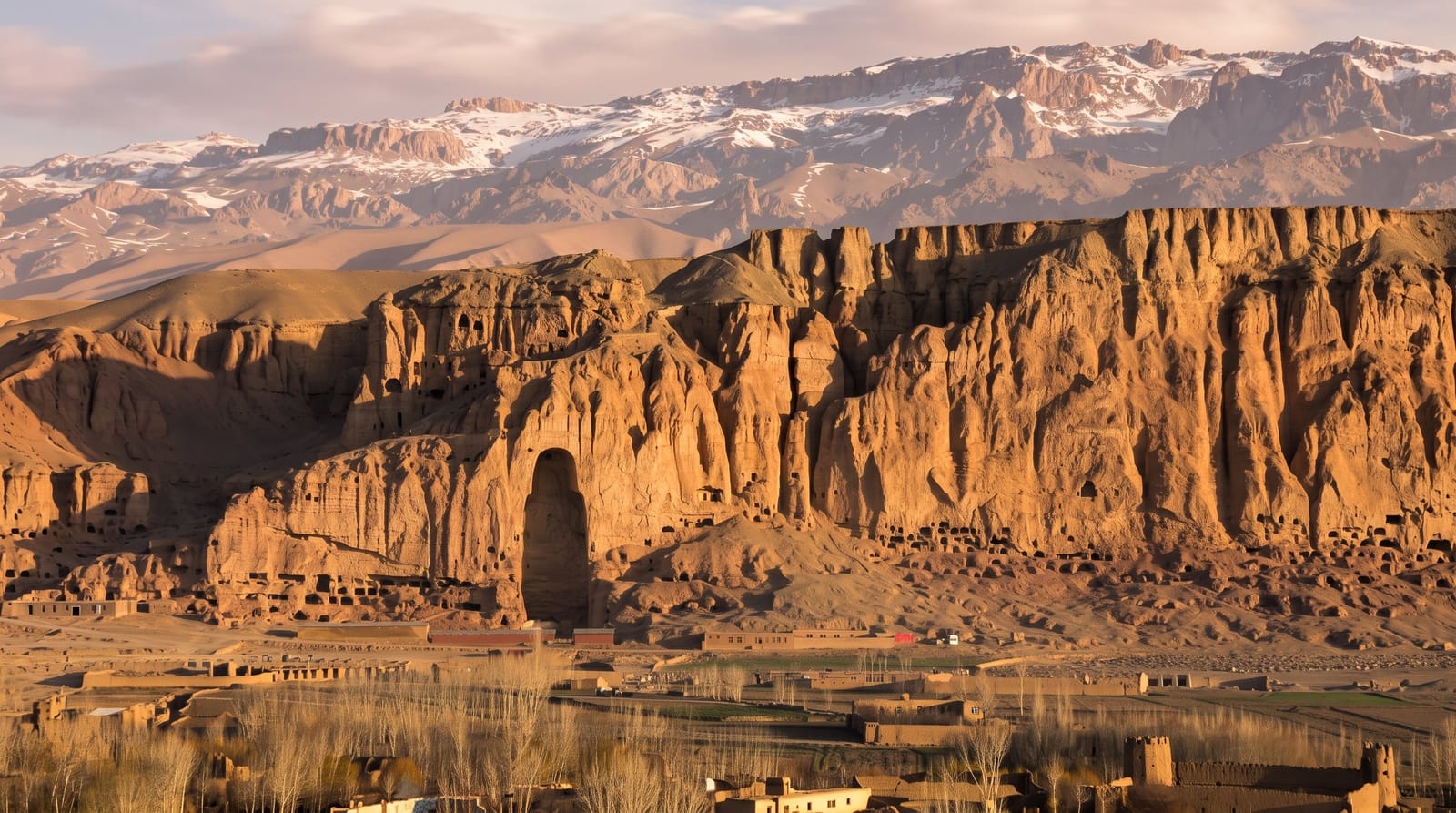
AI illustration
UNESCO World Heritage
Real photos (1)
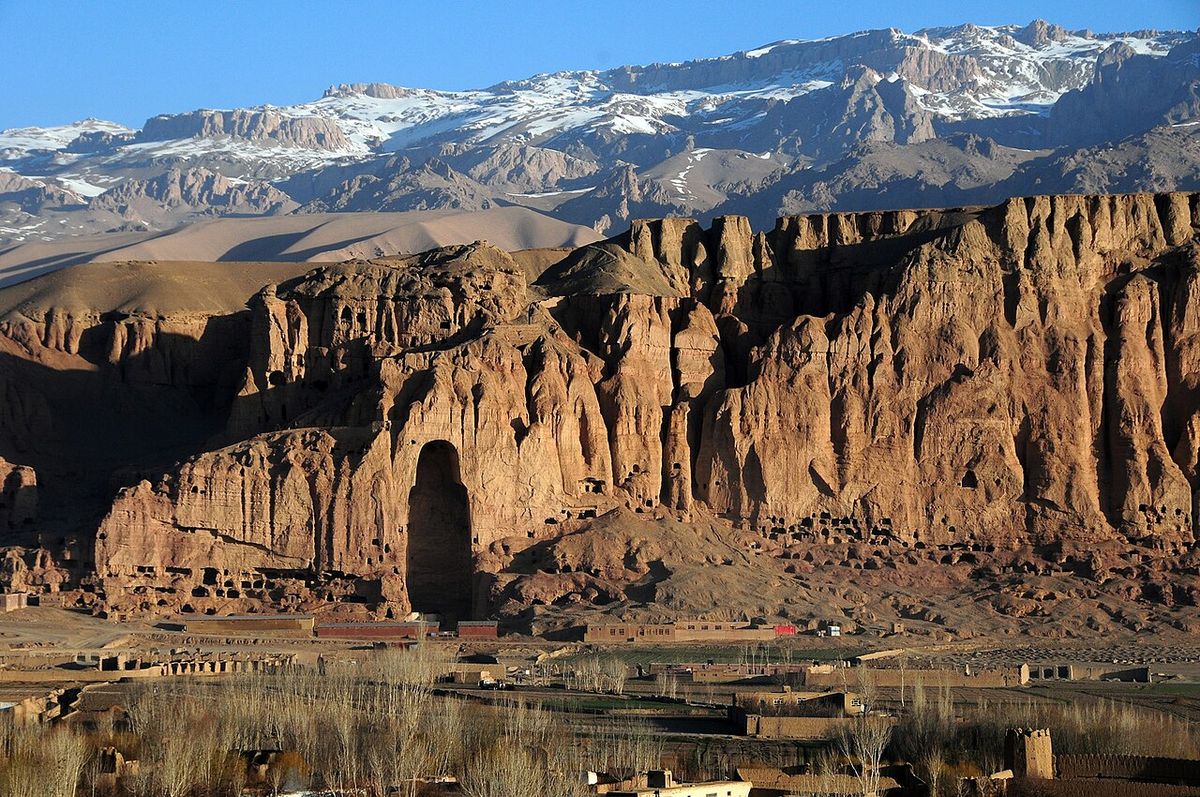
The Bamyan Valley, cradled in the mountains of central Afghanistan, was for centuries a great crossroads of the Silk Road and a flourishing centre of Buddhist civilisation. Into its sandstone cliffs were carved two colossal standing Buddhas, the largest once over fifty metres tall, surrounded by painted caves and monasteries. The vast niches where the statues stood, the honeycombed cliffs and the valley's other monuments endure, inscribed by UNESCO as the Cultural Landscape and Archaeological Remains of the Bamyan Valley. Set amid dramatic mountain scenery, it remains one of the most historically resonant and atmospheric places in Afghanistan.
What you'll find
- The great niches - the vast recesses where the Buddhas once stood.
- The painted caves - the surrounding Buddhist caves and monasteries.
- The cliff face - the honeycombed sandstone cliffs above the valley.
- The mountain setting - the dramatic Hindu Kush landscape.
When to go
Late spring to early autumn, around May to September, is mildest in this high valley, ideal for exploring the cliffs, caves and monuments in comfortable weather; winter brings deep cold and snow. The clear light of the warmer months best reveals the honeycombed cliffs and mountain backdrop.
Good to know
Bamyan sits high in the mountains and is reached by long roads, so a visit takes time and warm clothing even in summer, and the famous Buddha statues themselves no longer stand, leaving their great empty niches. As an ancient Silk Road crossroads and a UNESCO World Heritage landscape of caves, cliffs and deep history, though, the Bamyan Valley remains profoundly atmospheric and moving.
Nearby
The blue lakes of Band-e Amir lie within reach of the valley.
What to pack for The Bamyan Valley
Chosen from what this place is for. Tap a kit for the full checklist.
- Head torch + spare batteries - Hands-free light is essential; caves are truly dark. Find on Amazon
- Warm base layers - Merino or synthetic against the skin - never cotton, which chills when damp. Find on Amazon
- Comfortable walking shoes - Sightseeing means kilometres of pavement and cobbles daily. Find on Amazon
- Modest clothing - Shoulders and knees covered - the single most common requirement. Find on Amazon
Some links on this page are Amazon affiliate links - if you buy through them we may earn a small commission at no extra cost to you.
All packing kitsPlan your trip
Where to start if The Bamyan Valley is going on the list.
Booking links on this page are affiliate links - if you book through them we may earn a small commission at no extra cost to you. It never changes what we write about a place.
Opening times, ticket prices and seasonal closures change - check the official source before you go: official site.