Shibam
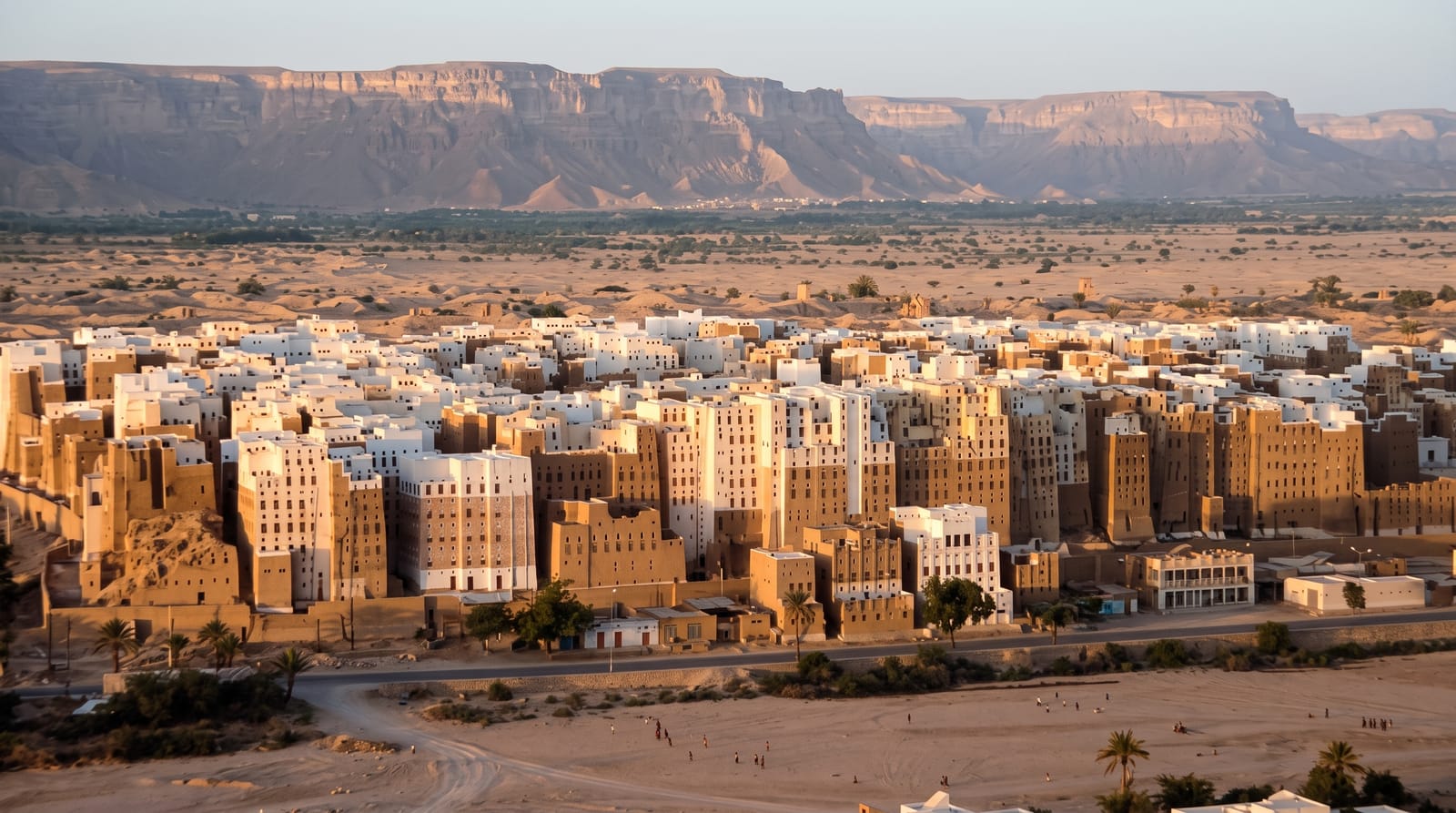
The Manhattan of the desert - the UNESCO World Heritage walled city of Shibam, whose forest of towering centuries-old mud-brick skyscrapers rises sheer from the desert floor, the oldest and most dramatic example of vertical city-building on earth.
Updated 19 October 2026
AI illustration
UNESCO World Heritage
Real photos (1)
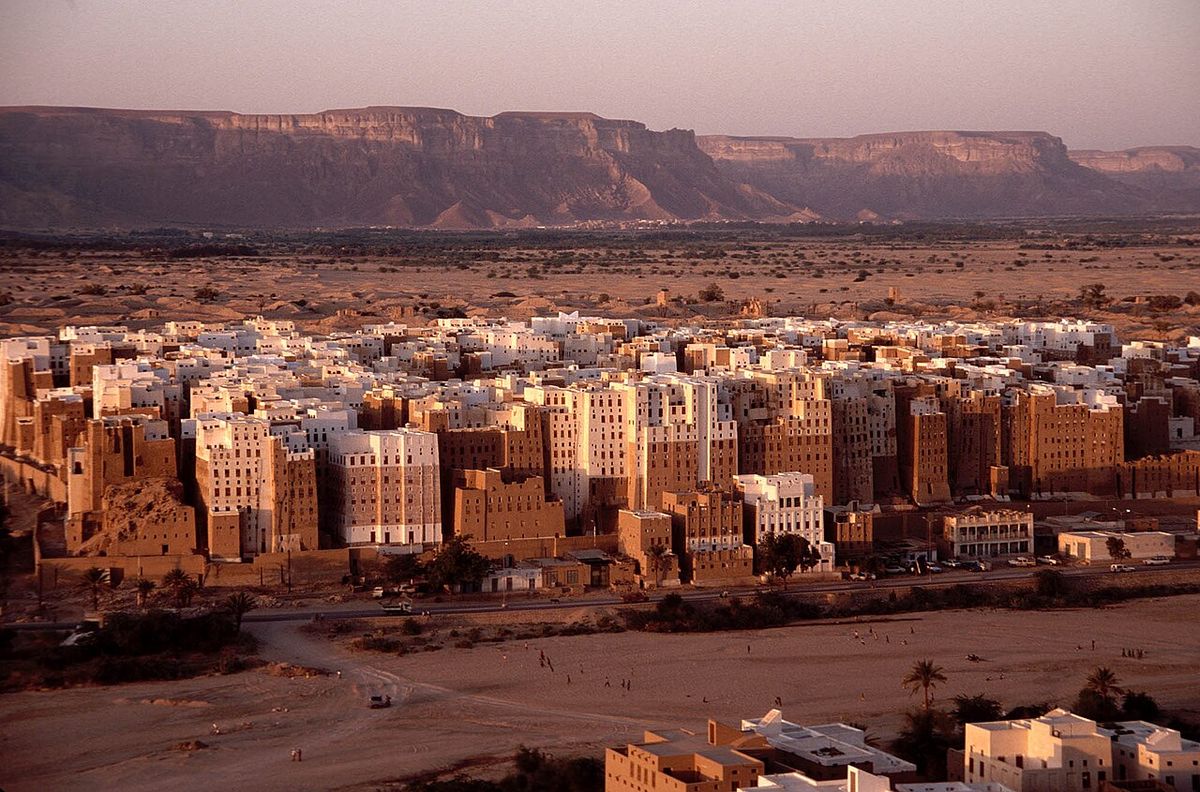
Shibam, rising from the floor of the Hadhramaut valley in eastern Yemen, is one of the most astonishing towns on earth, famously dubbed the Manhattan of the Desert. Within its old walls stands a dense forest of tower-houses built entirely of mud brick, many soaring five to eleven storeys and some centuries old, packed tightly together on a grid, one of the oldest and finest examples of vertical urban planning in the world. Seen from the surrounding valley, especially in the golden light of dawn or dusk, this UNESCO World Heritage city of sheer earthen skyscrapers rising against the desert cliffs is a breathtaking and unforgettable sight.
History
The first known inscription about the town dates from the 3rd century AD, and according to the historian al-Hamdani it became the capital of the Kingdom of Hadhramaut around 300, after the fall of the former capital, Shabwa, at the far west of the valley; it has been lived in for an estimated 1,700 years, and its mud-brick tower houses, some eleven storeys high, were built to protect the people from Bedouin raids. In the 20th century it was one of the three main towns of the Qu'aiti Sultanate, with Mukalla and Ash-Shihr, and in 1982 it became a World Heritage Site. The 2008 cyclone flooded the town and brought down some buildings (Wikipedia, Shibam).
What to look for
- The mud-brick towers - the forest of soaring earthen skyscrapers.
- The walled grid - the dense ancient town within its walls.
- The valley viewpoint - the classic view from across the desert.
- The desert setting - the cliffs and palm groves of Hadhramaut.
When to go
October to April, the cooler months, are far more comfortable in the desert valley than the fierce summer heat, ideal for exploring the town and admiring its skyline; the towers glow most magically in the low light of early morning and late afternoon. Winter days here are mild and clear.
Practical notes
Shibam lies deep in the remote Hadhramaut valley of eastern Yemen and is reached only with effort, and its ancient mud-brick towers need constant upkeep against the elements. As the original Manhattan of the desert, a UNESCO World Heritage forest of centuries-old earthen skyscrapers unlike anywhere else on earth, though, Shibam is a truly breathtaking and singular sight.
Nearby
The Hadhramaut towns of Seiyun and Tarim lie in the same valley.
Key facts
Source: Wikidata, item Q192518, read on 18 October 2026.
What to pack for Shibam
Chosen from what this place is for. Tap a kit for the full checklist.
- Loose, light, long clothing - Covering up beats bare skin in the desert - and locals dress this way for a reason. Find on Amazon
- Comfortable walking shoes - Sightseeing means kilometres of pavement and cobbles daily. Find on Amazon
- A wide-brim hat + sunglasses - Shade for your face and eyes where there is none overhead. Find on Amazon
- A slim anti-theft daypack - Zips that close properly; keep it in front in crowds and on transit. Find on Amazon
Some links on this page are Amazon affiliate links - if you buy through them we may earn a small commission at no extra cost to you.
All packing kitsPlan your trip
Where to start if Shibam is going on the list.
Booking links on this page are affiliate links - if you book through them we may earn a small commission at no extra cost to you. It never changes what we write about a place.
Opening times, ticket prices and seasonal closures change - check the official source before you go: official site.