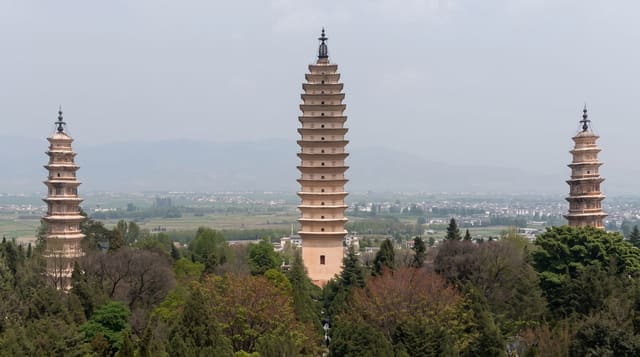
Tay Phuong Pagoda
Three halls on a hilltop holding the eighteenth century wooden arhats that Vietnamese poetry keeps returning to.
Updated 30 August 2026
Tay Phuong stands on a low hill west of Hanoi, three halls in line built in the eighteenth century with the deeply curved tiled roofs and openwork brick walls of that period. What it is known for is its statues: a set of wooden figures of arhats and patriarchs carved in the late eighteenth century, each with a distinct face and posture, gaunt and individual rather than idealised, and generally regarded as the finest surviving Vietnamese wood sculpture. Huy Can's poem about them, written in 1960, made them part of the national literary vocabulary. Several are designated national treasures.
The main sights
- Three halls in line - eighteenth century, with curved tiled roofs.
- Carved wooden arhats - individual faces, gaunt rather than idealised.
- The finest Vietnamese wood sculpture - the standard judgement.
- A poem that fixed them in memory - Huy Can's, from 1960.
When to go
Year round. Half a day.
Good to know
The climb is a couple of hundred steps. Interiors are dark and photography of the statues may be restricted. Interpretation is in Vietnamese. The site is small.
Nearby
Thay pagoda is a few kilometres away; Hanoi is east.
Key facts
Source: Wikidata, item Q10748567, read on 18 October 2026.
What to pack for Tay Phuong Pagoda
Chosen from what this place is for. Tap a kit for the full checklist.
- Comfortable walking shoes - Sightseeing means kilometres of pavement and cobbles daily. Find on Amazon
- A slim anti-theft daypack - Zips that close properly; keep it in front in crowds and on transit. Find on Amazon
- A refillable water bottle - Many cities have public fountains; save money and plastic. Find on Amazon
- A light layer + compact umbrella - For museum air-con and a sudden shower. Find on Amazon
Some links on this page are Amazon affiliate links - if you buy through them we may earn a small commission at no extra cost to you.
All packing kitsPlan your trip
Where to start if Tay Phuong Pagoda is going on the list.
Booking links on this page are affiliate links - if you book through them we may earn a small commission at no extra cost to you. It never changes what we write about a place.
Opening times, ticket prices and seasonal closures change - check the official source before you go: official site.