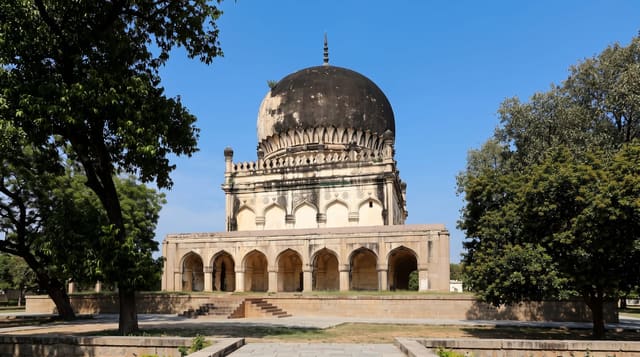
Chor-Bakr Necropolis
A walled city of tombs west of Bukhara built for a dynasty of sheikhs, inscribed by UNESCO.
Updated 3 September 2026
UNESCO World Heritage
Chor-Bakr grew up around the grave of Abu Bakr Sa'd, a descendant of the Prophet, and the Juybari sheikhs who dominated Bukhara in the sixteenth century built a mosque, a khanaka and a madrasa there along with courts and walled family enclosures for their own burials, producing what reads as a small city of the dead. UNESCO inscribed it in 2023 within the Zarafshan-Karakum Corridor. Storks nest on the minaret through the summer.
Highlights
- The walled enclosures - family burial courts laid out as streets and lanes.
- The sixteenth-century buildings - mosque, khanaka and madrasa built by the Juybari sheikhs.
- The storks - the birds nesting on the minaret through the summer.
- The UNESCO listing - inscription within the Zarafshan-Karakum Corridor.
When to go
April to June and September to October are the comfortable months. Storks are present from spring to late summer. Summer heat is severe.
Things to know
Restoration has been heavy and some of what stands is modern rebuilding. There is little shade in the courts. Interpretation on site is minimal.
Nearby
Bukhara is east, and the Bahauddin Naqshband complex is beyond it.
What to pack for Chor-Bakr Necropolis
Chosen from what this place is for. Tap a kit for the full checklist.
- Comfortable walking shoes - Sightseeing means kilometres of pavement and cobbles daily. Find on Amazon
- Modest clothing - Shoulders and knees covered - the single most common requirement. Find on Amazon
- A slim anti-theft daypack - Zips that close properly; keep it in front in crowds and on transit. Find on Amazon
- A scarf or shawl - To cover the head or shoulders on entry; women especially at mosques. Find on Amazon
Some links on this page are Amazon affiliate links - if you buy through them we may earn a small commission at no extra cost to you.
All packing kitsPlan your trip
Where to start if Chor-Bakr Necropolis is going on the list.
Booking links on this page are affiliate links - if you book through them we may earn a small commission at no extra cost to you. It never changes what we write about a place.
Opening times, ticket prices and seasonal closures change - check the official source before you go: official site.