Smithsonian National Museum of Natural History
A free Smithsonian museum on the Mall holding the Hope Diamond, a fossil hall rebuilt in 2019, and over 148 million specimens.
Updated 20 October 2026
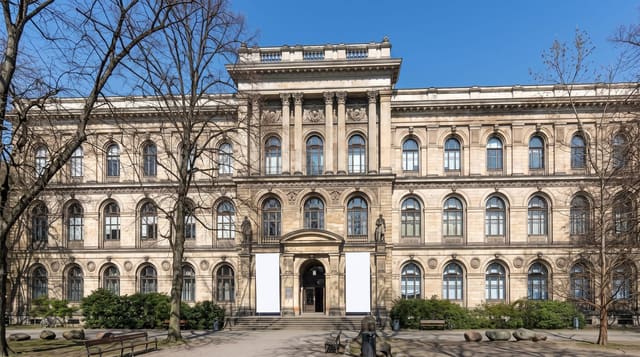
The museum opened in 1910 and holds over a hundred and forty-eight million specimens and artefacts, the largest natural history collection in the world, of which a very small proportion is on display. The Hope Diamond, 45.52 carats and deep blue from boron in the crystal, sits in the gem hall and is the single most-visited object. The fossil hall reopened in 2019 after a five-year rebuild and is organised around deep time and climate rather than a march of dinosaurs, with a Tyrannosaurus mounted over a Triceratops. An African elephant stands in the rotunda. The Ocean Hall holds a right whale model and a live coral reef tank. Entry is free, as at all Smithsonian museums.
What you'll find
- The Hope Diamond - 45.52 carats, blue from boron.
- A fossil hall rebuilt in 2019 - arranged around deep time and climate.
- The rotunda elephant - the museum's other fixed point.
- Ocean Hall - a right whale model and a live reef tank.
When to go
Year round; free always. Half a day.
Practical notes
It is one of the busiest museums in the world - school groups dominate weekday mornings in term. Security screening queues at the entrances. Some special exhibitions are ticketed. Very little of the collection is displayed.
Nearby
The National Gallery is east; the Washington Monument is west.
Key facts
Source: Wikidata, item Q148554, read on 18 October 2026.
What to pack for Smithsonian National Museum of Natural History
Chosen from what this place is for. Tap a kit for the full checklist.
- Binoculars - The single best wildlife tool - even a compact pair transforms a sighting. Find on Amazon
- Comfortable walking shoes - Sightseeing means kilometres of pavement and cobbles daily. Find on Amazon
- A zoom camera or long lens - Animals rarely come close; reach beats megapixels. Find on Amazon
- A slim anti-theft daypack - Zips that close properly; keep it in front in crowds and on transit. Find on Amazon
Some links on this page are Amazon affiliate links - if you buy through them we may earn a small commission at no extra cost to you.
All packing kitsPlan your trip
Where to start if Smithsonian National Museum of Natural History is going on the list.
Booking links on this page are affiliate links - if you book through them we may earn a small commission at no extra cost to you. It never changes what we write about a place.
Opening times, ticket prices and seasonal closures change - check the official source before you go: official site.