Whiterocks Beach
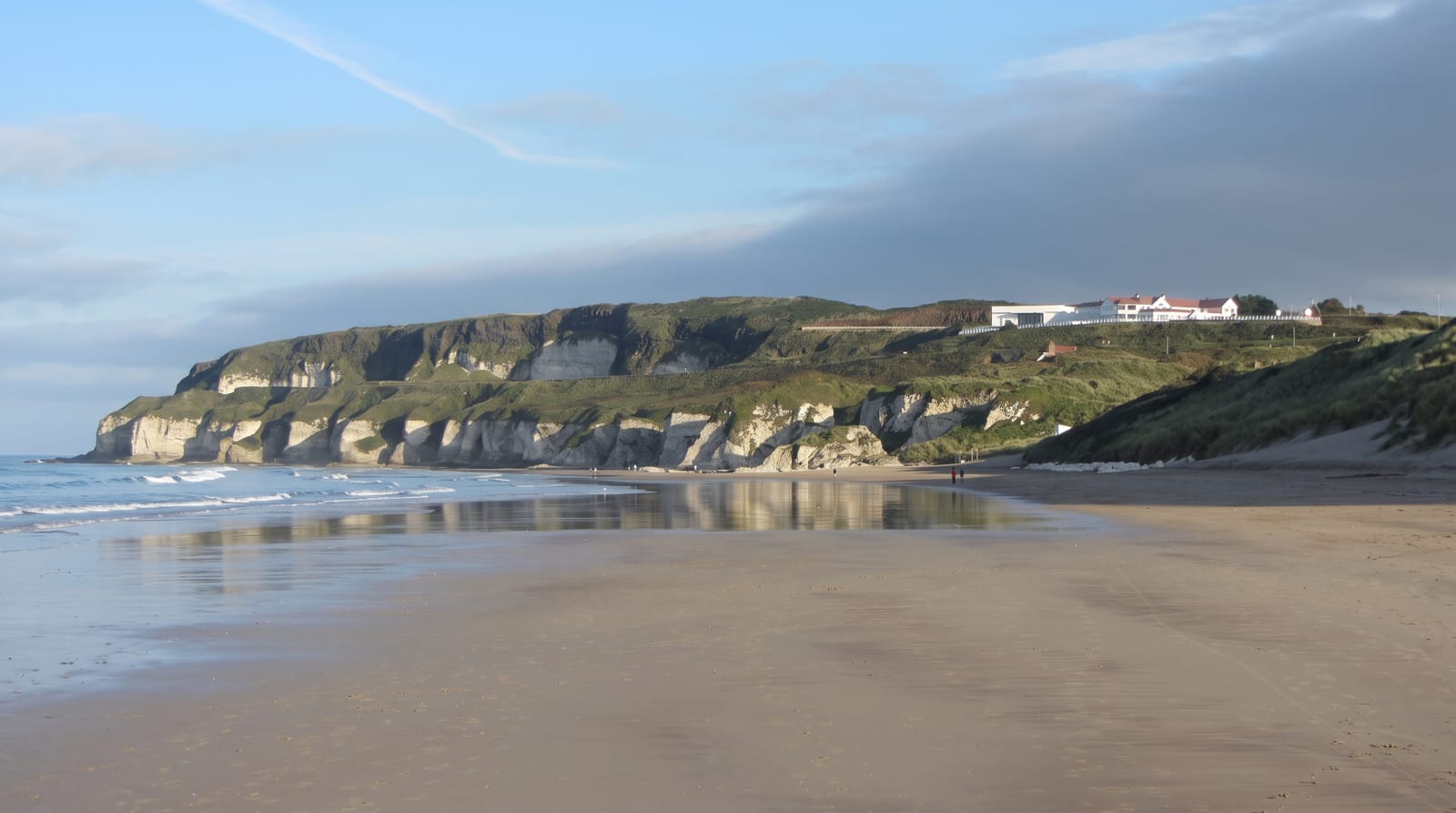
A three-kilometre strand under white limestone cliffs eroded into arches, caves and a formation called the Wishing Arch.
Updated 4 September 2026
AI illustration
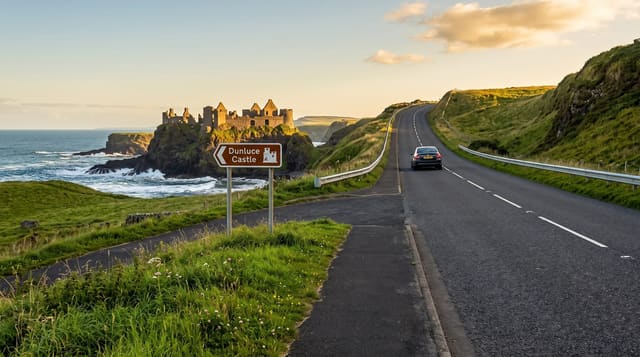
Whiterocks runs about three kilometres east from Portrush beneath cliffs of white Cretaceous chalk, unusual on this coast where basalt dominates; the chalk is soft and the sea has cut it into arches, caves, stacks and a natural bridge, with the best-known formation, the Wishing Arch, reachable on foot at low tide. Above the cliffs a path runs the length of the beach with viewpoints down into the coves. It is one of the main surfing beaches in Northern Ireland, with a consistent Atlantic swell, and holds a Blue Flag. Dunluce Castle stands on a basalt stack at the eastern end, where the chalk gives way. Boat trips from Portrush run along the cliff line into some of the larger caves in calm conditions.
Highlights
- The chalk cliffs - white Cretaceous rock in a coast otherwise made of basalt.
- The Wishing Arch - a sea-cut arch reachable on foot at low tide.
- The caves and stacks - erosion features along the full length of the cliff.
- The surf - a consistent Atlantic break used by surf schools.
When to go
April to September for the beach and surfing; low tide for the arch and caves, which are cut off or unreachable at high water. Winter storms make the cliff path exposed but the light is excellent.
What to expect
The tide cuts off sections of the beach and people are caught out at the arch. The chalk is soft and rockfall from the cliffs is a genuine hazard, so the base should not be lingered under. Currents make swimming outside lifeguarded areas risky.
Nearby
Dunluce Castle is at the eastern end; Portrush and Portstewart lie west.
What to pack for Whiterocks Beach
Chosen from what this place is for. Tap a kit for the full checklist.
- Reef-safe sunscreen - High SPF that will not bleach the coral you are swimming over. Find on Amazon
- Quick-dry clothing - Board shorts or synthetics that shrug off spray and dry fast. Find on Amazon
- Head torch + spare batteries - Hands-free light is essential; caves are truly dark. Find on Amazon
- Quick-dry towel - A microfibre towel packs small and dries in minutes. Find on Amazon
Some links on this page are Amazon affiliate links - if you buy through them we may earn a small commission at no extra cost to you.
All packing kitsPlan your trip
Where to start if Whiterocks Beach is going on the list.
Booking links on this page are affiliate links - if you book through them we may earn a small commission at no extra cost to you. It never changes what we write about a place.
Opening times, ticket prices and seasonal closures change - check the official source before you go: official site.