Rye
A cobbled hill town that was a Cinque Port until the sea retreated, leaving it two miles inland with its harbour gone.
Updated 4 September 2026

AI illustration
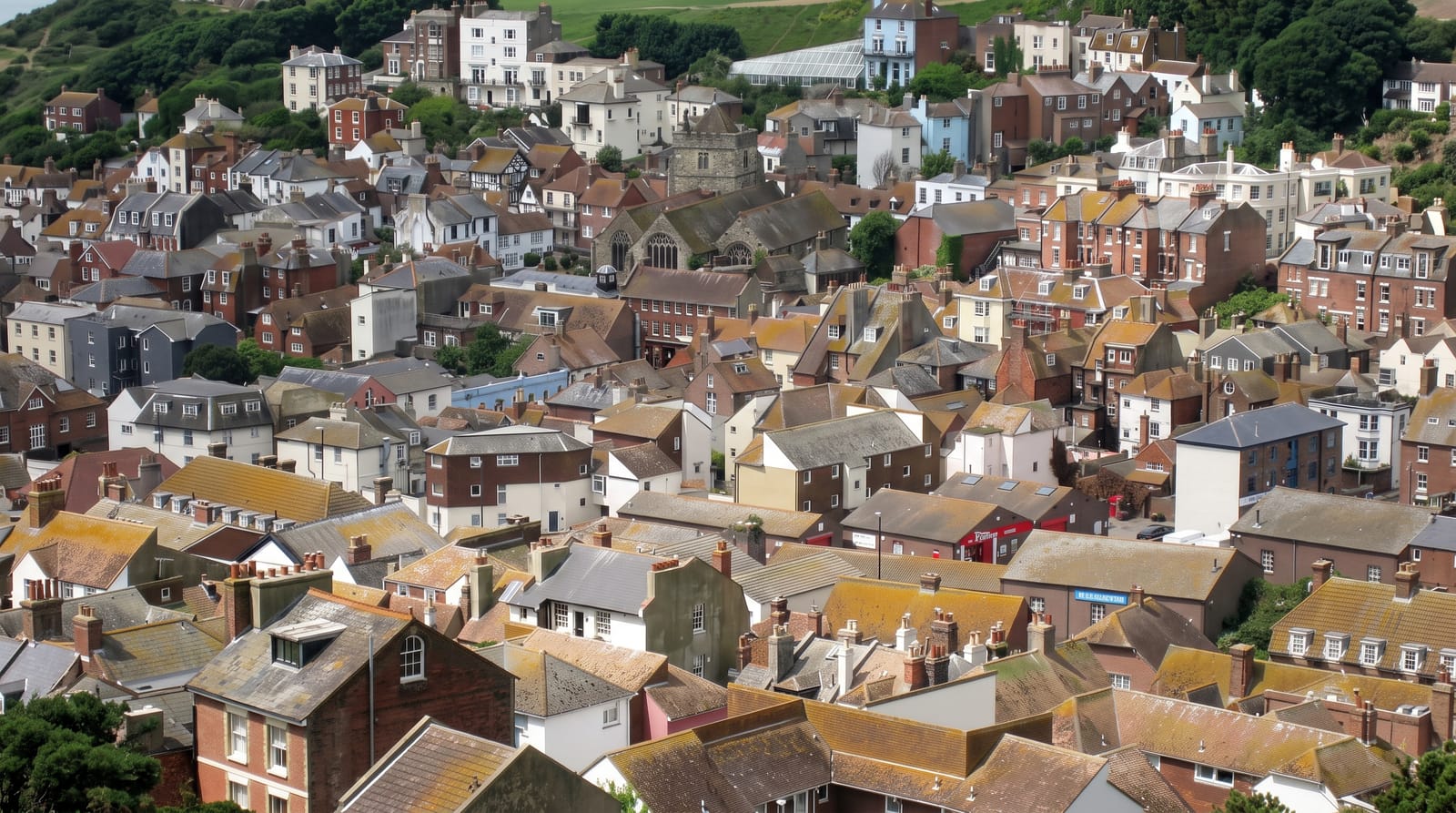
Rye was almost an island, a sandstone hill in a tidal bay, and as an Ancient Town attached to the Cinque Ports confederation it supplied ships to the crown in exchange for privileges. French raiders burned it in 1377. Then the sea left: silting through the sixteenth and seventeenth centuries pushed the coast two miles away and ended the port, which is why the town is preserved, since nothing was rebuilt on the trade that stopped coming. Mermaid Street is the set piece, a steep cobbled lane of timber-framed and tile-hung houses with names like The House Opposite. The Mermaid Inn, rebuilt in 1420, was the base of the Hawkhurst Gang of smugglers in the 1730s. Henry James lived at Lamb House from 1897, and E F Benson, who set the Mapp and Lucia novels in a thinly disguised Rye, followed him there.
Highlights
- Mermaid Street - a cobbled lane of timber-framed and tile-hung houses.
- The Mermaid Inn - a 1420 building used by the Hawkhurst smugglers.
- Ypres Tower - a thirteenth-century fort, later the town gaol, now a museum.
- Lamb House - Henry James's home, later E F Benson's.
When to go
April to October; the town is small and fills with day visitors from late morning at weekends, so early or late is better. The Rye Arts Festival runs in September. Winter is quiet and atmospheric.
Practical notes
Mermaid Street is short, steep and treacherously cobbled, and it is a residential street where people photograph doorways all day. Parking is limited and charged. The town is genuinely small and seen in a few hours.
Nearby
Camber Sands lies east; Bodiam Castle and Hastings are inland and west.
Key facts
Source: Wikidata, item Q1020800, read on 18 October 2026.
What to pack for Rye
Chosen from what this place is for. Tap a kit for the full checklist.
- Comfortable walking shoes - Sightseeing means kilometres of pavement and cobbles daily. Find on Amazon
- A slim anti-theft daypack - Zips that close properly; keep it in front in crowds and on transit. Find on Amazon
- A refillable water bottle - Many cities have public fountains; save money and plastic. Find on Amazon
- A light layer + compact umbrella - For museum air-con and a sudden shower. Find on Amazon
Some links on this page are Amazon affiliate links - if you buy through them we may earn a small commission at no extra cost to you.
All packing kitsPlan your trip
Where to start if Rye is going on the list.
Booking links on this page are affiliate links - if you book through them we may earn a small commission at no extra cost to you. It never changes what we write about a place.
Opening times, ticket prices and seasonal closures change - check the official source before you go: official site.