Hadrian's Wall
Rome's northern frontier - 73 miles of wall, fort and crag striding coast to coast across northern England since AD 122.
Updated 18 October 2026
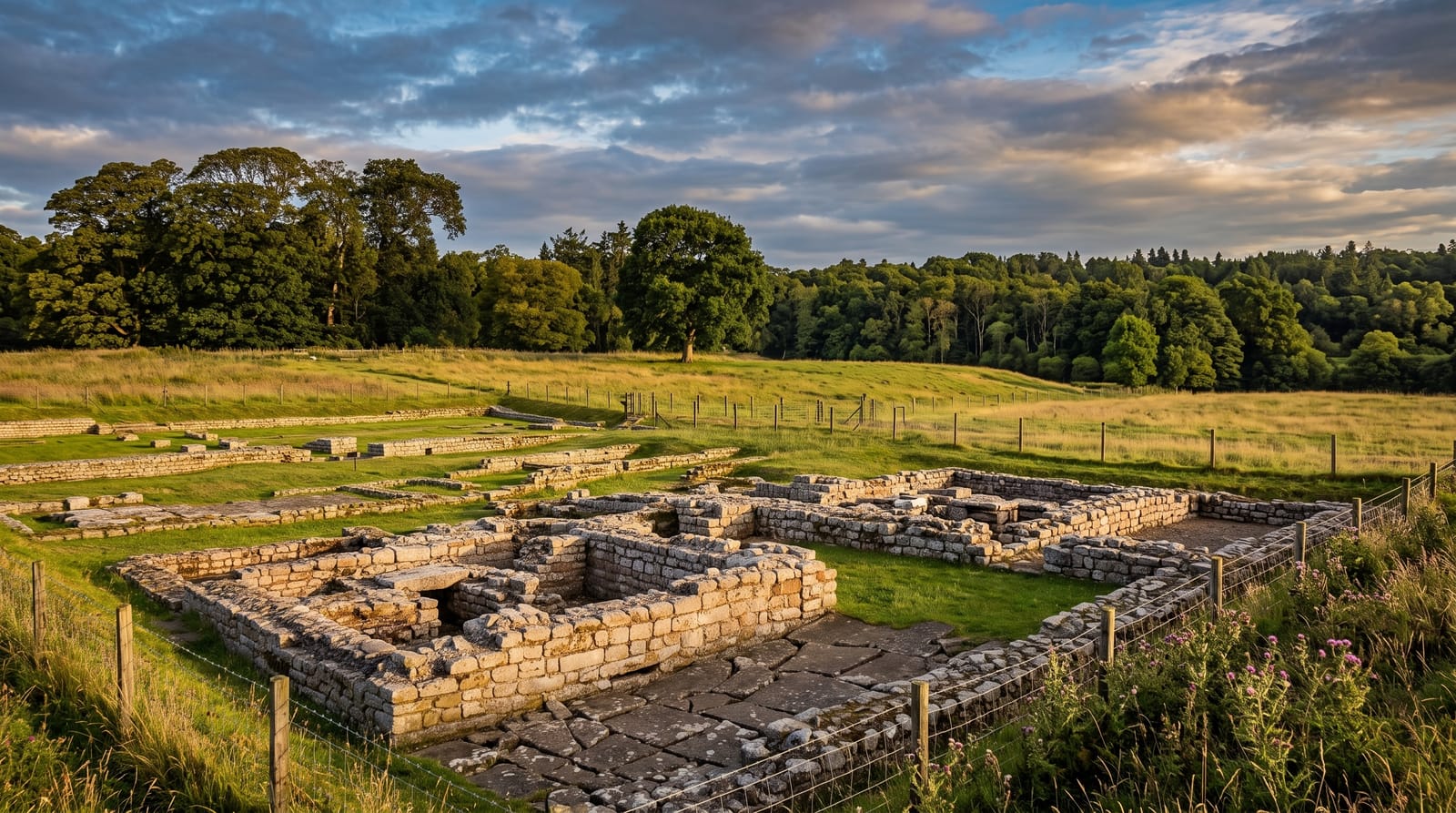
AI illustration
UNESCO World Heritage
Begun on the emperor's orders in AD 122, Hadrian's Wall ran 80 Roman miles - 73 modern ones - from Wallsend on the Tyne to Bowness-on-Solway, a stone frontier studded with milecastles, turrets and garrison forts that marked the north-west edge of the Roman world. The finest surviving stretch rides the dolerite crags of the Whin Sill through Northumberland, where the wall switchbacks over Steel Rigg and above the dark water of Crag Lough in the walking country of postcards. The forts carry the human detail: Housesteads with its famous communal latrines, Chesters with a riverside cavalry bathhouse, Birdoswald's long-occupied ramparts, and Vindolanda just south of the line, where waterlogged ground preserved the wooden writing tablets - birthday invitations, requests for socks - that put voices to the soldiers. The 84-mile Hadrian's Wall Path national trail walks the whole story, and the wall is inscribed within UNESCO's Frontiers of the Roman Empire.
History
Hadrian gave up his predecessor Trajan's policy of expansion and set out to defend the empire's borders, and as Britain lacked a natural frontier, work on the wall began in 122, built mostly within six years by three legions, the II Augusta, VI Victrix and XX Valeria Victrix, some 15,000 soldiers, with forts of 600 men and milecastles of 12 to 20. R. G. Collingwood showed that plans changed during building: the eastern wall was narrowed from ten to eight Roman feet, and the western part was first built of turf and later rebuilt in stone, while a ditch with mounds on either side, the Vallum, runs just south of it for almost its whole length. Almost all its standing masonry was later taken for local roads and farmhouses, so none stands to its original height (Wikipedia, Hadrian's Wall).
What's there
- The Whin Sill crags - the wall switchbacking over Steel Rigg and Crag Lough.
- Housesteads fort - barracks, granaries and the celebrated latrines.
- Vindolanda's tablets - handwritten Roman letters from the waterlogged ground.
- Chesters bathhouse - the cavalry fort's baths beside the North Tyne.
When to go
May to September gives long days, the seasonal bus and firmer paths; the central crags are exposed and wintry walking asks proper kit. Early mornings beat the coach parties to Housesteads.
Good to know
Manage the picture in your head - most surviving wall stands waist to shoulder height, not a rampart you walk along; the drama is the line across the landscape. Each fort charges separately, so an English Heritage or National Trust membership pays quickly. Weather on the exposed central section changes fast.
Nearby
Hexham's abbey town, Vindolanda and the Northumberland National Park dark skies.
Key facts
Source: Wikidata, item Q57357, read on 18 October 2026.
What to pack for Hadrian's Wall
Chosen from what this place is for. Tap a kit for the full checklist.
- Broken-in walking shoes or boots - Grip and ankle support matter more than looks; never hike in brand-new boots. Find on Amazon
- Comfortable walking shoes - Sightseeing means kilometres of pavement and cobbles daily. Find on Amazon
- Layers + a waterproof shell - Mountain weather turns fast; a packable rain jacket saves the day. Find on Amazon
- A slim anti-theft daypack - Zips that close properly; keep it in front in crowds and on transit. Find on Amazon
Some links on this page are Amazon affiliate links - if you buy through them we may earn a small commission at no extra cost to you.
All packing kitsPlan your trip
Where to start if Hadrian's Wall is going on the list.
Booking links on this page are affiliate links - if you book through them we may earn a small commission at no extra cost to you. It never changes what we write about a place.
Opening times, ticket prices and seasonal closures change - check the official source before you go: official site.