Beaumaris Castle
The most technically perfect concentric castle in Britain, and unfinished: the money ran out and the towers were never raised to full height.
Updated 18 October 2026

AI illustration
UNESCO World Heritage
Begun in 1295 on flat marshland, Beaumaris was the last and most symmetrical of Master James of St George's castles, laid out as a perfect square within a square with four concentric lines of defence, a moat filled from the sea, a dock where ships could tie up at the wall, and no natural high ground to compromise the geometry. It was never finished: costs ran beyond what the crown would pay, work stopped and started for decades and the towers stand at about half their intended height with no upper storeys, so a visitor walks a plan rather than a building. That incompleteness makes the design unusually legible, since every element of the intended defence is visible at once. It is part of the UNESCO group inscribed in 1986. The town outside has a Georgian gaol and courthouse.
History
After his conquest of north Wales in 1282, Edward I planned in 1284 a castle and town near Llanfaes, the richest borough in Wales, but the cost of his other castles put it off until the rising of Madog ap Llywelyn in 1294-1295 made it urgent; work began in 1295 under James of St George with a large workforce. The invasion of Scotland soon drained the money, building stopped and resumed only after an invasion scare in 1306, and when it finally ended around 1330, after £15,000 had been spent, the castle was still unfinished. Welsh forces took it in 1403 during the rising of Owain Glyndŵr and royal forces retook it in 1405 (Wikipedia, Beaumaris Castle).
What you'll find
- The perfect symmetry - a square castle within a square, on flat ground.
- The unfinished towers - walls stopped at roughly half their planned height.
- The tidal dock - a channel where supply ships tied up at the wall.
- The legible plan - four concentric defensive lines all visible at once.
When to go
April to October for full opening; the site is low-lying and exposed and the moat area is muddy after rain. Winter hours are reduced. Anglesey's coast path passes close by.
Practical notes
Because it was never completed, there is no height to climb and no roofed interior, so it can feel flat compared with Caernarfon or Conwy. The moat is partly silted. The site is small and a visit is short.
Nearby
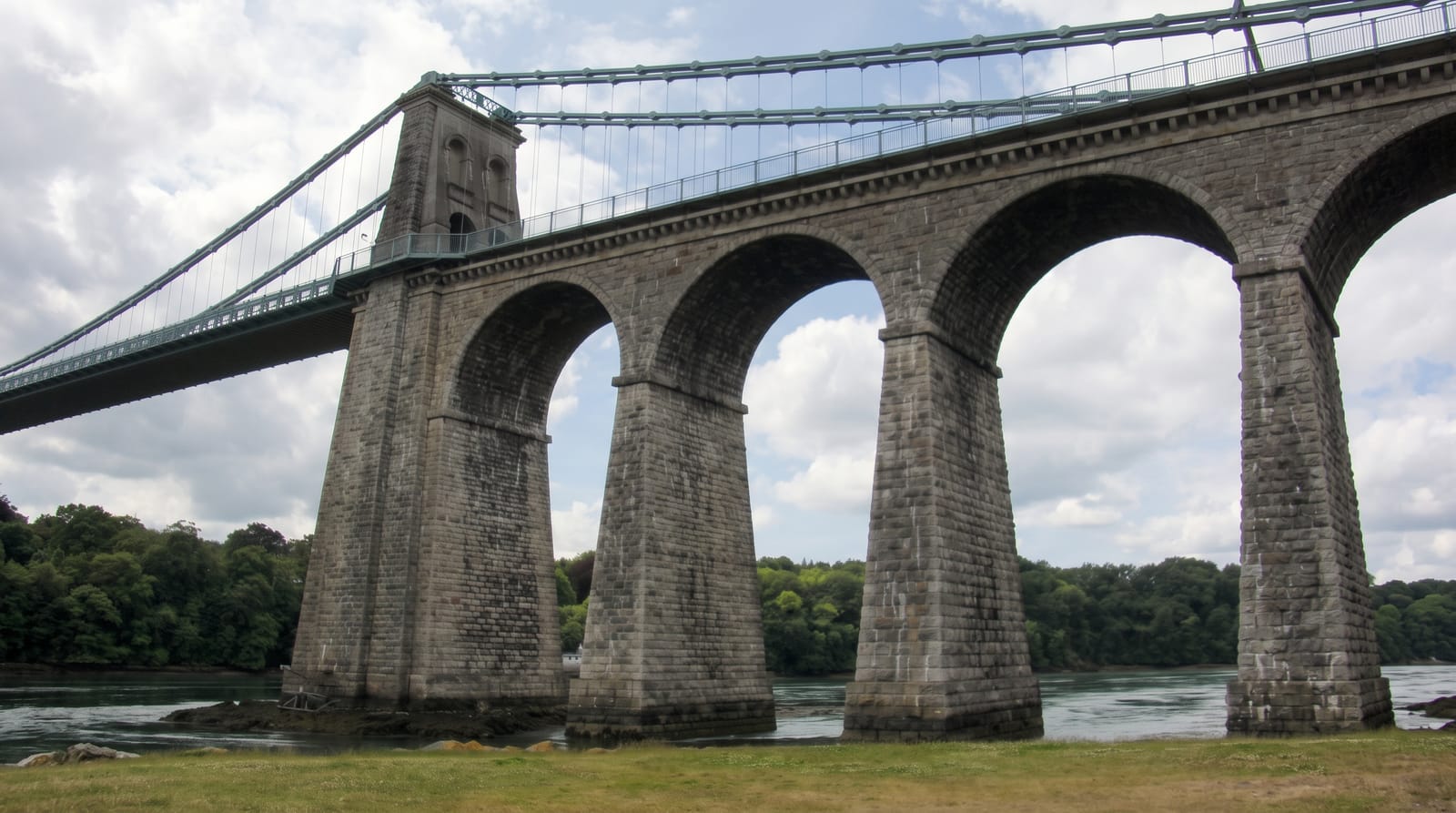
The Menai bridges lie southwest; Anglesey's coast path runs past the town.
Key facts
Source: Wikidata, item Q756815, read on 18 October 2026.
What to pack for Beaumaris Castle
Chosen from what this place is for. Tap a kit for the full checklist.
- Comfortable walking shoes - Sightseeing means kilometres of pavement and cobbles daily. Find on Amazon
- A slim anti-theft daypack - Zips that close properly; keep it in front in crowds and on transit. Find on Amazon
- A refillable water bottle - Many cities have public fountains; save money and plastic. Find on Amazon
- A light layer + compact umbrella - For museum air-con and a sudden shower. Find on Amazon
Some links on this page are Amazon affiliate links - if you buy through them we may earn a small commission at no extra cost to you.
All packing kitsPlan your trip
Where to start if Beaumaris Castle is going on the list.
Booking links on this page are affiliate links - if you book through them we may earn a small commission at no extra cost to you. It never changes what we write about a place.
Opening times, ticket prices and seasonal closures change - check the official source before you go: official site.