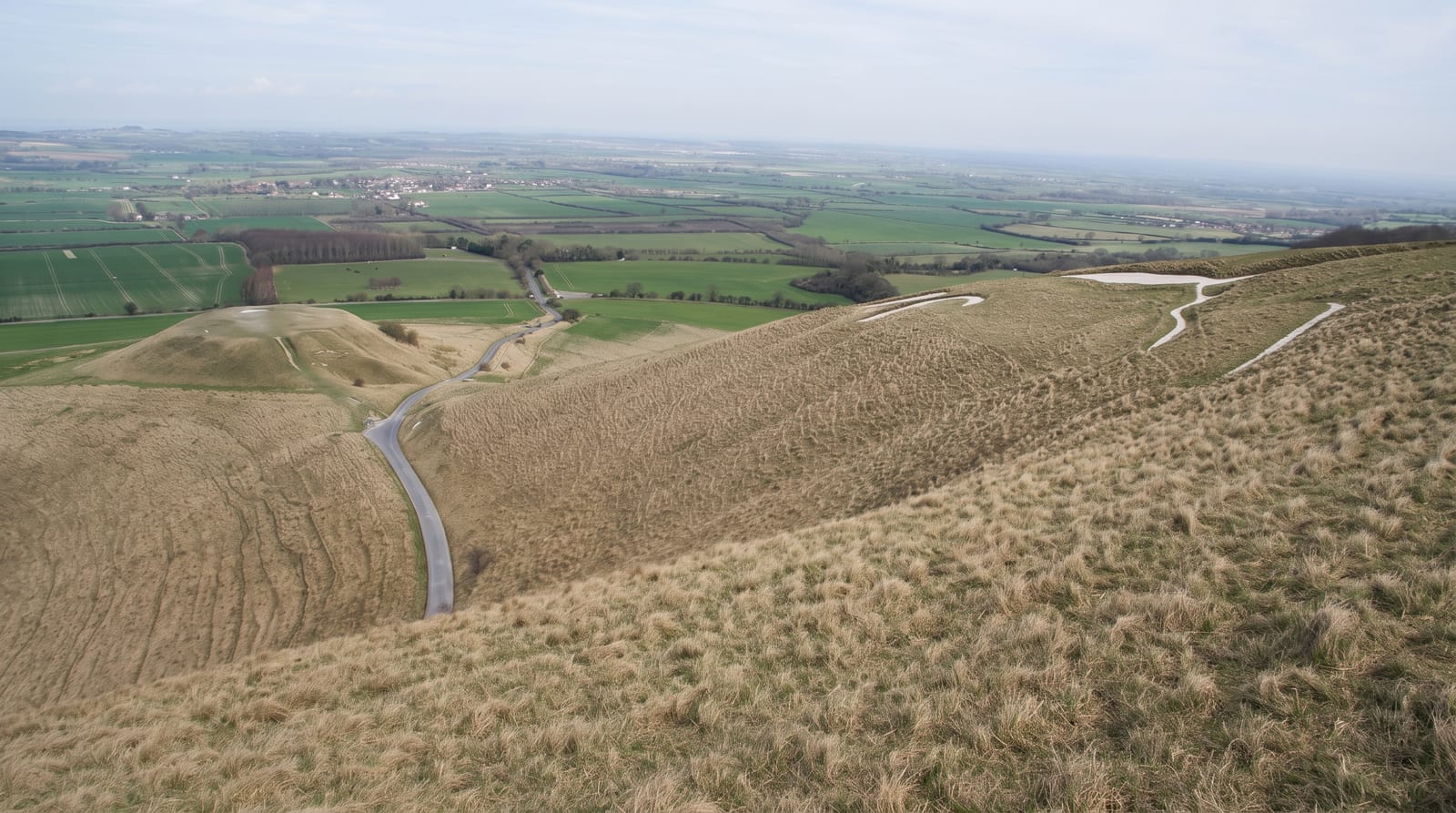
Avebury Stone Circle
The largest prehistoric stone circle in Britain, with a village and two roads inside its bank, free to walk among the sarsens.
Updated 18 October 2026
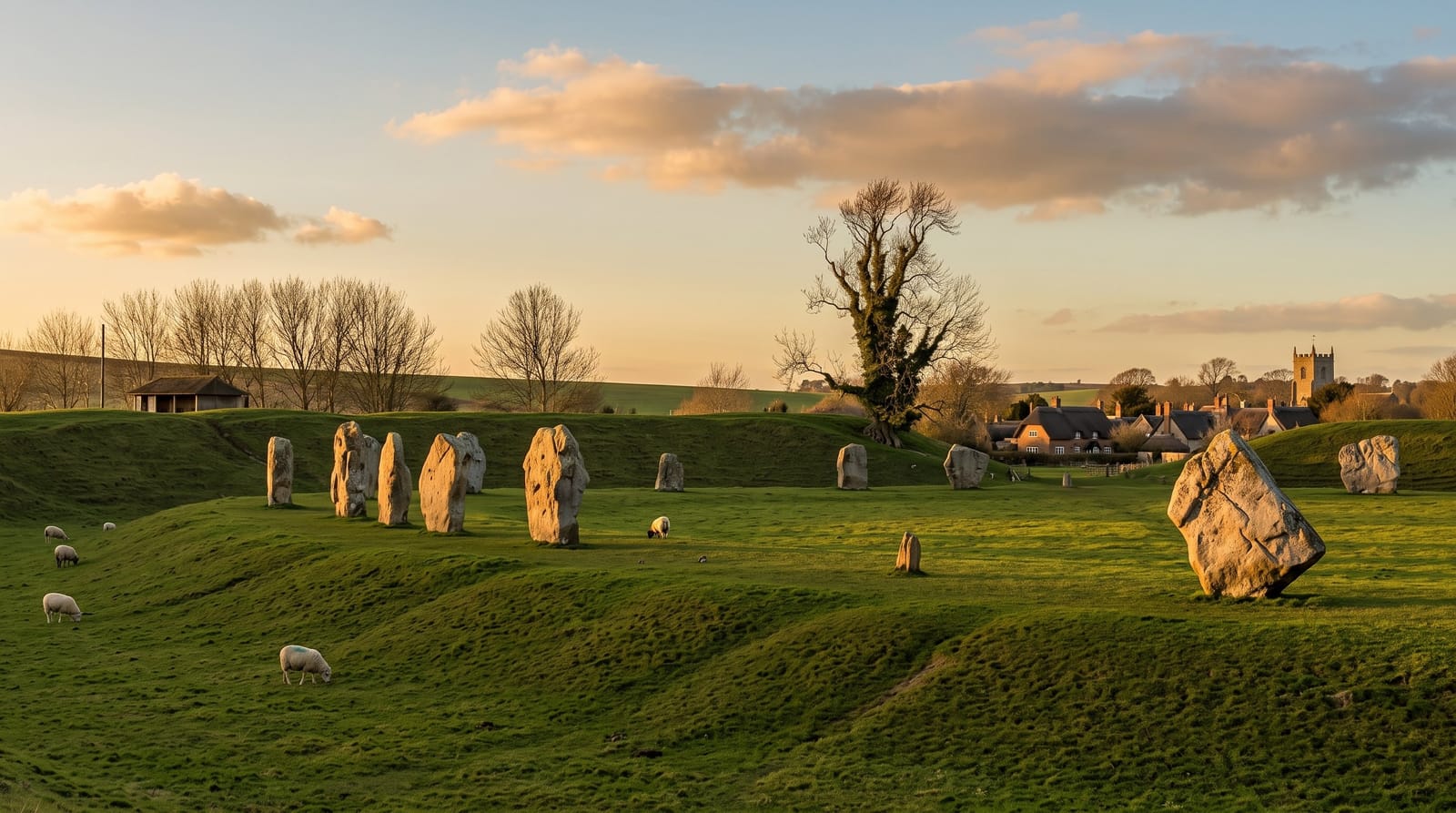
AI illustration
UNESCO World Heritage
Avebury is the opposite of Stonehenge in almost every way. The circle is around 330 metres across, big enough that a village and two public roads sit inside it, and the sarsens are unshaped lumps rather than dressed and lintelled blocks. There are no ropes: you walk up and put a hand on them. The bank and ditch enclosing the stones were dug with antler picks in the centuries around 2500 BC, and the ditch was originally far deeper than it now looks. Many stones were buried or broken up in later centuries; Alexander Keiller re-erected what he could in the 1930s and marked the missing ones with concrete posts.
History
Avebury was built over several hundred years in the 3rd millennium BC, not as one monument but in stages; Aubrey Burl suggests about 3000 BC for the central Cove, 2900 BC for the inner circle, 2600 BC for the outer circle and henge and around 2400 BC for the avenues, and the henge measures 347.4 metres across, with an outer circle of 331.6 metres, the largest megalithic stone circle in the world. By the Iron Age it had been largely abandoned, visitors came from nearby Roman towns, and early medieval settlers lived beside it; stones were still being broken up when William Stukeley recorded the site between 1719 and 1724, Harold St George Gray showed between 1908 and 1922 that its builders dug 11 metres into the chalk with red deer antlers, and Alexander Keiller dug and re-erected stones in the 1930s, so that, as is said, Avebury today is largely his creation (Wikipedia, Avebury).
Highlights
- The great outer circle - unshaped sarsens inside a bank and ditch 330 metres wide.
- West Kennet Avenue - paired stones running south from the henge for over a mile.
- Silbury Hill - the largest prehistoric mound in Europe, seen from the road below.
- The Alexander Keiller Museum - finds from the 1930s digs, shown in the old stable and barn.
When to go
The stones are open at all hours and free, which makes early morning and late evening the best of it, especially with mist sitting in the ditch. The summer solstice draws a large gathering and heavy parking restrictions. Museum and shop keep National Trust hours. Autumn and winter mud is real, so boots rather than trainers.
What to expect
Roads run through the circle carrying traffic, and the plan is hard to grasp on the ground without the aerial photographs on the boards. Parking is charged and some way from the stones. Sheep graze the field, with everything that implies underfoot. Silbury Hill cannot be climbed, and West Kennet Long Barrow is a further walk uphill.
Nearby
West Kennet Long Barrow, Silbury Hill and the Ridgeway path along the downs.
Key facts
Source: Wikidata, item Q661855, read on 18 October 2026.
What to pack for Avebury Stone Circle
Chosen from what this place is for. Tap a kit for the full checklist.
- Comfortable walking shoes - Sightseeing means kilometres of pavement and cobbles daily. Find on Amazon
- A slim anti-theft daypack - Zips that close properly; keep it in front in crowds and on transit. Find on Amazon
- A refillable water bottle - Many cities have public fountains; save money and plastic. Find on Amazon
- A light layer + compact umbrella - For museum air-con and a sudden shower. Find on Amazon
Some links on this page are Amazon affiliate links - if you buy through them we may earn a small commission at no extra cost to you.
All packing kitsPlan your trip
Where to start if Avebury Stone Circle is going on the list.
Booking links on this page are affiliate links - if you book through them we may earn a small commission at no extra cost to you. It never changes what we write about a place.
Opening times, ticket prices and seasonal closures change - check the official source before you go: official site.