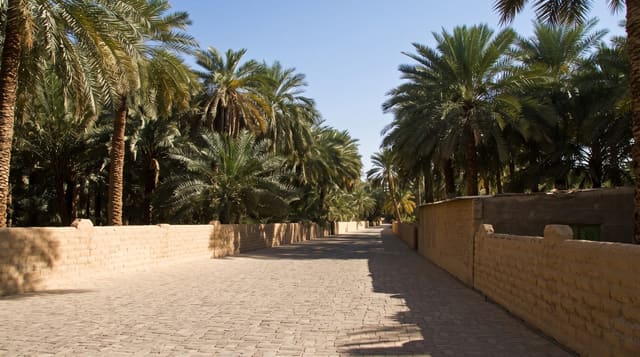
Hili Archaeological Park
A Bronze Age settlement and tomb complex in a public garden, an inscribed part of the UNESCO cultural sites of Al Ain.
Updated 2 September 2026
UNESCO World Heritage
Hili was one of the earliest oasis settlements in the region, occupied from the third millennium BC, and its remains sit inside what is otherwise a public park with lawns and picnic areas. The best-known monument is the Grand Tomb, a circular Umm an-Nar structure of dressed stone about twelve metres across with carved figures of people and animals flanking its entrances. Around it are mudbrick towers, a village and evidence of some of the earliest falaj irrigation known anywhere.
Highlights
- The Grand Tomb - a circular Umm an-Nar tomb with carved figures beside its entrances.
- The early falaj - among the oldest known evidence of underground irrigation channels.
- The mudbrick towers - third-millennium round structures excavated in the park.
- The park setting - an inscribed archaeological site inside a working public garden.
When to go
October to April for comfortable walking; the site is largely open. Mornings and late afternoons are best. It closes on Mondays.
Things to know
The site sits inside a family park and the setting is more municipal garden than archaeological reserve. Interpretation is limited relative to the importance of the remains. Much of the excavated material is in the Al Ain museum rather than here.
Nearby
Al Ain Oasis is south, and Al Jahili Fort is beyond it.
Key facts
Source: Wikidata, item Q16892306, read on 18 October 2026.
What to pack for Hili Archaeological Park
Chosen from what this place is for. Tap a kit for the full checklist.
- Head torch + spare batteries - Hands-free light is essential; caves are truly dark. Find on Amazon
- Comfortable walking shoes - Sightseeing means kilometres of pavement and cobbles daily. Find on Amazon
- Grippy closed shoes - Cave floors are wet, muddy and slick with formations. Find on Amazon
- A slim anti-theft daypack - Zips that close properly; keep it in front in crowds and on transit. Find on Amazon
Some links on this page are Amazon affiliate links - if you buy through them we may earn a small commission at no extra cost to you.
All packing kitsPlan your trip
Where to start if Hili Archaeological Park is going on the list.
Booking links on this page are affiliate links - if you book through them we may earn a small commission at no extra cost to you. It never changes what we write about a place.
Opening times, ticket prices and seasonal closures change - check the official source before you go: official site.