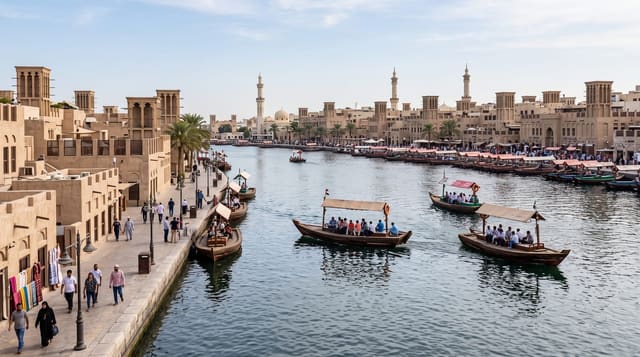
Emirati and Gulf Cuisine
The traditional flavours of the Gulf - fragrant spiced rice and slow-cooked meats, dates and Arabic coffee, and a world food scene, from street shawarma to fine dining.
Updated 2 September 2026
Beneath the glitz, the Emirates has a traditional Gulf cuisine of fragrant spiced rice and slow-cooked meats, shaped by Bedouin, Persian and Indian influence. Dishes like machboos, a spiced rice with meat, and harees are shared from communal platters, sweetened by dates and washed down with cardamom-scented Arabic coffee. Alongside, the cities offer one of the world's most cosmopolitan food scenes, from street shawarma to global fine dining.
Highlights
- Machboos and harees - the traditional spiced rice and slow-cooked dishes.
- Dates and Arabic coffee - the traditional welcome of dates and cardamom coffee.
- Shawarma and street food - the beloved wraps and Levantine street food.
- The global dining scene - the world cuisines of the cosmopolitan cities.
When to go
Year-round; traditional Emirati food is best sought at dedicated heritage restaurants, as much dining is international. During Ramadan, the nightly iftar feasts are a special experience, though daytime eating is limited out of respect.
What to expect
Genuine Emirati food can be surprisingly hard to find amid the international restaurants, so seek out dedicated heritage eateries. During the holy month of Ramadan, eating and drinking in public in daylight is restricted out of respect. Alcohol is served only in licensed venues. Dining out can be expensive.
Nearby
Dubai and Abu Dhabi offer both heritage Emirati restaurants and the full range of world cuisines.
What to pack for Emirati and Gulf Cuisine
Chosen from what this place is for. Tap a kit for the full checklist.
- A reusable bag or container - For market produce and cutting down on packaging. Find on Amazon
- Wet wipes + hand sanitiser - Street food and washbasins do not always go together. Find on Amazon
Some links on this page are Amazon affiliate links - if you buy through them we may earn a small commission at no extra cost to you.
All packing kitsPlan your trip
Where to start if Emirati and Gulf Cuisine is going on the list.
Booking links on this page are affiliate links - if you book through them we may earn a small commission at no extra cost to you. It never changes what we write about a place.
Opening times, ticket prices and seasonal closures change - check the official source before you go: official site.