Wade's Green Plantation
The best preserved loyalist plantation in the islands, abandoned within a generation when the cotton failed and the soil gave out.
Updated 3 September 2026
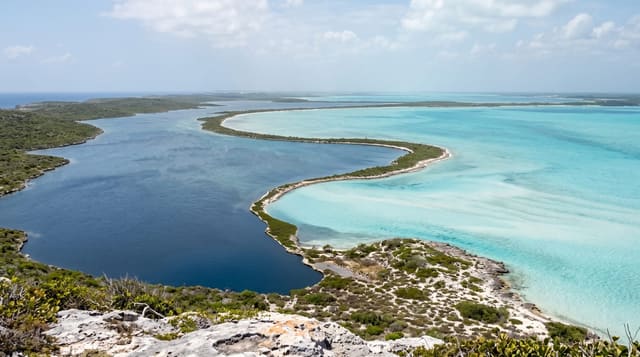
After the American Revolution, loyalists who had backed the losing side were granted land in the Caicos Islands and arrived with enslaved people to grow cotton. Wade Stubbs received a substantial grant and built at Kew, and the ruins of what he made are the most complete of the loyalist plantations here: the great house, kitchen, storehouses, overseer's quarters and the dry stone walls of the fields, along with the buildings where the enslaved workforce lived. The venture failed within a generation as the thin soil gave out and insects took the crop, and the planters left, in many cases abandoning the people they had enslaved.
Highlights
- The great house ruin - walls, chimneys and cisterns still standing.
- The slave quarters - the dwellings of the workforce, in the bush.
- The field walls - dry stone boundaries across the plantation.
- The abandonment - the failure that ended the loyalist experiment here.
When to go
November to May is the driest and best for walking the site. Access is arranged in advance through the National Trust rather than by turning up. Mornings are cooler; the site is exposed and the bush is thick.
Practical notes
Access must be arranged in advance and the site is not permanently staffed. The bush has grown over much of it and mosquitoes are heavy. Interpretation is limited. The history of the people enslaved here, whose descendants make up much of the population of North and Middle Caicos, deserves more prominence than the site currently gives it.
Nearby
Kew is the nearest settlement; Flamingo Pond is on the main road.
What to pack for Wade's Green Plantation
Chosen from what this place is for. Tap a kit for the full checklist.
- Comfortable walking shoes - Sightseeing means kilometres of pavement and cobbles daily. Find on Amazon
- A slim anti-theft daypack - Zips that close properly; keep it in front in crowds and on transit. Find on Amazon
- A refillable water bottle - Many cities have public fountains; save money and plastic. Find on Amazon
- A light layer + compact umbrella - For museum air-con and a sudden shower. Find on Amazon
Some links on this page are Amazon affiliate links - if you buy through them we may earn a small commission at no extra cost to you.
All packing kitsPlan your trip
Where to start if Wade's Green Plantation is going on the list.
Booking links on this page are affiliate links - if you book through them we may earn a small commission at no extra cost to you. It never changes what we write about a place.
Opening times, ticket prices and seasonal closures change - check the official source before you go: official site.