Conch in the Turks and Caicos
The territory's emblem and its most eaten food, cracked and fried, in salad, in fritters and in a chowder.
Updated 3 September 2026
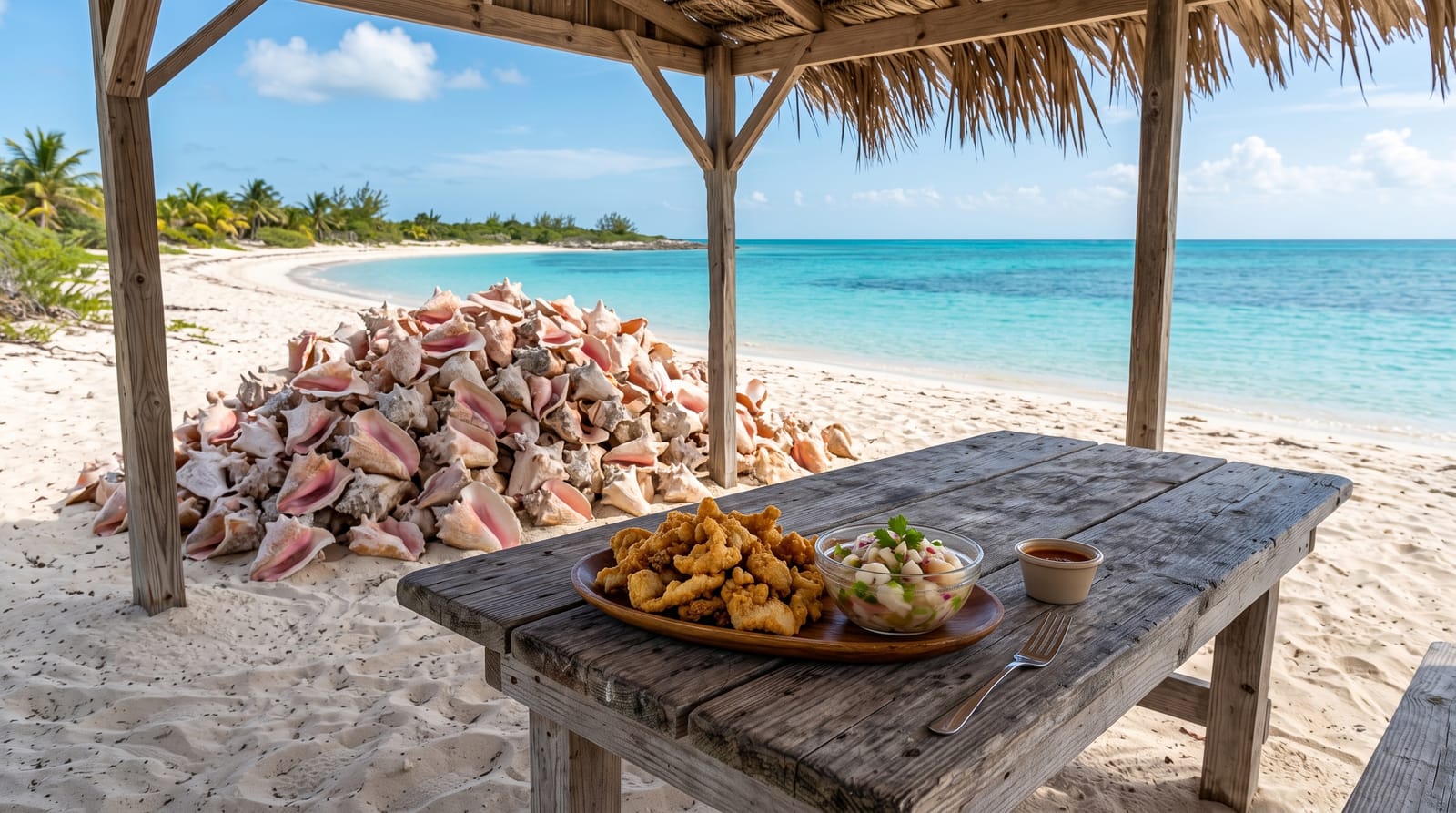
AI illustration
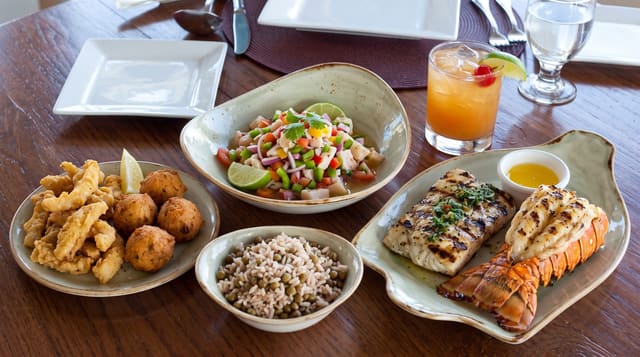
Queen conch is on the territory's coat of arms and on almost every menu: cracked conch, pounded flat, battered and fried; conch salad, diced raw and cured with lime, onion and pepper in front of you; fritters; and a chowder. The islands ran the world's first commercial conch farm at Providenciales for three decades, raising animals from egg to market size, until it closed in the 2010s. Conch is now under real pressure across the region and the territory operates a closed season and export quotas, which the fishery has generally respected better than most of its neighbours.
The main sights
- Cracked conch - pounded, battered and fried, the standard preparation.
- Conch salad - diced raw and cured with lime in front of you.
- The shell middens - piles of discarded shells at the landing sites.
- The closed season - July to October, when it should not be on menus.
When to go
Year-round except the closed season, which runs roughly from mid-July to mid-October and during which conch should not be served from local waters. Beach shacks at Blue Hills and Five Cays do it best.
Practical notes
The closed season is real and any restaurant serving locally caught conch during it is breaking the rules; imported frozen conch is legal and should be declared. Regional conch stocks are in serious decline. Conch salad is raw and stand hygiene varies. Taking shells out of the country requires a CITES permit.
Nearby
Blue Hills and Five Cays on Providenciales; every island has its own.
What to pack for Conch in the Turks and Caicos
Chosen from what this place is for. Tap a kit for the full checklist.
- A reusable bag or container - For market produce and cutting down on packaging. Find on Amazon
- Wet wipes + hand sanitiser - Street food and washbasins do not always go together. Find on Amazon
Some links on this page are Amazon affiliate links - if you buy through them we may earn a small commission at no extra cost to you.
All packing kitsPlan your trip
Where to start if Conch in the Turks and Caicos is going on the list.
Booking links on this page are affiliate links - if you book through them we may earn a small commission at no extra cost to you. It never changes what we write about a place.
Opening times, ticket prices and seasonal closures change - check the official source before you go: official site.