Ani
The city of 1,001 churches - a ruined medieval Armenian capital scattered across empty steppe above a river gorge, cathedral and churches alone under an enormous sky.
Updated 18 October 2026

AI illustration
UNESCO World Heritage
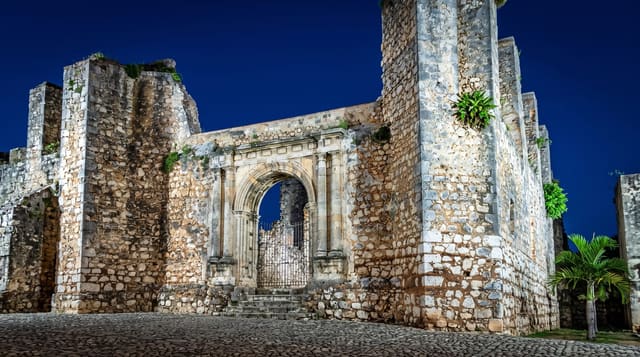
Ani spreads its ruined splendour across a grass steppe above the Akhurian river gorge at Turkey's far eastern edge - a medieval metropolis that served as capital of the Bagratid Armenian kingdom from 961 to 1045, grew rich on a branch of the Silk Road, and was celebrated as the 'city of 1,001 churches'. Perhaps 100,000 people lived here at its height; invasions and a 1319 earthquake slowly emptied it, and what remains is one of the world's great abandoned cities - the fractured cathedral, the round Church of the Redeemer sliced in half, the frescoed church of St Gregory of Tigran Honents on the gorge lip, a mosque's minaret, and double walls running the plateau's neck. UNESCO inscribed the site in 2016, and its emptiness under the enormous sky is the point: an entire city, and the wind.
History
Armenian chroniclers of the 5th century first mention Ani as a strong hilltop fortress of the Kamsarakan dynasty, and by the early 9th century its lands had passed to the Bagratuni dynasty, which won independence from the Arabs late in that century. The Bagratunis moved their capital from Bagaran to Shirakavan and then to Kars in 929, and in 961 King Ashot III moved it to Ani, which grew fast under Smbat II, received the seat of the Armenian Catholicos in 992 and may have had 50,000 to 100,000 people in the 10th century. It was the capital of the Bagratuni kingdom until 1045, was celebrated as the city of 1,001 churches, though there were far fewer, and its cathedral is linked with early ribbed vaulting of a kind European cathedrals adopted much later; 50 churches, 33 cave chapels and 20 chapels have been excavated so far (Wikipedia, Ani).
What's there
- The cathedral - the great domed shell completed around 1001 by the architect Trdat.
- St Gregory of Tigran Honents - the frescoed church above the gorge.
- The Church of the Redeemer - the half-standing rotunda, braced and defiant.
- The city walls - the double line of red-stone towers across the plateau.
When to go
May to June and September for green steppe and bearable temperatures; July and August bake and winter buries the plateau in snow. Late afternoon light turns the stone red-gold.
Before you go
Ani is 45 km from Kars with no practical public transport - hire a taxi for a half day or join a tour. The site is huge, shadeless and windswept: water, sun cover and two to three hours of walking are the minimum. Facilities are basic.
Nearby
Kars and its stone architecture, with the Sarikamis forests to the southwest.
Key facts
Source: Wikidata, item Q546010, read on 18 October 2026.
What to pack for Ani
Chosen from what this place is for. Tap a kit for the full checklist.
- Head torch + spare batteries - Hands-free light is essential; caves are truly dark. Find on Amazon
- Warm base layers - Merino or synthetic against the skin - never cotton, which chills when damp. Find on Amazon
- Comfortable walking shoes - Sightseeing means kilometres of pavement and cobbles daily. Find on Amazon
- Modest clothing - Shoulders and knees covered - the single most common requirement. Find on Amazon
Some links on this page are Amazon affiliate links - if you buy through them we may earn a small commission at no extra cost to you.
All packing kitsPlan your trip
Where to start if Ani is going on the list.
Booking links on this page are affiliate links - if you book through them we may earn a small commission at no extra cost to you. It never changes what we write about a place.
Opening times, ticket prices and seasonal closures change - check the official source before you go: official site.