Chemtou
The quarries that produced giallo antico marble for the Roman empire, with an excellent site museum.
Updated 2 September 2026
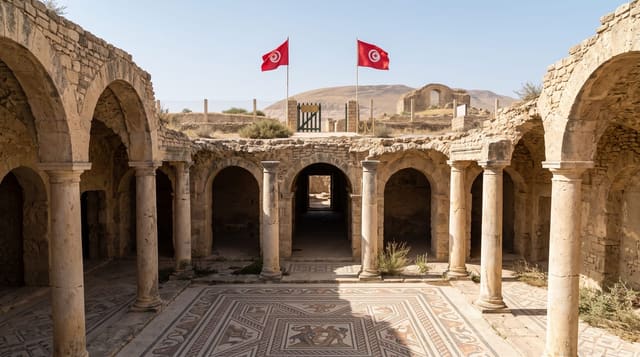
Simitthus at Chemtou was where the Romans quarried numidicum, the yellow and pink marble known in Italy as giallo antico, which was shipped across the empire for columns and floors and was one of the most prized stones of the ancient world. The quarry faces, the worker settlement, a Numidian sanctuary on the hill and a bridge over the Medjerda survive, and a German-built site museum is among the best presented in Tunisia.
Highlights
- The marble quarries - the faces where giallo antico was cut for the empire.
- The site museum - a well-presented display on the quarry, the marble and the workers.
- The Numidian sanctuary - the pre-Roman monument on the hill above the quarries.
- The Medjerda bridge - the Roman crossing of the river below the site.
When to go
October to May is comfortable. The museum keeps regular hours and is worth the visit on its own. Winter here can be wet.
Good to know
The quarry faces themselves are less immediately impressive than the museum. The site is spread out over a hillside. It is remote and public transport is poor.
Nearby
Bulla Regia is east, and Jendouba is south.
Key facts
Source: Wikidata, item Q1493784, read on 18 October 2026.
What to pack for Chemtou
Chosen from what this place is for. Tap a kit for the full checklist.
- Comfortable walking shoes - Sightseeing means kilometres of pavement and cobbles daily. Find on Amazon
- A slim anti-theft daypack - Zips that close properly; keep it in front in crowds and on transit. Find on Amazon
- A refillable water bottle - Many cities have public fountains; save money and plastic. Find on Amazon
- A light layer + compact umbrella - For museum air-con and a sudden shower. Find on Amazon
Some links on this page are Amazon affiliate links - if you buy through them we may earn a small commission at no extra cost to you.
All packing kitsPlan your trip
Where to start if Chemtou is going on the list.
Booking links on this page are affiliate links - if you book through them we may earn a small commission at no extra cost to you. It never changes what we write about a place.
Opening times, ticket prices and seasonal closures change - check the official source before you go: official site.