Wat Ratchabophit
A royal temple with a Thai exterior and a Gothic interior, built by a king who had just returned from studying Europe.
Updated 21 October 2026
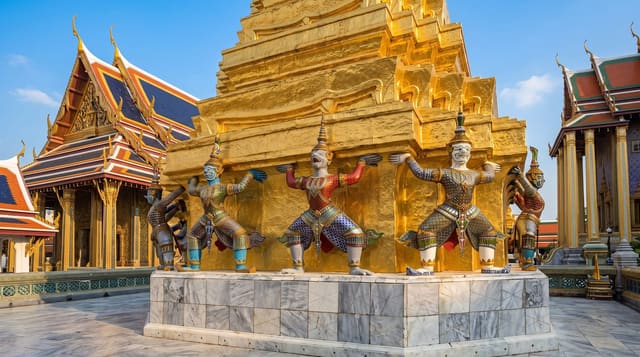
Rama V began Wat Ratchabophit in 1869, early in a reign spent modernising Siam against European pressure, and the building is that project in architecture. From outside it is entirely Thai: a circular cloister of Chinese-tiled walls enclosing a golden chedi, 43 metres high in Sri Lankan style and holding a relic of the Buddha, with ordination and assembly halls opening off it, everything faced in five-coloured Chinese ceramic. Step inside the ubosot and the vocabulary changes completely - the interior is Gothic Revival, with ribbed vaulting, pointed arches, stained glass and a colour scheme that would not be out of place in a nineteenth-century European chapel, all built around a Buddha image on a European-style altar; the three-metre doors are inlaid in mother-of-pearl with the insignia of royal orders. The combination is deliberate and startling, and the temple is much less visited than the Grand Palace a few minutes away. A royal cemetery in the grounds holds monuments to Rama V's family in a mixture of styles, including a small Gothic chapel.
What to look for
- The Gothic interior - ribbed vaults and pointed arches inside a Thai ubosot.
- The circular cloister - the tiled gallery enclosing the golden chedi.
- The ceramic facing - five-coloured Chinese tile across the exterior.
- The royal cemetery - monuments in Thai, Khmer and European styles.
When to go
November to February. It is quiet compared with the Grand Palace nearby. An hour covers it. Halls close at midday for a period.
Good to know
Halls close for part of the middle of the day. Temple dress code applies. It is small - an hour is enough. The cemetery is sometimes locked.
Nearby
The Grand Palace and Wat Pho are a short walk west; Wat Suthat is east.
Key facts
Source: Wikidata, item Q1513232, read on 18 October 2026.
What to pack for Wat Ratchabophit
Chosen from what this place is for. Tap a kit for the full checklist.
- Comfortable walking shoes - Sightseeing means kilometres of pavement and cobbles daily. Find on Amazon
- Modest clothing - Shoulders and knees covered - the single most common requirement. Find on Amazon
- A slim anti-theft daypack - Zips that close properly; keep it in front in crowds and on transit. Find on Amazon
- A scarf or shawl - To cover the head or shoulders on entry; women especially at mosques. Find on Amazon
Some links on this page are Amazon affiliate links - if you buy through them we may earn a small commission at no extra cost to you.
All packing kitsPlan your trip
Where to start if Wat Ratchabophit is going on the list.
Booking links on this page are affiliate links - if you book through them we may earn a small commission at no extra cost to you. It never changes what we write about a place.
Opening times, ticket prices and seasonal closures change - check the official source before you go: official site.