King Narai's Palace
The seventeenth-century Lopburi palace of the king who opened Siam to France, and where that opening violently ended.
Updated 29 October 2026
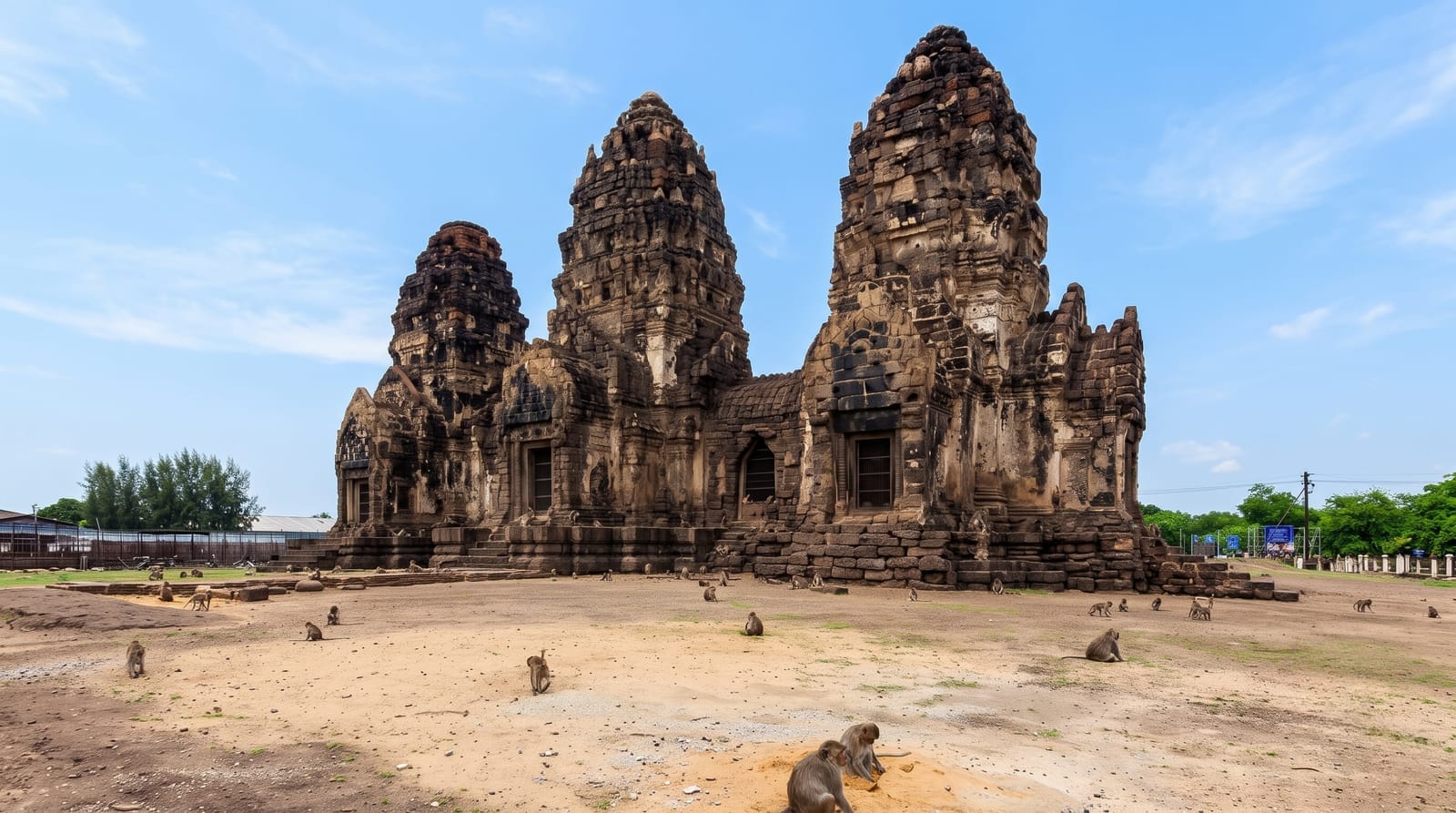
AI illustration
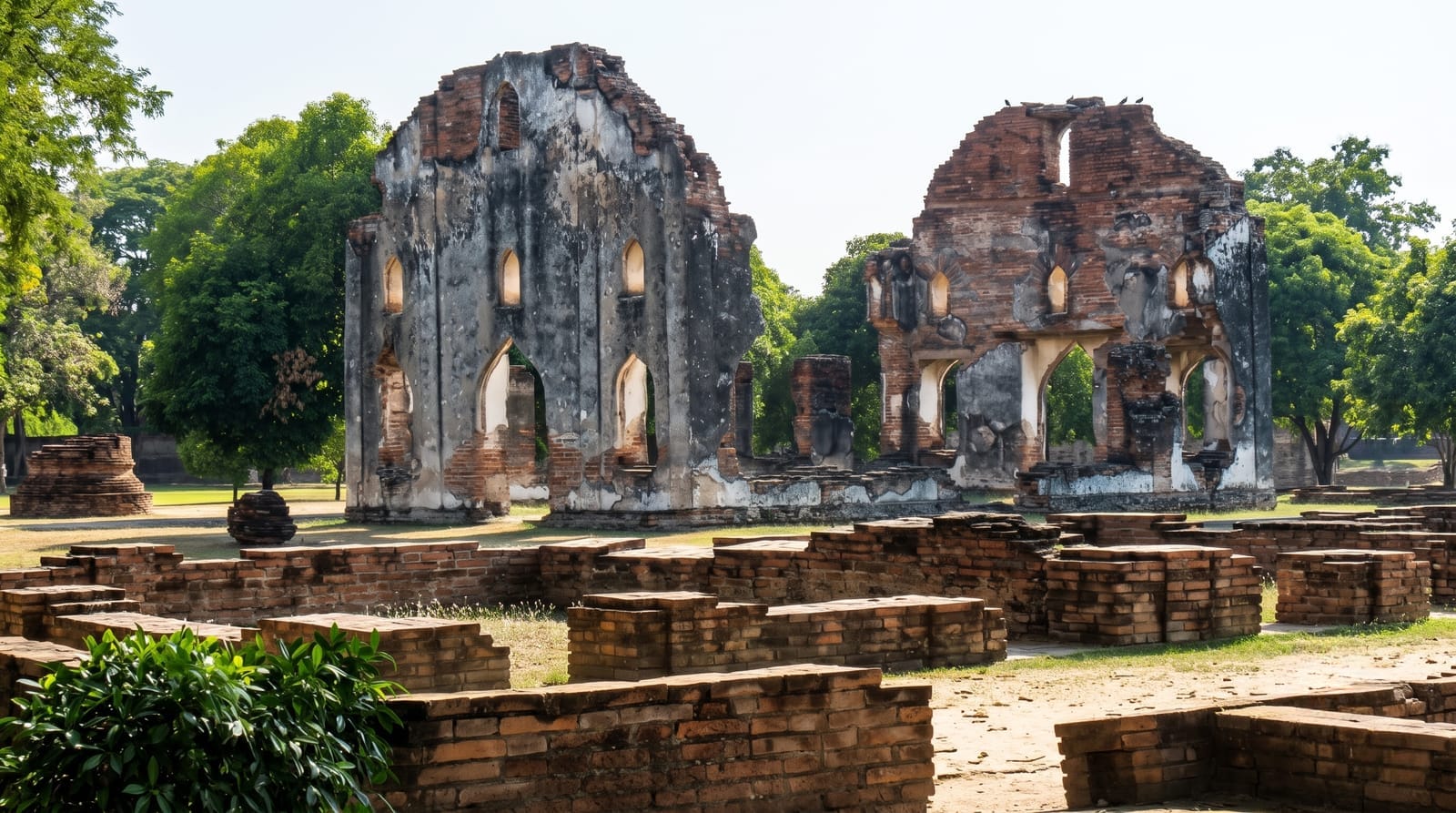
Narai the Great ruled Ayutthaya from 1656 to 1688 and spent eight or nine months of each year at Lopburi, his second capital, where from 1666 he built a walled palace on the site of King Ramesuan's older one, with the help of French and Italian engineers - the architecture mixes Thai and European forms, with pointed Gothic-influenced window openings unusual in Siamese building. His reign was the high point of Franco-Siamese relations: embassies went both ways, Louis XIV received Siamese ambassadors at Versailles, and the Greek adventurer Constantine Phaulkon rose to become Narai's chief minister. It ended badly. In 1688, with Narai dying in this palace, Phetracha seized power in a coup, Phaulkon was executed, the French garrison was expelled and Siam closed to the West for a century and a half. Narai died here during the coup. The grounds now hold ruins of the audience halls, reservoirs and elephant stables, with a national museum in a later Rama IV building.
Background
King Narai's Palace, Phra Narai Ratchaniwet in Thai, stands in Lopburi and was built by King Narai the Great, king of Ayutthaya from 1656 to 1688. He ordered it in 1666 on the same ground as King Ramesuan's Palace, made Lopburi the second capital of the Ayutthaya Kingdom, and lived here for about 8 to 9 months a year, except in the rainy season. The palace was used for relaxation, hunting, affairs of state and the reception of official visitors. Both Lopburi and the palace were abandoned after the king's death in 1688. King Mongkut, Rama IV, later ordered its restoration and added the Phiman Mongkut Pavilion for his stay in 1856. In 1961 the museum in the palace took the name Somdet Phra Narai National Museum.
Source: Wikipedia, "King Narai's Palace"
What's there
- The palace ruins - audience halls, reservoirs and elephant stables in a walled compound.
- The European influence - Gothic-style window openings on Thai buildings.
- The 1688 revolution - where Narai died and Siam closed to the West.
- The museum - in a Rama IV-era building within the grounds.
When to go
November to February. Early or late - the grounds are largely unshaded. Two hours covers the ruins and the museum. Closed on some weekdays.
Good to know
Mostly foundations and shells rather than intact buildings. Little shade. The museum has limited English labelling. Lopburi's macaques range into parts of the town around it.
Nearby
Phra Prang Sam Yot is a short walk; Wat Phra Si Rattana Mahathat is by the station.
Key facts
Source: Wikidata, item Q661271, read on 18 October 2026.
What to pack for King Narai's Palace
Chosen from what this place is for. Tap a kit for the full checklist.
- Comfortable walking shoes - Sightseeing means kilometres of pavement and cobbles daily. Find on Amazon
- A slim anti-theft daypack - Zips that close properly; keep it in front in crowds and on transit. Find on Amazon
- A refillable water bottle - Many cities have public fountains; save money and plastic. Find on Amazon
- A light layer + compact umbrella - For museum air-con and a sudden shower. Find on Amazon
Some links on this page are Amazon affiliate links - if you buy through them we may earn a small commission at no extra cost to you.
All packing kitsPlan your trip
Where to start if King Narai's Palace is going on the list.
Booking links on this page are affiliate links - if you book through them we may earn a small commission at no extra cost to you. It never changes what we write about a place.
Opening times, ticket prices and seasonal closures change - check the official source before you go: official site.