The Beaches of Zanzibar
The Spice Island's tropical paradise - dazzling white-sand beaches and turquoise waters fringed by palms on the Indian Ocean, where dhows sail, the tide sweeps far out, and seaweed farmers work the shallows.
Updated 5 August 2026
AI illustration
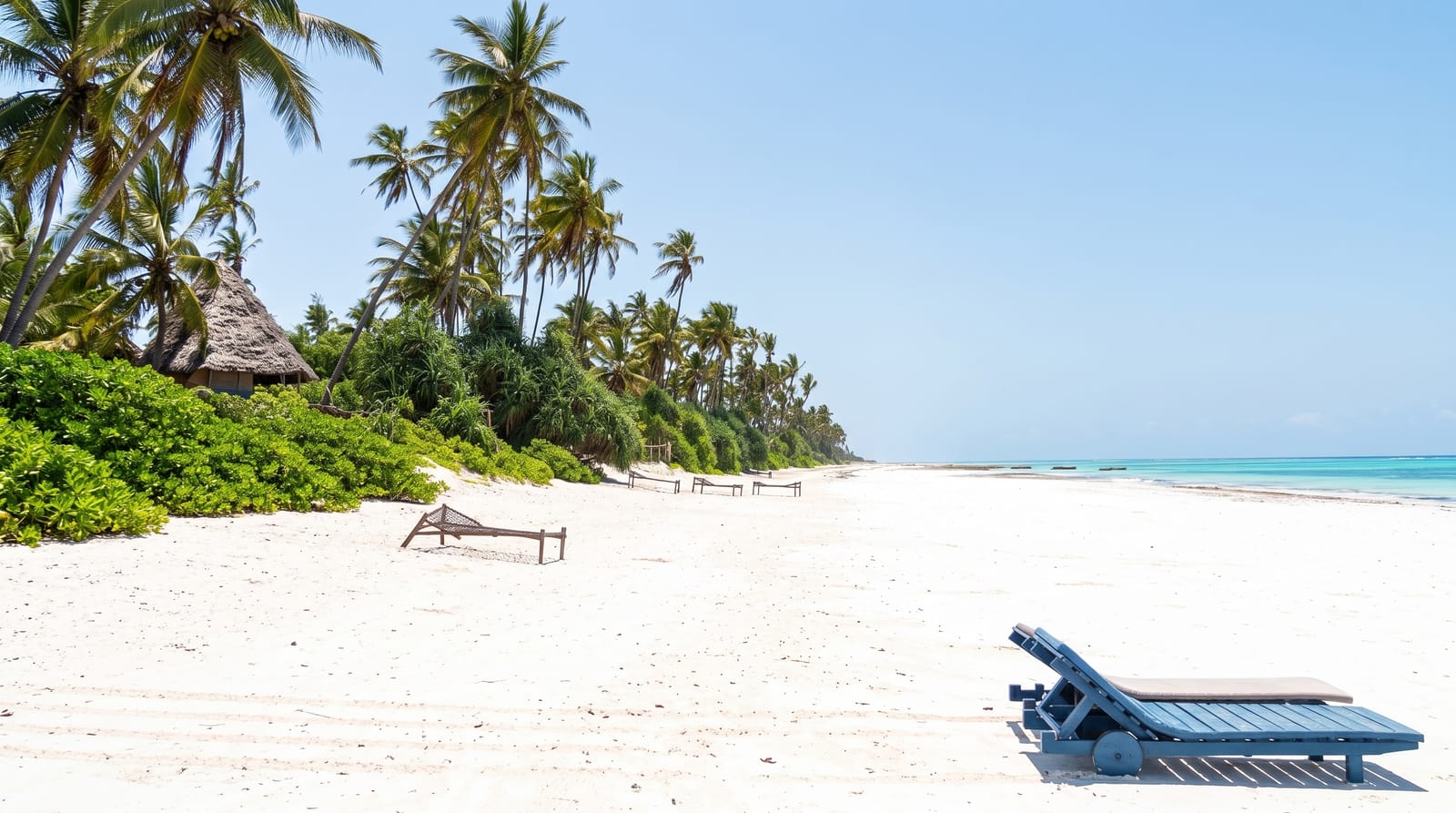
Beyond Stone Town, the island of Zanzibar is fringed with some of the most beautiful beaches in the world, dazzling ribbons of powder-white sand lapped by warm, impossibly turquoise Indian Ocean water and shaded by palms. From the lively resort beaches of the north at Nungwi to the serene, wide sands of the east coast, where the tide sweeps far out to reveal seaweed farmers and dhows sail the horizon, it is a tropical paradise and the perfect finish to a safari.
What's there
- The white beaches - the powder sand and turquoise water.
- The dhows - the traditional sailing boats on the horizon.
- The tides and seaweed farms - the dramatic tides and coastal life of the east.
- Snorkelling and diving - the reefs and the Mnemba atoll.
When to go
June to October and December to February for the driest, sunniest weather; the long rains of April and May are best avoided. The north-coast beaches are less affected by the extreme tides than the east, where the sea can retreat a long way at low tide.
Things to know
On the east coast the tide goes out dramatically far, so swimming is tidal and the sea can be distant at low tide, which surprises those expecting all-day swimming; the north coast has less extreme tides. Seasonal seaweed and its farming are part of the east-coast scene. As a Muslim island, modest dress off the resort beaches is respectful.
Nearby
Stone Town, the spice farms and Jozani Forest with its red colobus monkeys are on the island.
What to pack for The Beaches of Zanzibar
Chosen from what this place is for. Tap a kit for the full checklist.
- Reef-safe sunscreen - High SPF that will not bleach the coral you are swimming over. Find on Amazon
- Your own mask + snorkel - A well-fitting mask is the single biggest comfort upgrade underwater. Find on Amazon
- Binoculars - The single best wildlife tool - even a compact pair transforms a sighting. Find on Amazon
- Quick-dry towel - A microfibre towel packs small and dries in minutes. Find on Amazon
Some links on this page are Amazon affiliate links - if you buy through them we may earn a small commission at no extra cost to you.
All packing kitsPlan your trip
Where to start if The Beaches of Zanzibar is going on the list.
Booking links on this page are affiliate links - if you book through them we may earn a small commission at no extra cost to you. It never changes what we write about a place.
Opening times, ticket prices and seasonal closures change - check the official source before you go: official site.