Prehistoric Pile Dwellings
Waterlogged Stone Age and Bronze Age settlements on Swiss lakeshores, mostly buried or submerged, marked by shoreline sites and reconstructions.
Updated 30 August 2026
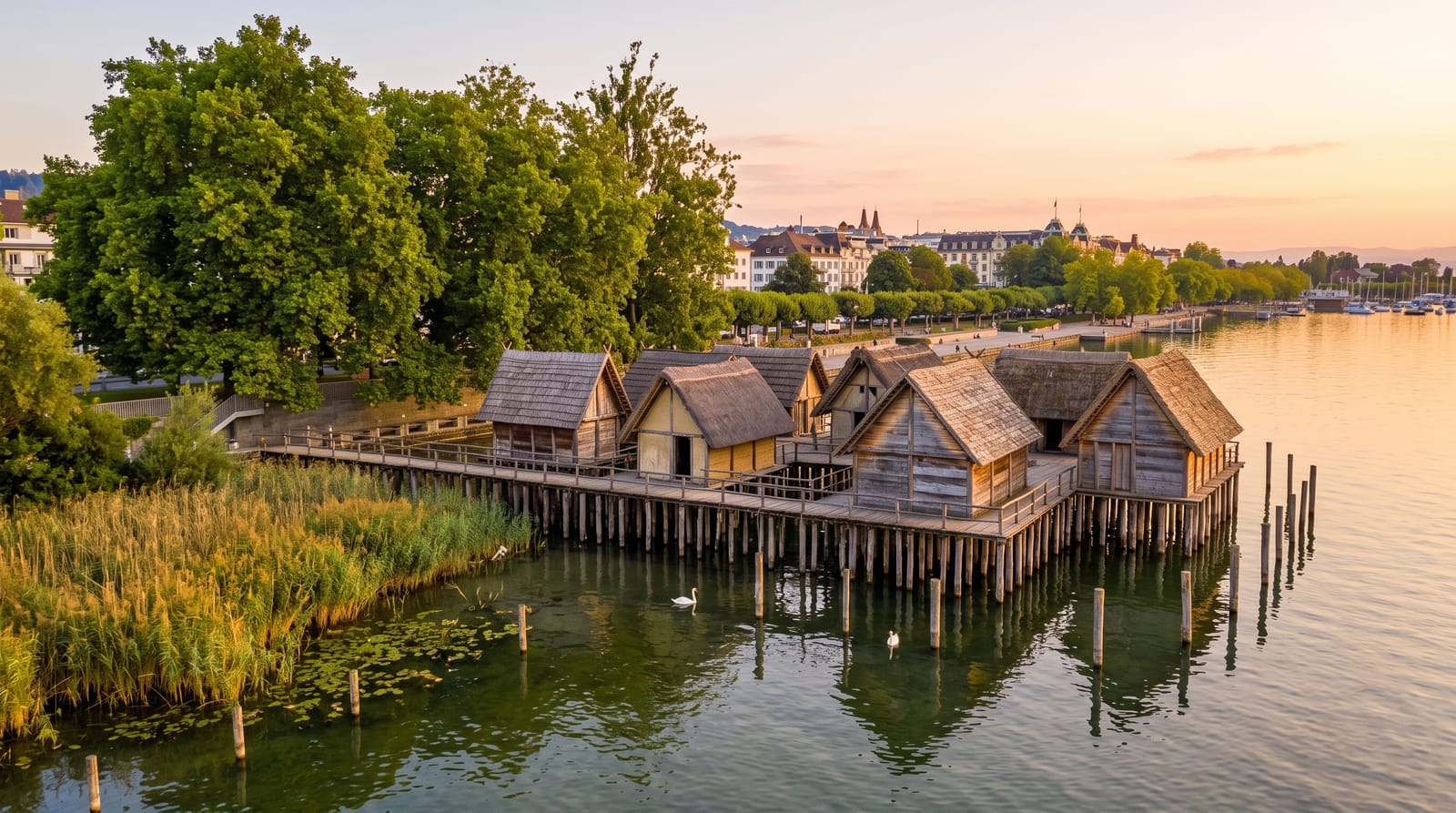
AI illustration
UNESCO World Heritage
For thousands of years people built villages on wooden posts along the edges of Alpine lakes and marshes, and the wet ground kept the timber, textiles, seeds and tools that dry soil would have destroyed. Swiss lakeshores hold a large share of the sites recognised together as a single World Heritage listing spread across several countries. Almost all of them are invisible: buried under silt, lying under a few metres of water, or fenced off in reed beds. What you can visit are the shoreline markers, the reconstructed houses built on posts at a handful of places, and the museum collections where the finds are kept wet and dark to stay intact.
Highlights
- Reconstructed pile houses - timber huts rebuilt on posts at the water's edge at several lakes.
- Shoreline markers - posts and panels showing where a settlement lies beneath the water or the path.
- Waterlogged finds - wooden wheels, woven cloth, dugout canoes and food remains kept in museums.
- The lake settings - reed beds and shallow bays that explain why people built here in the first place.
When to go
Summer, when lake levels are usually lower and the shoreline paths and reconstructions are open. Museums holding the finds are open year round and make a better wet-weather option. Low water in late summer sometimes exposes post stumps that are otherwise submerged, though there is no way to plan for it.
Before you go
This is the least visual World Heritage listing in the country. At most locations there is nothing to see but a lake, a panel and the knowledge that something lies below. The reconstructions are modern buildings, not remains. Anyone expecting ruins will be flatly disappointed; the interest is in the museums, and the sites make sense only after them.
Nearby
The lakes themselves, with shoreline walks and swimming spots, are the obvious pairing with any site visit.
What to pack for Prehistoric Pile Dwellings
Chosen from what this place is for. Tap a kit for the full checklist.
- Reef-safe sunscreen - High SPF that will not bleach the coral you are swimming over. Find on Amazon
- Quick-dry clothing - Board shorts or synthetics that shrug off spray and dry fast. Find on Amazon
- Comfortable walking shoes - Sightseeing means kilometres of pavement and cobbles daily. Find on Amazon
- Shelter suited to the place - Tent, tarp or hut booking - match it to the terrain and rules. Find on Amazon
Some links on this page are Amazon affiliate links - if you buy through them we may earn a small commission at no extra cost to you.
All packing kitsPlan your trip
Where to start if Prehistoric Pile Dwellings is going on the list.
Booking links on this page are affiliate links - if you book through them we may earn a small commission at no extra cost to you. It never changes what we write about a place.
Opening times, ticket prices and seasonal closures change - check the official source before you go: official site.