The Castles of Bellinzona
Three linked medieval fortresses guarding the valley floor of Ticino, joined by ramparts that once walled off the whole Alpine approach.
Updated 18 October 2026

AI illustration
UNESCO World Heritage
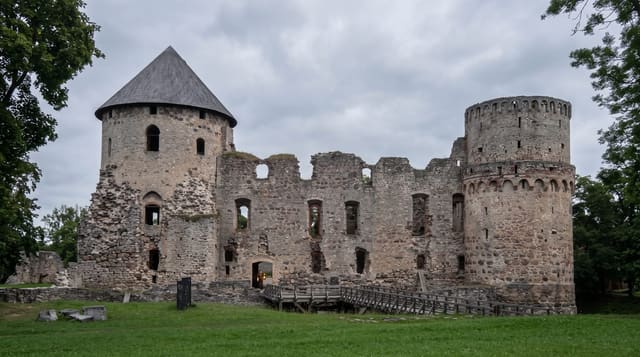
Bellinzona sits where the Ticino valley narrows to a bottleneck, and whoever held that gap controlled the route between Italy and the Alpine passes, which is why three castles rise here in a stepped chain up the hillside. Castelgrande stands on a rocky outcrop over the town, Montebello climbs above it, and Sasso Corbaro crowns the slope higher still, and from Castelgrande a great fortified wall, the Murata, once ran clear across the valley floor to block it entirely. Built and rebuilt through the Middle Ages, largely by the dukes of Milan before the Swiss took the valley, they form the most complete surviving example of late-medieval Alpine fortification, which earned them World Heritage listing. You can walk the ramparts, look down on terracotta roofs and vineyards, and feel the geography that made this small town matter so much.
History
Routes from the Nufenen, Gotthard, Lukmanier and San Bernardino passes meet here, and the area has been occupied since the early Neolithic; a Roman fort first rose on the Castelgrande rock late in the 1st century BC under Augustus and was rebuilt as a large castle in the 4th century to guard northern Italy, and in 475 its garrison defeated 900 Alemanni. Ostrogoths, Byzantines and, from 568-570, Lombards held it in turn, Gregory of Tours records that a Frankish invasion of 590 broke on its defences, and later Otto III, opening the Lukmanier and St Bernard passes, took the town from Milan. With its walls and three castles, Castelgrande, Montebello and Sasso Corbaro, it has been a World Heritage Site since 2000 (Wikipedia, Castles of Bellinzona).
What to look for
- Castelgrande - the lowest and largest castle on its rock above the old town.
- Montebello - the middle castle with its double moat and keep.
- Sasso Corbaro - the highest fortress, with the widest view down the valley.
- The Murata - the surviving stretch of wall that once sealed off the whole valley floor.
When to go
April to October is mildest for walking between the three; Ticino is the warmest corner of Switzerland and summer can be hot on the exposed ramparts. Spring brings blossom on the valley slopes and autumn the vineyard colour. The castles keep seasonal hours, shorter in winter.
Things to know
The three sit at different heights and visiting all of them means a real climb, or a bus and lift for the upper two; many people do Castelgrande and Montebello and skip Sasso Corbaro. The interiors are fairly sparse, with modest museums, so the draw is the architecture, the ramparts and the views rather than rich collections. Bellinzona is a working town, not a resort.
Nearby
Lake Maggiore and Locarno lie south; Lugano and the Ticino lakes are within an easy train ride.
Key facts
Source: Wikidata, item Q510279, read on 18 October 2026.
What to pack for The Castles of Bellinzona
Chosen from what this place is for. Tap a kit for the full checklist.
- Comfortable walking shoes - Sightseeing means kilometres of pavement and cobbles daily. Find on Amazon
- A slim anti-theft daypack - Zips that close properly; keep it in front in crowds and on transit. Find on Amazon
- A refillable water bottle - Many cities have public fountains; save money and plastic. Find on Amazon
- A light layer + compact umbrella - For museum air-con and a sudden shower. Find on Amazon
Some links on this page are Amazon affiliate links - if you buy through them we may earn a small commission at no extra cost to you.
All packing kitsPlan your trip
Where to start if The Castles of Bellinzona is going on the list.
Booking links on this page are affiliate links - if you book through them we may earn a small commission at no extra cost to you. It never changes what we write about a place.
Opening times, ticket prices and seasonal closures change - check the official source before you go: official site.