Kumana National Park
An east coast park of lagoons and mangrove swamp, the country's most important waterbird breeding ground.
Updated 16 October 2026
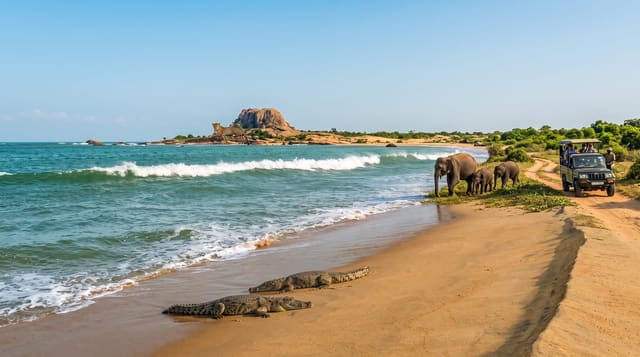
Kumana adjoins Yala on its eastern side and is centred on the Kumana villu, a mangrove swamp of some two hundred hectares fed by the Kumbukkan river, which is where the birds breed: pelicans, painted storks, spoonbills, herons and egrets nest here in large mixed colonies through the middle of the year. Elephants and leopards are present too, but the park is visited for the birds. It is far quieter than Yala next door.
Background
Set up on 20 January 1970 as Yala East National Park, Kumana took its current name in 2006. It lies 391 kilometres southeast of Colombo, covers 35,664 hectares and takes in the Kumana Bird Sanctuary, declared in 1938. The Kumana Wetland Cluster became a Ramsar site on 29 October 2010. Some 20 lagoons and tanks feed the birdlife, and the lagoons are less than 2 metres deep. The land rises from sea level to 90 metres. Records list 255 bird species, among them pintail snipes that fly 9000 kilometres to 11000 kilometres from Siberia, and an estimated 30-40 elephants roam the park. Rock inscriptions from the 2nd and 1st centuries BC have been found in the region.
Source: Wikipedia, "Kumana National Park"
What's there
- The breeding colonies - pelicans, storks and herons nesting in the mangrove swamp.
- The Kumana villu - the mangrove wetland at the heart of the park.
- The lagoons - a chain of water bodies along the coastal strip.
- The quiet - a fraction of the jeep traffic of neighbouring Yala.
When to go
April to July is the breeding season and the reason to come. The park closes for part of the year in some seasons. Early morning is best for activity.
What to expect
Outside the breeding months the park is much quieter and the colonies empty. The road down from Arugam Bay is rough. Facilities are minimal.
Nearby
Arugam Bay is north, and Yala is west.
Key facts
Source: Wikidata, item Q6443439, read on 18 October 2026.
What to pack for Kumana National Park
Chosen from what this place is for. Tap a kit for the full checklist.
- Broken-in walking shoes or boots - Grip and ankle support matter more than looks; never hike in brand-new boots. Find on Amazon
- Reef-safe sunscreen - High SPF that will not bleach the coral you are swimming over. Find on Amazon
- Binoculars - The single best wildlife tool - even a compact pair transforms a sighting. Find on Amazon
- Layers + a waterproof shell - Mountain weather turns fast; a packable rain jacket saves the day. Find on Amazon
Some links on this page are Amazon affiliate links - if you buy through them we may earn a small commission at no extra cost to you.
All packing kitsPlan your trip
Where to start if Kumana National Park is going on the list.
Booking links on this page are affiliate links - if you book through them we may earn a small commission at no extra cost to you. It never changes what we write about a place.
Opening times, ticket prices and seasonal closures change - check the official source before you go: official site.