Xativa Castle
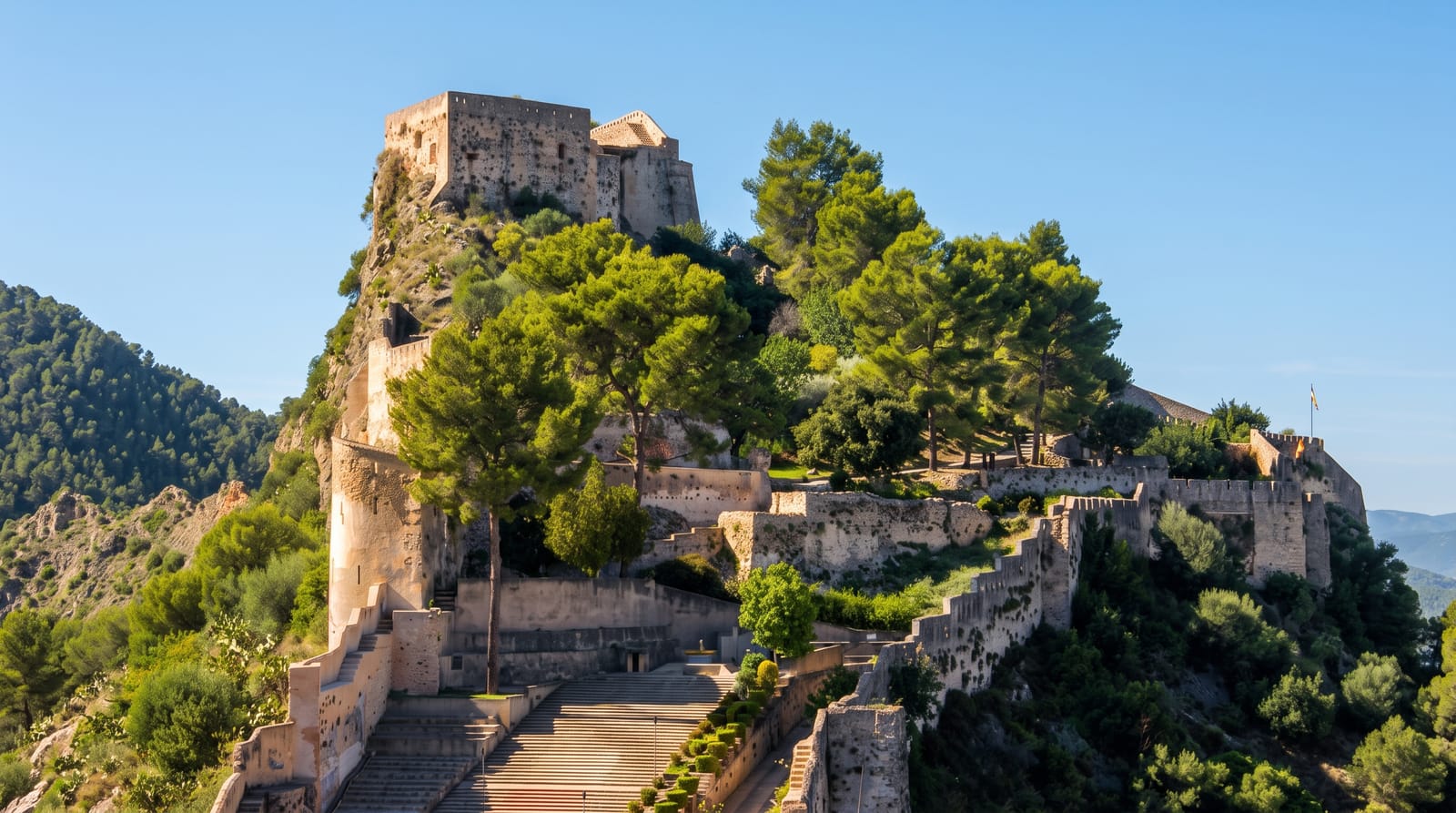
A double castle strung along a ridge above the town that produced two Borgia popes, with thirty towers between the two halves.
Updated 4 September 2026
AI illustration
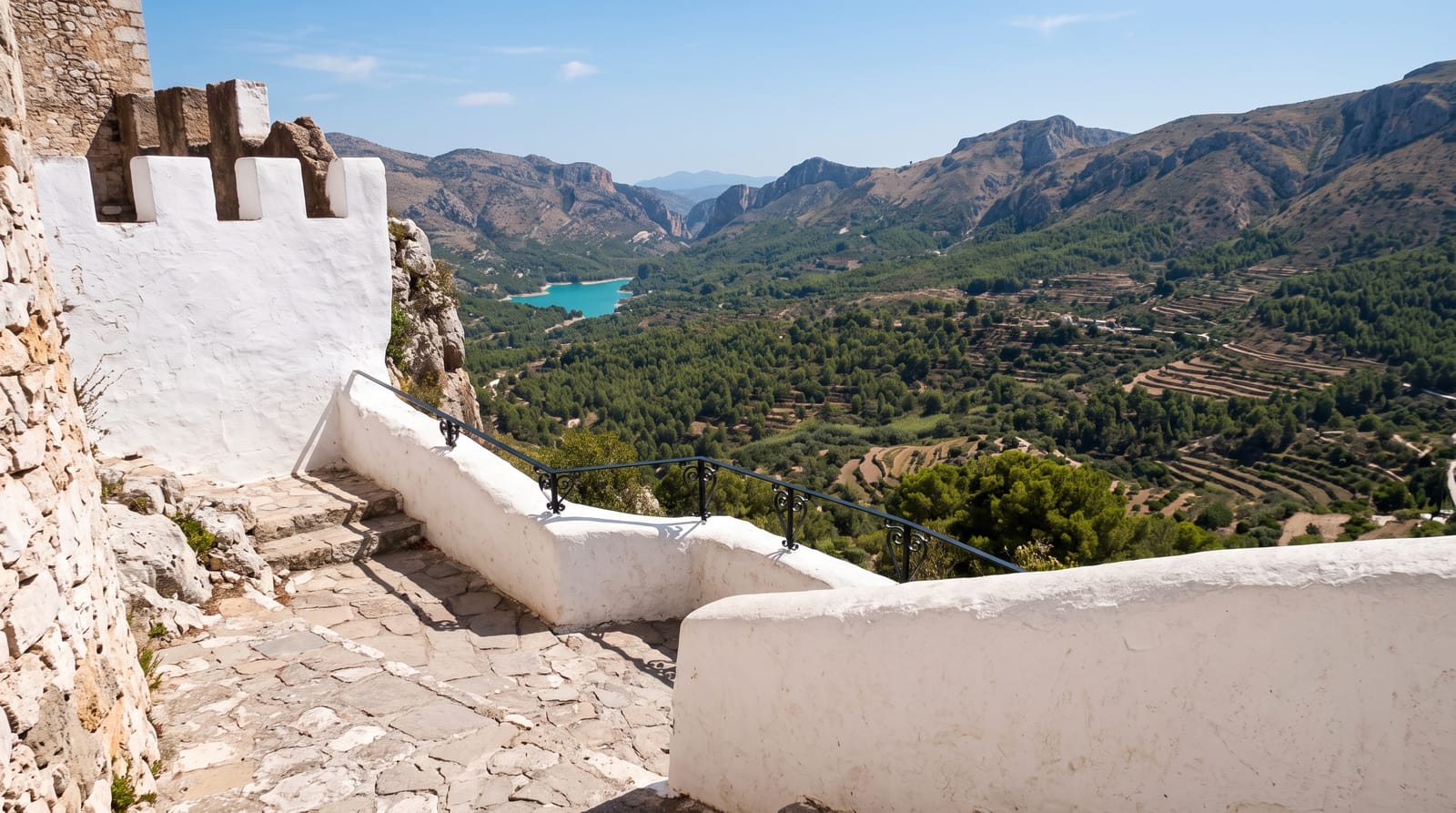
Xativa castle runs along a ridge in two parts: the Castell Menor at the eastern end, of Iberian and Roman origin, and the Castell Major to the west, largely Muslim and later Christian work, with around thirty towers and gates distributed along the connecting walls. It served as a state prison, holding among others the Count of Urgell, a claimant to the Aragonese throne, who died in a cell here. The town below was the birthplace of Alfons de Borja and Roderic de Borja, who became popes Calixtus III and Alexander VI. Xativa also made paper, with one of the earliest mills in Europe operating here under Muslim rule. Philip V burned the town in 1707 during the War of the Spanish Succession.
What's there
- The two castles - Menor and Major linked along the ridge.
- The thirty towers - gates and bastions distributed along the walls.
- The prison cells - chambers where noble prisoners were held.
- The town view - Xativa and the plain from the ramparts.
When to go
March to June and September to November; the ridge is exposed and the Valencian interior is very hot in summer. A shuttle runs from the town for those avoiding the climb, and the castle closes on Mondays.
Good to know
The climb from town is steep and long, around forty minutes, with limited shade. The site is large and covering both castles takes time. Parts are ruinous with restricted access.
Nearby
Xativa's old town and museum are below; Valencia lies sixty kilometres north.
Key facts
Source: Wikidata, item Q2455157, read on 18 October 2026.
What to pack for Xativa Castle
Chosen from what this place is for. Tap a kit for the full checklist.
- Comfortable walking shoes - Sightseeing means kilometres of pavement and cobbles daily. Find on Amazon
- A slim anti-theft daypack - Zips that close properly; keep it in front in crowds and on transit. Find on Amazon
- A refillable water bottle - Many cities have public fountains; save money and plastic. Find on Amazon
- A light layer + compact umbrella - For museum air-con and a sudden shower. Find on Amazon
Some links on this page are Amazon affiliate links - if you buy through them we may earn a small commission at no extra cost to you.
All packing kitsPlan your trip
Where to start if Xativa Castle is going on the list.
Booking links on this page are affiliate links - if you book through them we may earn a small commission at no extra cost to you. It never changes what we write about a place.
Opening times, ticket prices and seasonal closures change - check the official source before you go: official site.