Peniscola
A walled old town on a rock joined to the shore by a sand bar, crowned by a Templar castle that housed an antipope.
Updated 20 October 2026
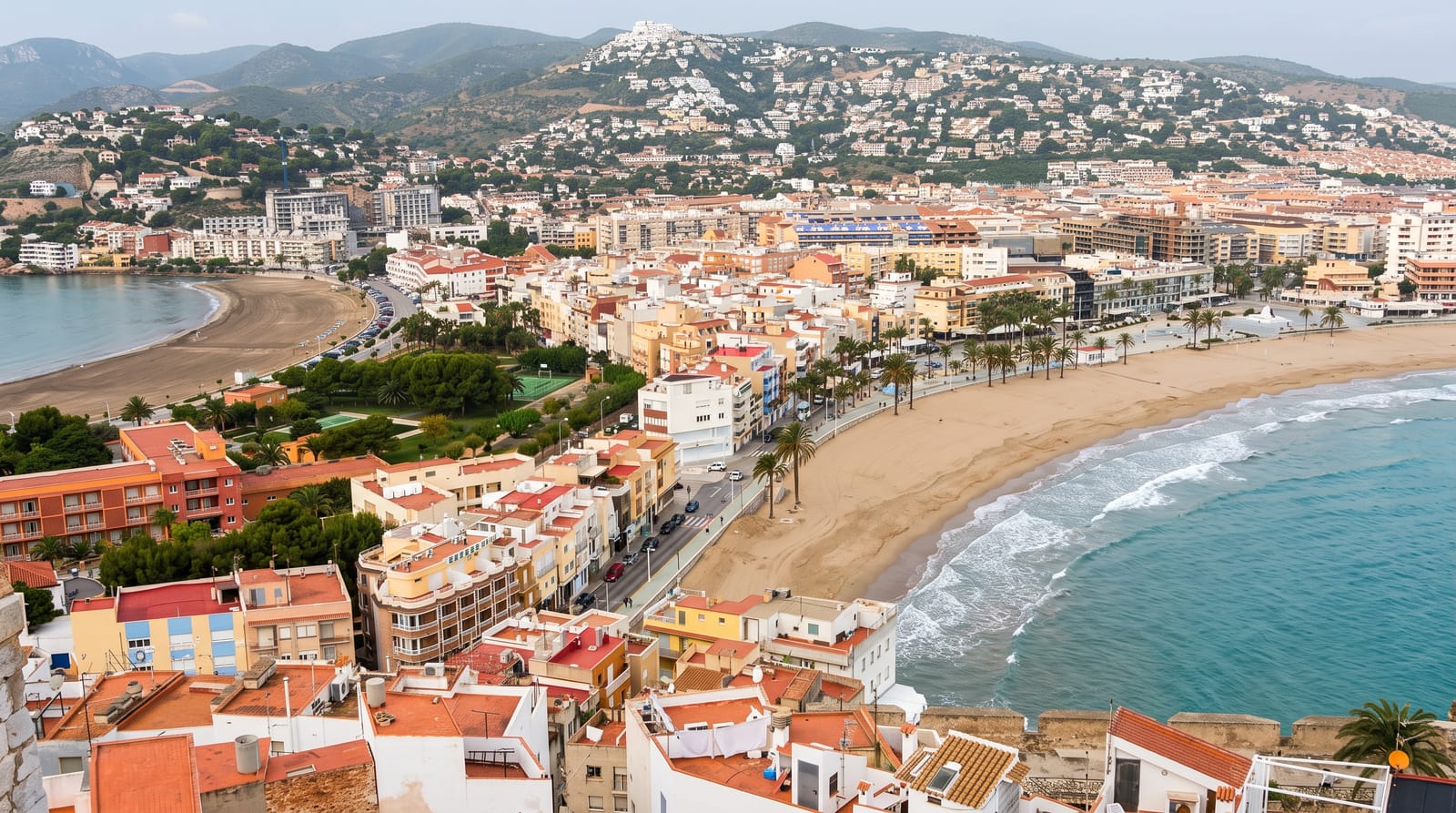
AI illustration
Peniscola occupies a rock about sixty-seven metres high joined to the mainland by a narrow isthmus, which for most of its history made it effectively an island fortress. The Knights Templar built the castle between 1294 and 1307 on Muslim foundations, and it became the residence of Pedro de Luna, Benedict XIII, the Avignon claimant to the papacy who withdrew here after the Council of Constance deposed him in 1417 and continued to insist he was pope until his death in 1423. The old town below the castle is a compact grid of whitewashed lanes inside sixteenth-century walls, with beaches on both sides of the isthmus. It has been used as a film location, including for El Cid and Game of Thrones.
The main sights
- The Templar castle - a fortress on the rock with the papal chambers.
- The walled old town - whitewashed lanes inside sixteenth-century walls.
- The isthmus beaches - sand on both sides of the connecting bar.
- The sea walls - fortifications dropping straight to the water.
When to go
April to June and September to October for the town without peak crowds; July and August fill it completely with Spanish holidaymakers. Winter is quiet with many businesses closed.
Practical notes
Summer crowding is heavy and the old town's narrow lanes become slow-moving. Parking is outside the walls and expensive in season. The modern resort development along the beach is extensive and unattractive.
Nearby
Morella lies inland in the mountains; the Ebro delta is north across the provincial border.
Key facts
Source: Wikidata, item Q845424, read on 18 October 2026.
What to pack for Peniscola
Chosen from what this place is for. Tap a kit for the full checklist.
- Reef-safe sunscreen - High SPF that will not bleach the coral you are swimming over. Find on Amazon
- Comfortable walking shoes - Sightseeing means kilometres of pavement and cobbles daily. Find on Amazon
- Quick-dry towel - A microfibre towel packs small and dries in minutes. Find on Amazon
- A slim anti-theft daypack - Zips that close properly; keep it in front in crowds and on transit. Find on Amazon
Some links on this page are Amazon affiliate links - if you buy through them we may earn a small commission at no extra cost to you.
All packing kitsPlan your trip
Where to start if Peniscola is going on the list.
Booking links on this page are affiliate links - if you book through them we may earn a small commission at no extra cost to you. It never changes what we write about a place.
Opening times, ticket prices and seasonal closures change - check the official source before you go: official site.