Aldeburgh
A Suffolk shingle town that Benjamin Britten made a centre of music, with fish sold off the beach and a giant steel scallop on the shore.
Updated 20 October 2026
AI illustration
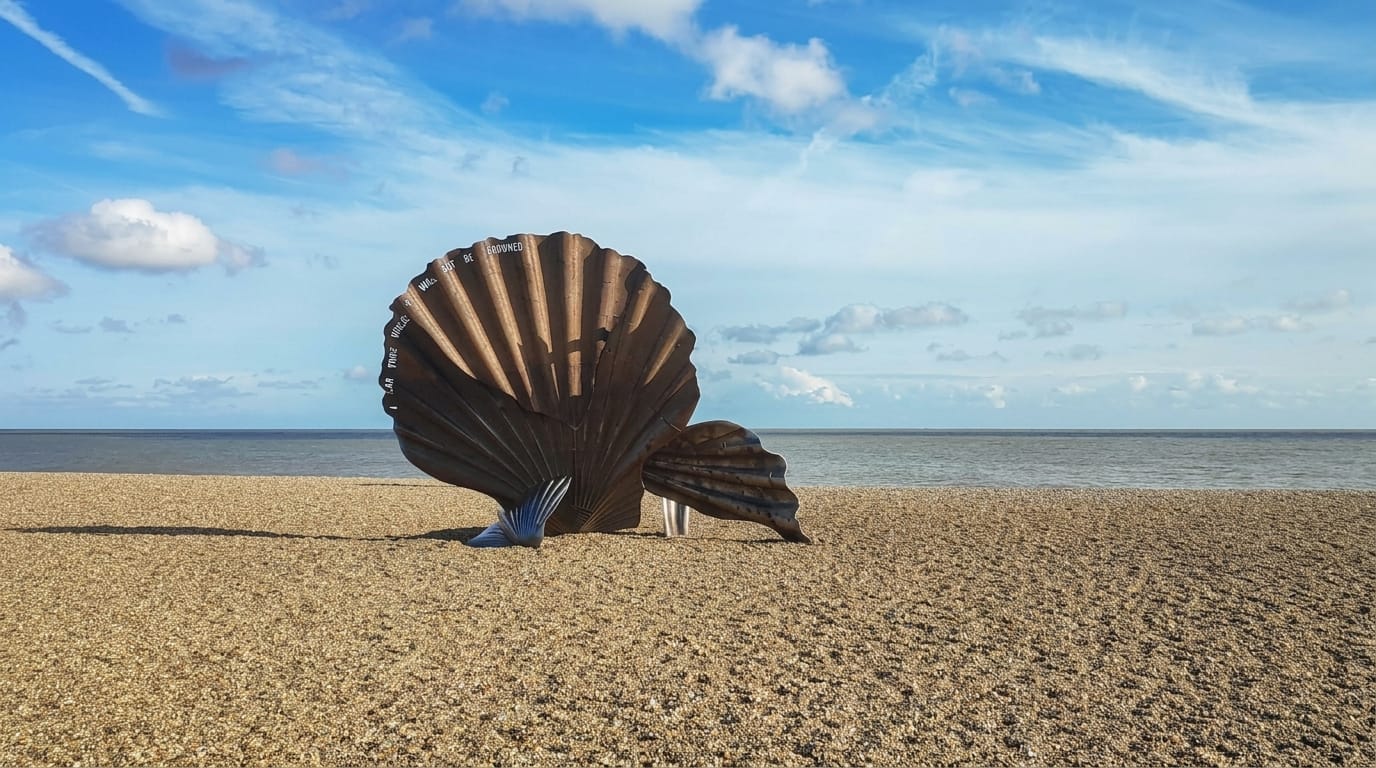
Aldeburgh was a Tudor port until the Alde silted and the sea took most of the old town, which is why the sixteenth-century Moot Hall, once in the middle of the settlement, now stands almost on the beach. Benjamin Britten, born up the coast at Lowestoft, settled here, founding the Aldeburgh Festival in 1948 and later converting the Snape Maltings, a Victorian barley works up the river, into a concert hall that opened in 1967; it remains one of the better-regarded halls in the country and the festival still runs each June. Fishermen sell the day's catch from black tarred huts on the shingle. Maggi Hambling's Scallop, a four-metre steel shell on the beach installed in 2003 and inscribed with a line from Britten's Peter Grimes, has been repeatedly vandalised and still divides opinion.
The main sights
- Snape Maltings - a Victorian malthouse turned concert hall, opened in 1967.
- The Moot Hall - a Tudor building now at the water's edge as the town eroded.
- The fish huts - catch sold direct off the shingle beach.
- The Scallop - Hambling's steel shell, admired and vandalised in turn.
When to go
June for the Aldeburgh Festival, when accommodation books far ahead; May to September otherwise. Snape runs concerts year-round and the reed beds around it are worth the walk in any season.
Practical notes
The beach is steep shingle with no sand and the swimming is cold with a strong undertow. The town is small and expensive with heavy second-home ownership. Festival periods fill every bed for miles.
Nearby
Snape is up the river; Orford and Thorpeness lie either side along the coast.
Key facts
Source: Wikidata, item Q2077402, read on 18 October 2026.
What to pack for Aldeburgh
Chosen from what this place is for. Tap a kit for the full checklist.
- Reef-safe sunscreen - High SPF that will not bleach the coral you are swimming over. Find on Amazon
- Comfortable walking shoes - Sightseeing means kilometres of pavement and cobbles daily. Find on Amazon
- Shelter suited to the place - Tent, tarp or hut booking - match it to the terrain and rules. Find on Amazon
- Quick-dry towel - A microfibre towel packs small and dries in minutes. Find on Amazon
Some links on this page are Amazon affiliate links - if you buy through them we may earn a small commission at no extra cost to you.
All packing kitsPlan your trip
Where to start if Aldeburgh is going on the list.
Booking links on this page are affiliate links - if you book through them we may earn a small commission at no extra cost to you. It never changes what we write about a place.
Opening times, ticket prices and seasonal closures change - check the official source before you go: official site.