La Geria
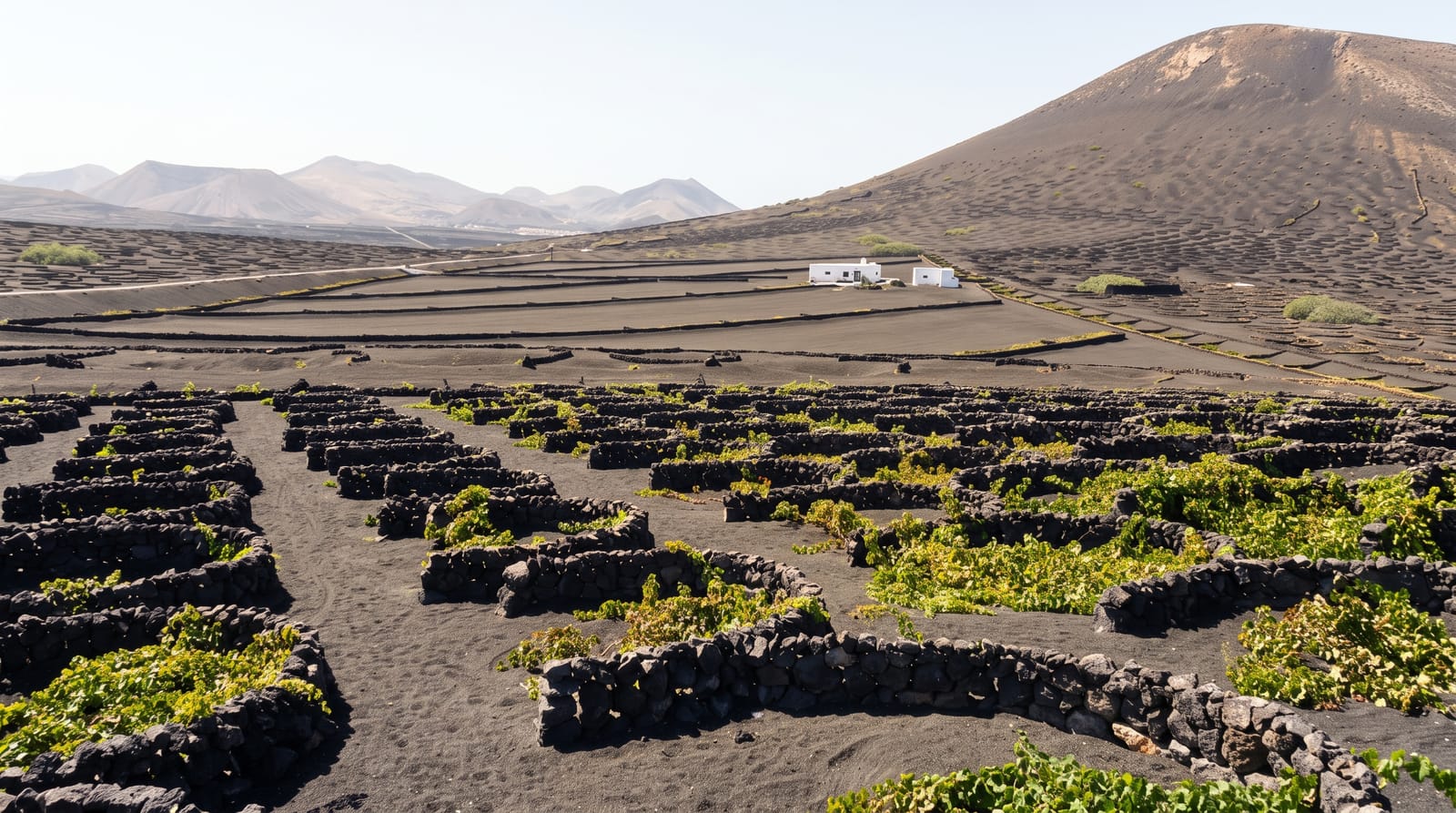
Vines grown singly in hollows dug into black volcanic ash on Lanzarote, each sheltered by a low crescent wall.
Updated 20 October 2026
AI illustration
The eruptions of 1730 to 1736 covered a quarter of Lanzarote with lava and spread lapilli, black volcanic gravel, far beyond it, and farmers found that it worked as a mulch: it absorbs the little rain and the night dew and releases it to the roots while preventing evaporation. In La Geria they dug hollows down through the ash to the soil beneath, planted a single vine in each, and built a low crescent wall of lava blocks on the windward side, producing a landscape of thousands of black craters each with one vine, worked entirely by hand since no machine can enter. The grape is mainly Malvasia Volcanica, making dry and sweet whites. Several bodegas along the road receive visitors, and the harvest is in August, unusually early.
What you'll find
- The dug hollows - thousands of pits in black ash, one vine in each.
- The crescent walls - low lava windbreaks around every plant.
- The bodegas - wineries along the road offering tastings.
- The August harvest - picking by hand, months earlier than mainland Spain.
When to go
Year-round for the landscape, which is striking in any season; August for the harvest. The road through La Geria is the standard route and can be driven in an hour with stops.
Practical notes
Yields are tiny and the wine is expensive for what it is, reflecting the hand labour. Tastings need a driver who does not drink. The vineyards are private and walking among them is not permitted.
Nearby
Timanfaya national park lies west; Yaiza and the southern coast are south.
What to pack for La Geria
Chosen from what this place is for. Tap a kit for the full checklist.
- A reusable bag or container - For market produce and cutting down on packaging. Find on Amazon
- Wet wipes + hand sanitiser - Street food and washbasins do not always go together. Find on Amazon
Some links on this page are Amazon affiliate links - if you buy through them we may earn a small commission at no extra cost to you.
All packing kitsPlan your trip
Where to start if La Geria is going on the list.
Booking links on this page are affiliate links - if you book through them we may earn a small commission at no extra cost to you. It never changes what we write about a place.
Opening times, ticket prices and seasonal closures change - check the official source before you go: official site.