La Garrotxa Volcanic Zone
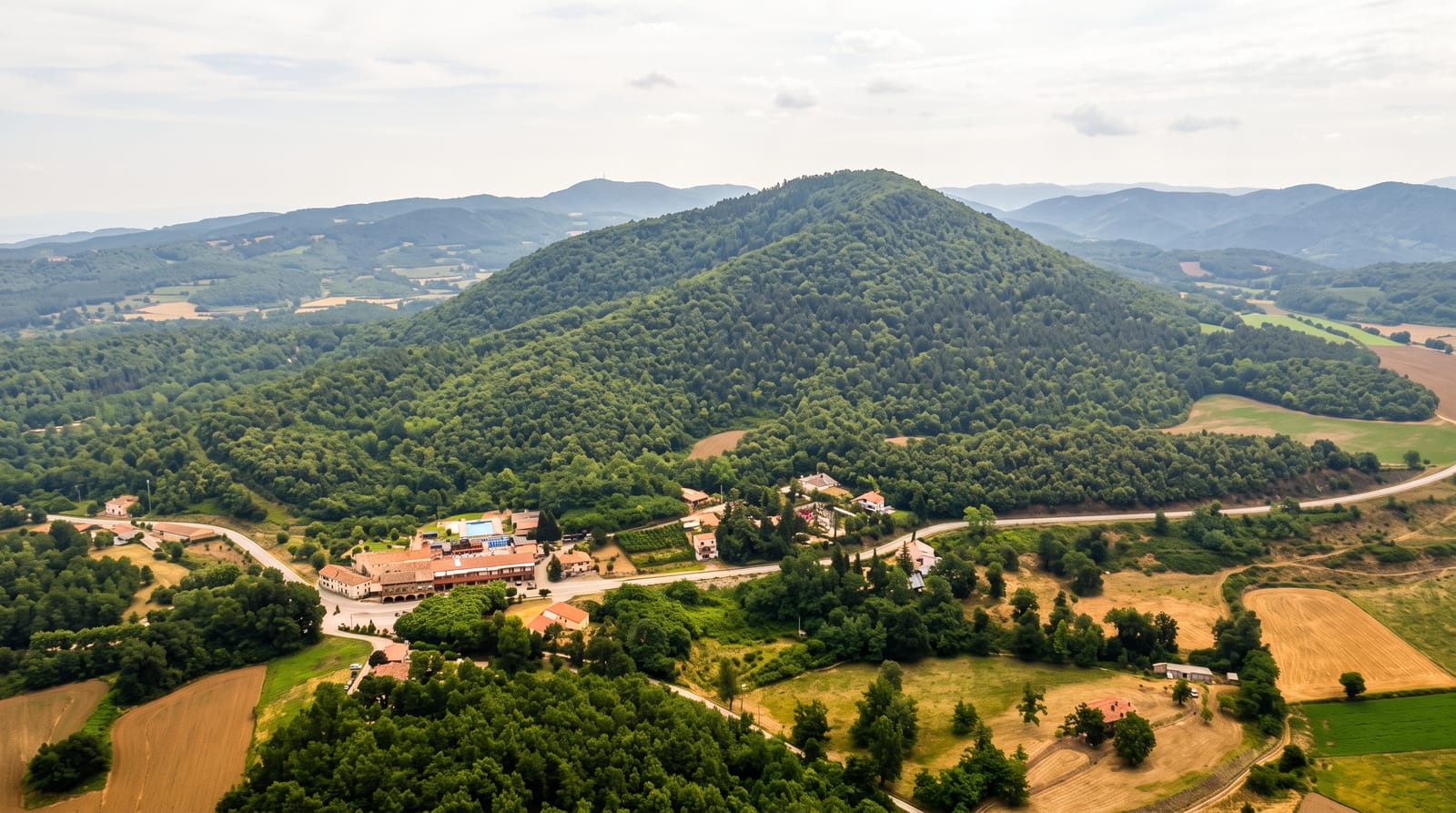
Forty dormant volcanic cones in a green Catalan landscape, with a beech forest growing on a lava flow.
Updated 21 October 2026
AI illustration
The Garrotxa volcanic field holds around forty cones and over twenty lava flows, the youngest erupting some eleven thousand years ago, in a landscape that is otherwise wet, green and farmed, so the volcanoes appear as wooded hills rather than bare cones. Santa Margarida is the most striking, a crater about 350 metres across and 79 deep with a Romanesque chapel standing in the middle of the grassy floor; Croscat, at 160 metres high the largest volcanic cone in the Iberian Peninsula, was quarried for volcanic gravel from the 1960s until the early 1990s, which left one side cut away and the internal structure exposed. La Fageda d'en Jorda is a beech forest growing directly on a lava flow, producing a landscape of trees on hummocky black ground that Joan Maragall wrote a poem about. Santa Pau is a medieval walled village within the park, which was first protected in 1982 and became a natural park in 1985.
What's there
- Santa Margarida crater - a grassy crater floor with a chapel at its centre.
- Croscat - a cone with one side quarried away, showing its structure.
- La Fageda d'en Jorda - beech forest growing on a lava flow.
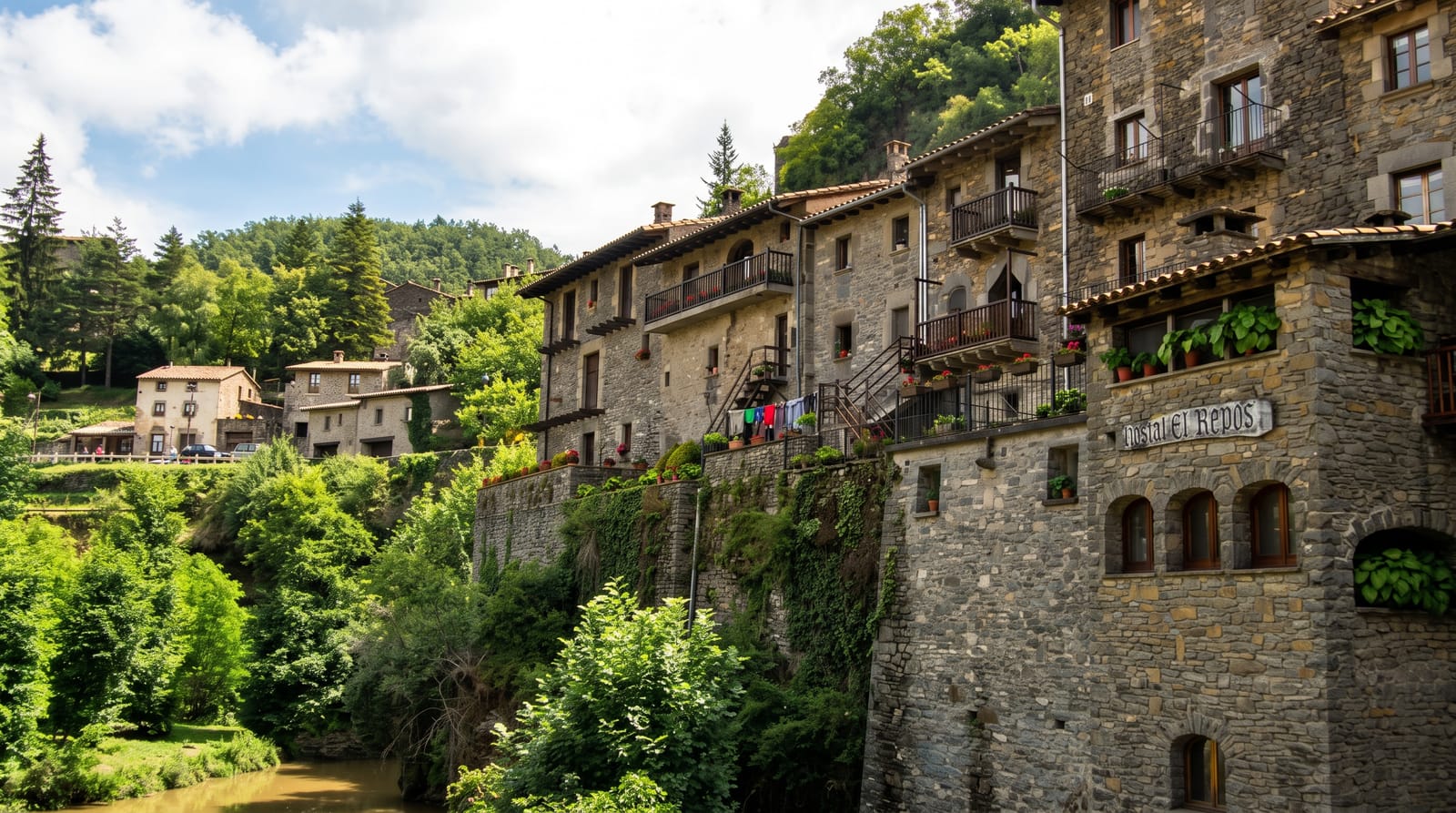
- Santa Pau - a walled medieval village inside the park.
When to go
April to June for green and flowers, October to November for beech colour in the Fageda, which is the most photographed season. Summer is warm and busy, and winter wet.
Things to know
Parking at the main trailheads is charged and fills at weekends and during autumn colour. The volcanoes are wooded and read as hills rather than obvious craters. The park is farmed and inhabited, not wilderness.
Nearby
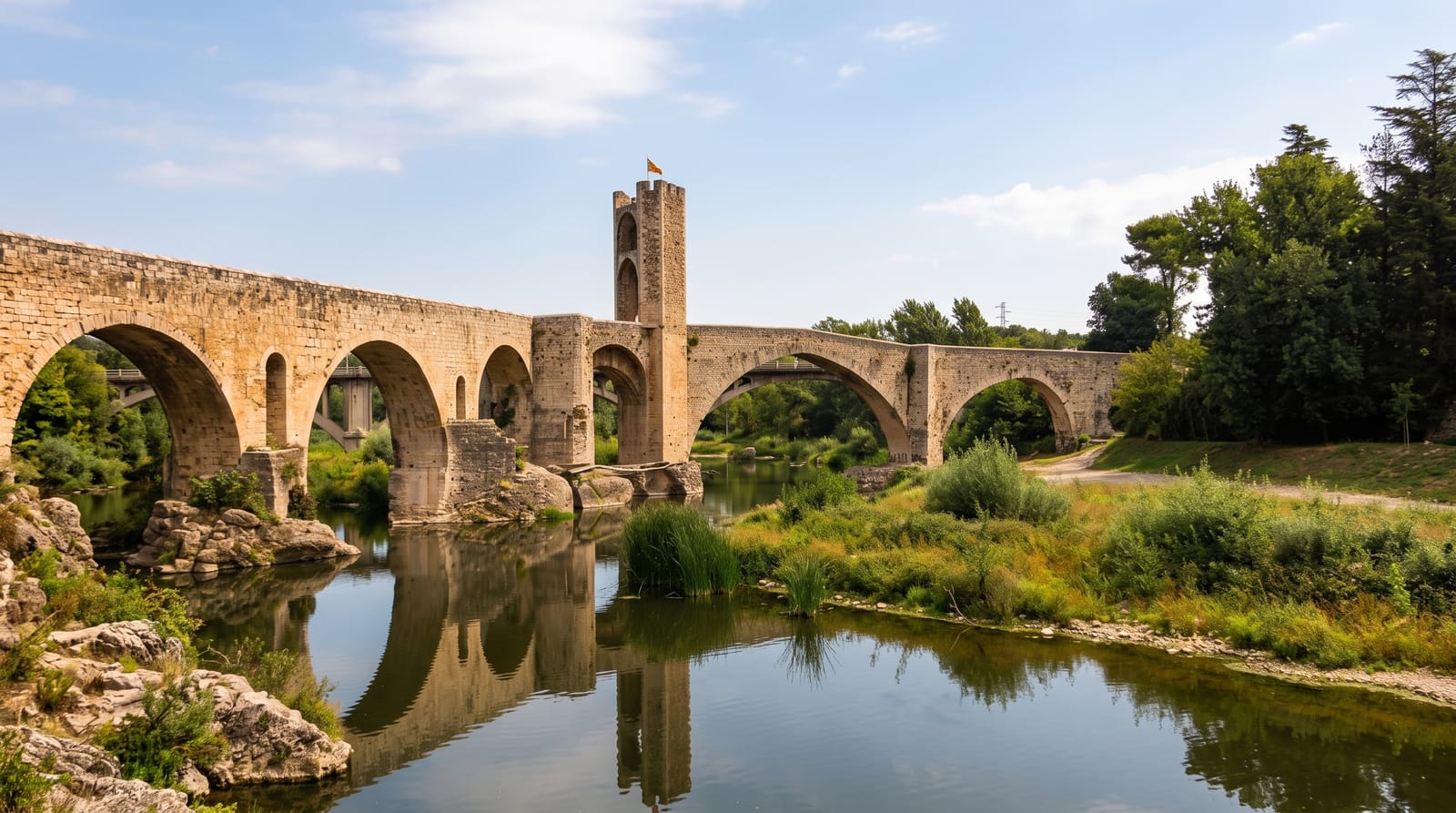
Olot and Santa Pau are in the park; Besalu and Girona lie southeast.
Key facts
Source: Wikidata, item Q1971559, read on 18 October 2026.
What to pack for La Garrotxa Volcanic Zone
Chosen from what this place is for. Tap a kit for the full checklist.
- Broken-in walking shoes or boots - Grip and ankle support matter more than looks; never hike in brand-new boots. Find on Amazon
- Layers + a waterproof shell - Mountain weather turns fast; a packable rain jacket saves the day. Find on Amazon
- Daypack with rain cover - 20-30 litres holds water, snacks, layers and a first-aid kit. Find on Amazon
- Offline maps + a power bank - Download the trail before you lose signal; carry backup charge. Find on Amazon
Some links on this page are Amazon affiliate links - if you buy through them we may earn a small commission at no extra cost to you.
All packing kitsPlan your trip
Where to start if La Garrotxa Volcanic Zone is going on the list.
Booking links on this page are affiliate links - if you book through them we may earn a small commission at no extra cost to you. It never changes what we write about a place.
Opening times, ticket prices and seasonal closures change - check the official source before you go: official site.