Es Trenc
Two and a half kilometres of undeveloped white sand and turquoise shallows in southern Mallorca, backed by dunes and salt pans.
Updated 21 October 2026

AI illustration
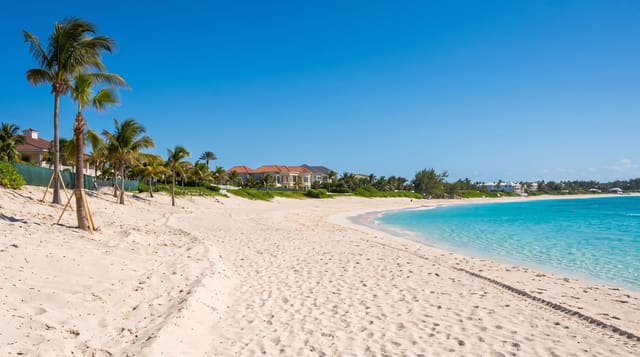
Es Trenc is the longest stretch of undeveloped beach left on Mallorca, about two and a half kilometres of fine white sand backed by dunes, pine and the Salobrar de Campos salt pans, with water that shelves very gradually and takes an intense turquoise. It was made a natural park in 2017. Nothing is built on it beyond a few kiosks; access is on foot from car parks behind the dunes, which are charged and fill early in summer. The salt pans behind still produce salt, including fleur de sel, and hold flamingos and waders. Part of the beach has long been used by naturists. Wind from the south makes it choppy on some days.
Highlights
- The white sand - two and a half kilometres with no development behind.
- The turquoise shallows - water shelving very gradually from the shore.
- The dune belt - protected sand and pine behind the beach.
- The salt pans - working salinas with flamingos and waders inland.
When to go
May, June, September and October for space and warm water; July and August fill the car parks by mid-morning and the beach becomes crowded despite its length. Winter is quiet and good for walking.
Before you go
Parking is charged, limited and fills early, with a walk of several hundred metres to the sand. There are no facilities beyond a couple of kiosks and no shade. Dunes are fenced and must not be crossed outside marked paths.
Nearby
The Salobrar salt pans lie behind; Colonia de Sant Jordi and Ses Salines are east.
Key facts
Source: Wikidata, item Q11919677, read on 18 October 2026.
What to pack for Es Trenc
Chosen from what this place is for. Tap a kit for the full checklist.
- Reef-safe sunscreen - High SPF that will not bleach the coral you are swimming over. Find on Amazon
- Loose, light, long clothing - Covering up beats bare skin in the desert - and locals dress this way for a reason. Find on Amazon
- Quick-dry towel - A microfibre towel packs small and dries in minutes. Find on Amazon
- A wide-brim hat + sunglasses - Shade for your face and eyes where there is none overhead. Find on Amazon
Some links on this page are Amazon affiliate links - if you buy through them we may earn a small commission at no extra cost to you.
All packing kitsPlan your trip
Where to start if Es Trenc is going on the list.
Booking links on this page are affiliate links - if you book through them we may earn a small commission at no extra cost to you. It never changes what we write about a place.
Opening times, ticket prices and seasonal closures change - check the official source before you go: official site.