Cordoba Roman Bridge
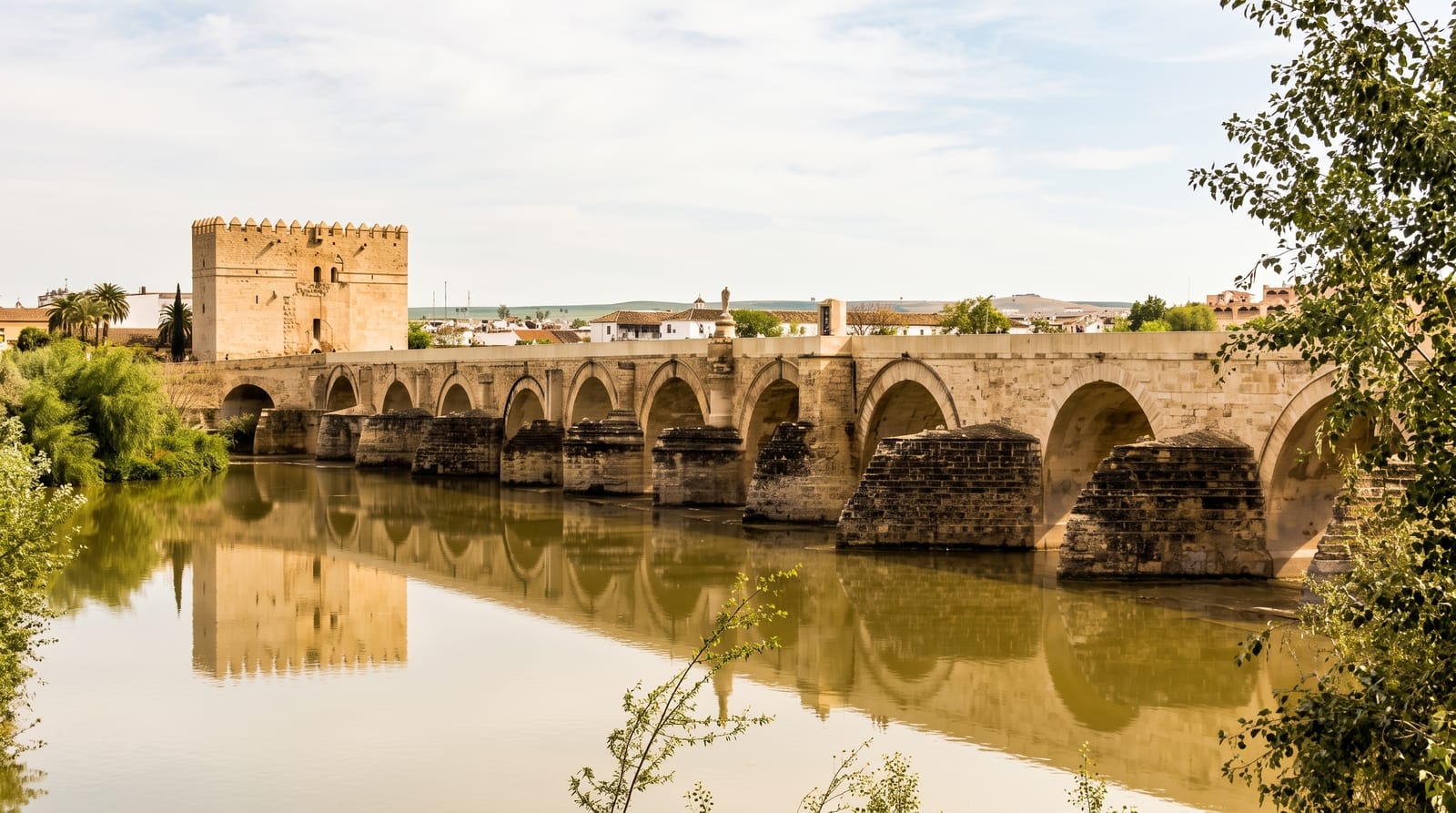
A sixteen-arched bridge over the Guadalquivir, Roman in origin and rebuilt many times, leading to the Mezquita.
Updated 21 October 2026
AI illustration
UNESCO World Heritage
The bridge was built in the first century BC on the Via Augusta and has been rebuilt so often, by Visigoths, Umayyads, Almohads and later Spanish administrations, that little Roman fabric survives above the foundations; sixteen arches carry it about 250 metres across the Guadalquivir with the Mezquita on one bank and the Torre de la Calahorra, a Moorish gate tower now holding a museum of Andalusi culture, on the other. A statue of the Archangel Raphael, the city's protector, stands mid-span with candles left at its base. It was pedestrianised in 2004, and the view back toward the mosque-cathedral at sunset, with the water mills and the Albolafia wheel below, is Cordoba's standard image.
History
The Romans built the bridge in the early 1st century BC, perhaps replacing a wooden one, and the Via Augusta from Rome to Cádiz probably crossed it. Early in the Islamic period the Umayyad governor Al-Samh ibn Malik al-Khawlani had it rebuilt on the Roman ruins, most of today's structure dates from that 8th-century rebuilding, and it has sixteen arches, one fewer than at first, over some 247 metres; the Calahorra Tower and the Puerta del Puente were built at its ends in the Middle Ages, and a statue of Saint Raphael by Bernabé Gómez del Río was set in the middle in the 17th century. Only the 14th and 15th arches are original; for two thousand years it was the city's only bridge, it was pedestrianised on 1 May 2004, and its restoration of 2006-2008 was inaugurated on 9 January 2008 (Wikipedia, Roman bridge of Córdoba).
What to look for
- The sixteen arches - a much-rebuilt Roman bridge across the river.
- The Calahorra tower - a Moorish gate tower with a museum inside.
- The Archangel statue - a mid-span figure with candles at its foot.
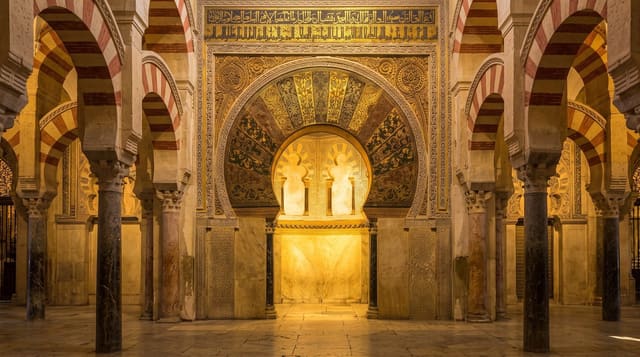
- The Mezquita view - the mosque-cathedral seen across the water.
When to go
Spring and autumn for comfort; May brings the patio festival and fills the city. Sunset and the hour after are when the bridge is busiest and the light best. Cordoba's summer heat is among the most extreme in Europe.
What to expect
Almost nothing visible is Roman despite the name. The bridge is crowded from late afternoon with photographers and tour groups. There is no shade on the crossing.
Nearby
The Mezquita is at the northern end; the Juderia and the Alcazar lie beyond it.
Key facts
Source: Wikidata, item Q97625652, read on 18 October 2026.
What to pack for Cordoba Roman Bridge
Chosen from what this place is for. Tap a kit for the full checklist.
- Comfortable walking shoes - Sightseeing means kilometres of pavement and cobbles daily. Find on Amazon
- Modest clothing - Shoulders and knees covered - the single most common requirement. Find on Amazon
- A slim anti-theft daypack - Zips that close properly; keep it in front in crowds and on transit. Find on Amazon
- A scarf or shawl - To cover the head or shoulders on entry; women especially at mosques. Find on Amazon
Some links on this page are Amazon affiliate links - if you buy through them we may earn a small commission at no extra cost to you.
All packing kitsPlan your trip
Where to start if Cordoba Roman Bridge is going on the list.
Booking links on this page are affiliate links - if you book through them we may earn a small commission at no extra cost to you. It never changes what we write about a place.
Opening times, ticket prices and seasonal closures change - check the official source before you go: official site.