Gyochon Traditional Village
The Gyeongju quarter of the Choi family, twelve generations rich, with a house rule about how much land to own.
Updated 25 August 2026
Gyochon sits beside the Gyeongju city wall ground, on land that held the Silla national academy - hence the name - and its interest is the Choi family, who were wealthy here for some twelve generations and are remembered for the rules they set themselves: do not sit for the highest civil examinations, do not accumulate more than ten thousand seok of rice a year, do not buy land in a famine year, and see that nobody within a hundred li goes hungry. Whether every clause is documented or partly legend, the house is real and can be visited, and the family's descendants gave much of the fortune away in the twentieth century to found a university. Alongside stands the brewery for Gyeongju beopju, a clear rice liquor made by the family and designated an intangible heritage. The quarter has been restored with hanok stays, craft workshops and the reconstructed Woljeonggyo bridge at its edge.
Highlights
- The Choi family house - the compound and its granary.
- The house rules - displayed and explained on site.
- The beopju brewery - the family liquor, still made.
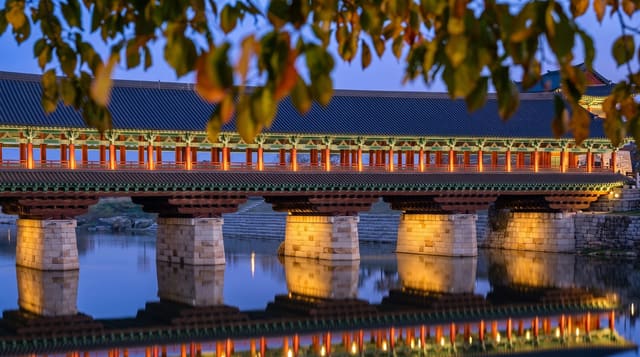
- Woljeonggyo bridge - the reconstructed covered bridge nearby.
When to go
April to June and September to November. Mornings are quiet; the quarter fills with hanbok-rental groups in the afternoon. Woljeonggyo is lit at night.
Good to know
Much of the quarter is recent restoration and it is heavily commercialised - cafes, rentals, souvenir workshops. The Choi house itself is small. Free, so easy to fit in.
Nearby
Woljeonggyo, Cheomseongdae and the Gyeongju National Museum are all within walking distance.
Key facts
Source: Wikidata, item Q56826922, read on 18 October 2026.
What to pack for Gyochon Traditional Village
Chosen from what this place is for. Tap a kit for the full checklist.
- Comfortable walking shoes - Sightseeing means kilometres of pavement and cobbles daily. Find on Amazon
- A slim anti-theft daypack - Zips that close properly; keep it in front in crowds and on transit. Find on Amazon
- A refillable water bottle - Many cities have public fountains; save money and plastic. Find on Amazon
- A light layer + compact umbrella - For museum air-con and a sudden shower. Find on Amazon
Some links on this page are Amazon affiliate links - if you buy through them we may earn a small commission at no extra cost to you.
All packing kitsPlan your trip
Where to start if Gyochon Traditional Village is going on the list.
Booking links on this page are affiliate links - if you book through them we may earn a small commission at no extra cost to you. It never changes what we write about a place.
Opening times, ticket prices and seasonal closures change - check the official source before you go: official site.