Goryeo Palace Site
The hilltop ground on Ganghwa where the Goryeo court moved its capital for four decades in the thirteenth century.
Updated 25 August 2026
In 1232 the Goryeo court left Gaegyeong and moved to Ganghwa, and for thirty-eight years the island was the capital of Korea - the choice was geographic, since the channel between the island and the mainland has ferocious tidal currents that made it defensible. The palace was built on a slope in what is now Ganghwa town, laid out to echo the old capital, and it was dismantled when the court returned in 1270. What survives is the site rather than the buildings: terraced ground, foundation stones, and a set of later Joseon structures put up on the same platform - Oegyujanggak, a reconstruction of the royal library annexe whose books were taken to France in the nineteenth century and returned on long-term loan in 2011, along with a magistrate's hall and a bell pavilion. It takes an hour and it is best read as ground rather than architecture. The period is also when the first Tripitaka woodblocks were carved on this island.
The main sights
- The terraced platform - the palace ground and foundation stones.
- Oegyujanggak - the reconstructed royal library annexe.
- The Joseon buildings - the magistrate's hall and bell pavilion.
- The town view - Ganghwa from the slope.
When to go
April to June and October to November. An hour covers it. Closed on Mondays. It pairs with the island's other historic sites.
Before you go
Nothing of the Goryeo palace stands - this is terraced ground with later buildings on it, and it needs some reading to mean much. Interpretation on site is thin.
Nearby
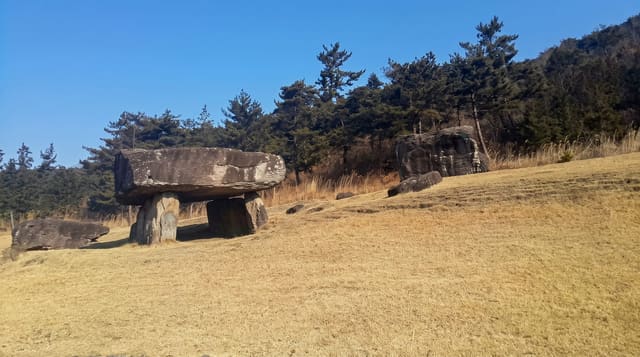
Ganghwa's dolmen site and Jeondeungsa are on the island; the town market is a short walk.
What to pack for Goryeo Palace Site
Chosen from what this place is for. Tap a kit for the full checklist.
- Comfortable walking shoes - Sightseeing means kilometres of pavement and cobbles daily. Find on Amazon
- A slim anti-theft daypack - Zips that close properly; keep it in front in crowds and on transit. Find on Amazon
- A refillable water bottle - Many cities have public fountains; save money and plastic. Find on Amazon
- A light layer + compact umbrella - For museum air-con and a sudden shower. Find on Amazon
Some links on this page are Amazon affiliate links - if you buy through them we may earn a small commission at no extra cost to you.
All packing kitsPlan your trip
Where to start if Goryeo Palace Site is going on the list.
Booking links on this page are affiliate links - if you book through them we may earn a small commission at no extra cost to you. It never changes what we write about a place.
Opening times, ticket prices and seasonal closures change - check the official source before you go: official site.