Dosan Seowon
The Confucian academy above the Nakdong river founded in memory of Yi Hwang, the scholar whose face is on the thousand-won note.
Updated 18 October 2026
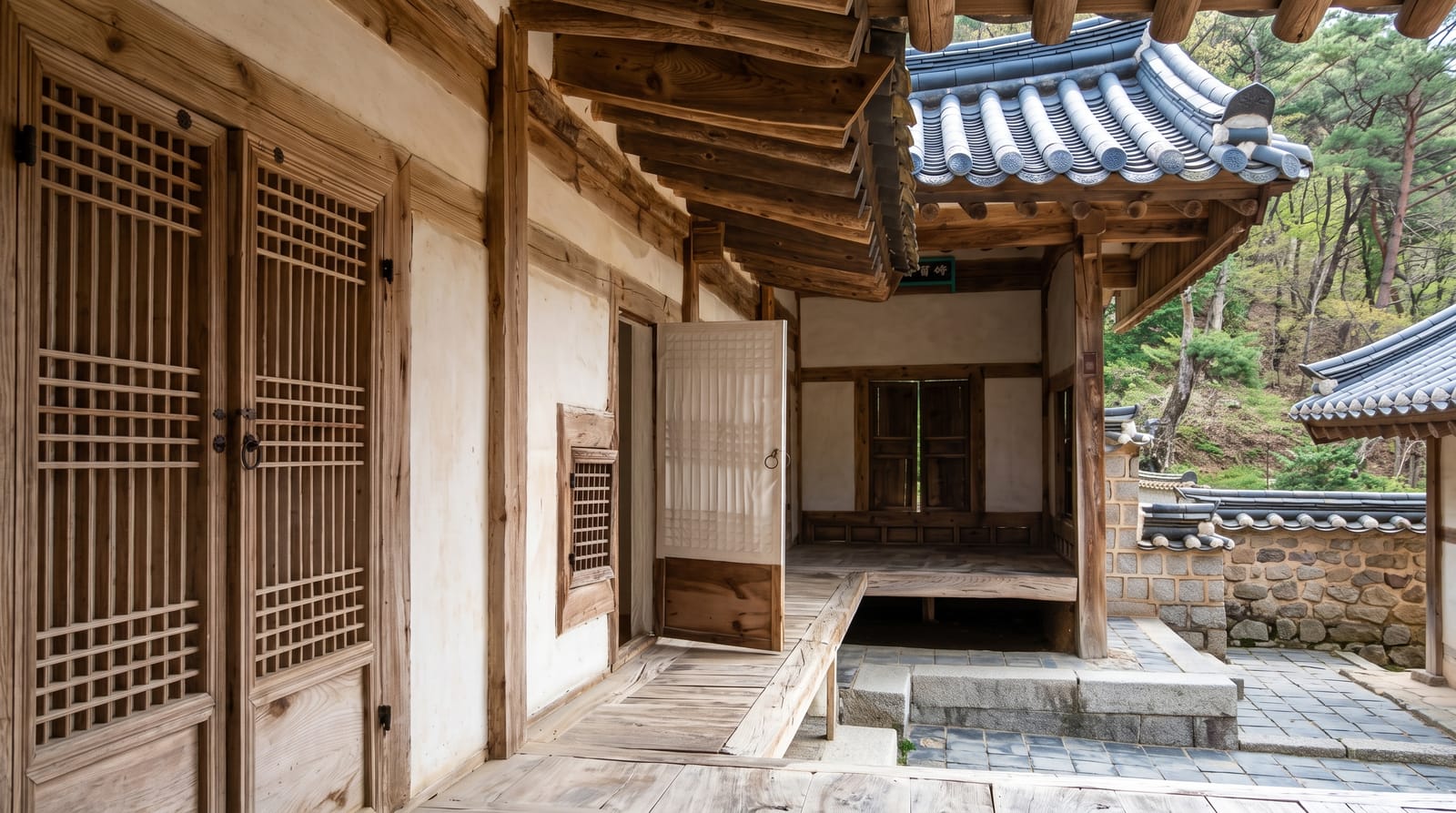
AI illustration
UNESCO World Heritage
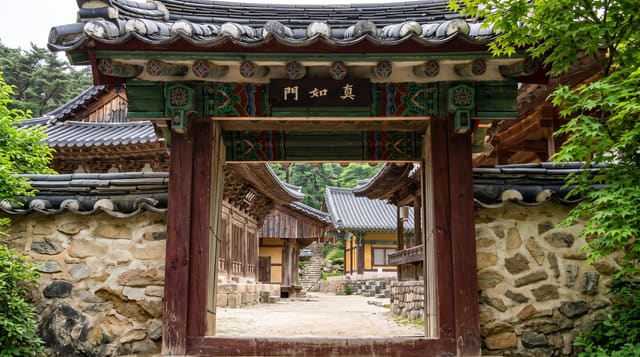
Yi Hwang, known as Toegye, was the most influential of Korea's Neo-Confucian thinkers, and he spent his last years teaching in a small study hall he built above the Nakdong river. Four years after his death his students enlarged the site into a seowon, a private academy that combined a school with a shrine to its founder, and it became the model for the rest. The buildings are deliberately plain: an unpainted lecture hall, two dormitories facing each other across a small yard, a library, and a walled shrine at the top of the slope. Nine of these academies were listed together in 2019, and Dosan is the one most Koreans can name.
History
The Neo-Confucian scholar Yi Hwang, known as Toegye, retired here in 1549 and built the Dosan Seodang lecture hall, which took him four years as he was not wealthy, and dug a small square lotus pond beside it; his students later extended the hall's floor with planks while he was out, against his wishes. In 1574, four years after his death, his disciples and other Confucian scholars founded the academy in his memory, King Seonjo granted it a royal charter and a name tablet in 1575, and for over 400 years it was home to the Toegye school of thought; teaching has long ceased, but memorial rites are still held twice a year, and the academy appeared on the back of the 1,000-won note from 1975 to 2007 (Wikipedia, Dosan Seowon).
The main sights
- Dosan Seodang - the small original study hall Toegye built and taught in.
- Jeongyodang - the unpainted lecture hall at the centre of the academy.
- The dormitories - the two student halls facing each other across the yard.
- The river terrace - the view down over the Nakdong from the front gate.
When to go
Spring and autumn are best; the site is small and open with little shelter. Buses from Andong run every hour or two and the last one back is early, so check the timetable before you set off. Weekday mornings are close to empty. Korean school groups arrive mid-morning during term time and fill the courtyard.
What to expect
The buildings are austere by design, small, unpainted and rather alike, and without some grounding in Confucian schooling there is not much to hold you beyond an hour. English interpretation is minimal. Public transport is awkward, interiors are viewed from the yard rather than entered, and a dam downstream changed the river the academy was sited to look at.
Nearby
Hahoe village and Andong's old centre are within an hour; Bongjeongsa lies west of the city.
Key facts
Source: Wikidata, item Q625663, read on 18 October 2026.
What to pack for Dosan Seowon
Chosen from what this place is for. Tap a kit for the full checklist.
- Comfortable walking shoes - Sightseeing means kilometres of pavement and cobbles daily. Find on Amazon
- Modest clothing - Shoulders and knees covered - the single most common requirement. Find on Amazon
- A slim anti-theft daypack - Zips that close properly; keep it in front in crowds and on transit. Find on Amazon
- A scarf or shawl - To cover the head or shoulders on entry; women especially at mosques. Find on Amazon
Some links on this page are Amazon affiliate links - if you buy through them we may earn a small commission at no extra cost to you.
All packing kitsPlan your trip
Where to start if Dosan Seowon is going on the list.
Booking links on this page are affiliate links - if you book through them we may earn a small commission at no extra cost to you. It never changes what we write about a place.
Opening times, ticket prices and seasonal closures change - check the official source before you go: official site.