Baekje Cultural Land
A full-scale rebuild of a Baekje palace and village at Buyeo, put up because nothing of the real one survives.
Updated 20 October 2026
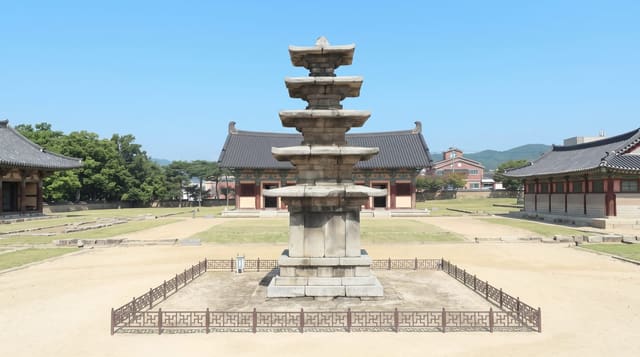
The problem with Baekje is that almost nothing of it stands. The kingdom's architecture is known from foundations, roof tiles and later Japanese buildings its craftsmen influenced, but there is no surviving hall to visit. This site, begun in 1994 and opened in 2010, is the province's answer: a full-scale reconstruction on a large plot near Buyeo of Sabigung, a royal palace with its throne hall and gates; Neungsa, a five-storey wooden pagoda and temple modelled on the excavated Neungsan-ri site; a tomb park; and a village of thatched and tiled houses showing the range of classes. A Baekje history museum stands alongside. Everything is new, which the site does not conceal - the interest is in seeing at full size what the foundations elsewhere imply. It has been used heavily as a drama set. Whether it moves you depends on how much reconstruction you can accept.
What's there
- Sabigung - the reconstructed palace and throne hall.
- The five-storey wooden pagoda - Neungsa, built to the excavated plan.
- The class village - thatched and tiled houses of different ranks.
- The history museum - the evidence the reconstruction rests on.
When to go
April to June and September to November. Closed some Mondays. It is open ground with little shade - avoid summer midday.
What to expect
Everything is a modern reconstruction, built in the 2000s. Purists dislike it on principle. Ticketed, and the site is large enough that it needs real walking.
Nearby
Busosanseong, Gungnamji and the Buyeo National Museum are in the town; Gongju is north.
Key facts
Source: Wikidata, item Q26721245, read on 18 October 2026.
What to pack for Baekje Cultural Land
Chosen from what this place is for. Tap a kit for the full checklist.
- Comfortable walking shoes - Sightseeing means kilometres of pavement and cobbles daily. Find on Amazon
- Modest clothing - Shoulders and knees covered - the single most common requirement. Find on Amazon
- A slim anti-theft daypack - Zips that close properly; keep it in front in crowds and on transit. Find on Amazon
- A scarf or shawl - To cover the head or shoulders on entry; women especially at mosques. Find on Amazon
Some links on this page are Amazon affiliate links - if you buy through them we may earn a small commission at no extra cost to you.
All packing kitsPlan your trip
Where to start if Baekje Cultural Land is going on the list.
Booking links on this page are affiliate links - if you book through them we may earn a small commission at no extra cost to you. It never changes what we write about a place.
Opening times, ticket prices and seasonal closures change - check the official source before you go: official site.