Wonderwerk Cave
A cave holding evidence of controlled fire about a million years ago, the oldest such trace found inside a shelter.
Updated 21 October 2026
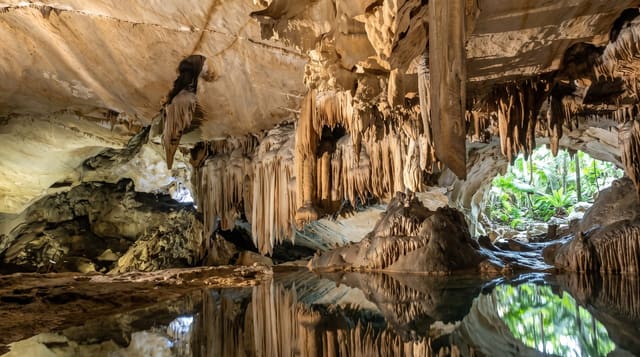
Wonderwerk is a tunnel running about 140 metres into a hillside in the Kuruman hills, and its floor deposits hold one of the longest continuous records of human occupation known anywhere - roughly two million years of sediment, excavated in layers. The finding that made it internationally significant came from those layers: burnt bone and plant ash about thirty metres inside the cave, dated to around a million years ago, which is the oldest well-supported evidence of fire used inside a shelter rather than in the open; a 2026 study put fire use here between about 1.07 and 1.79 million years ago, most likely wildfire carried in and kept going. Wonderwerk means miracle, and the cave is a National Heritage Site run by the McGregor Museum in Kimberley. Later layers hold stone tools through the whole sequence, and the walls carry engravings and paintings from far more recent occupants. Research continues, so parts of the floor are trenches under study. Guided access is from a small office, the cave is dry and cool, and the interpretation is modest relative to the site's importance.
What's there
- The million-year fire - burnt bone and ash deep inside, the oldest such evidence in a shelter.
- The two-million-year floor - one of the longest occupation sequences known.
- The tunnel - about 140 metres of cave running into the hillside.
- The rock art - engravings and paintings from far later occupants on the walls.
When to go
April to September. Two hours. Guided entry only, at the site office's hours.
Practical notes
Interpretation on site is thin compared with the science - the significance is mostly told rather than shown. Active excavation trenches limit access. The cave is plain to look at. Summer heat outside is severe.
Nearby
Kuruman and its Eye are north-east; Danielskuil is south.
Key facts
Source: Wikidata, item Q2543042, read on 18 October 2026.
What to pack for Wonderwerk Cave
Chosen from what this place is for. Tap a kit for the full checklist.
- Head torch + spare batteries - Hands-free light is essential; caves are truly dark. Find on Amazon
- Grippy closed shoes - Cave floors are wet, muddy and slick with formations. Find on Amazon
- A warm layer - Many caves sit near 10°C year-round, even in a hot country. Find on Amazon
- Gloves - Protect your hands on rough rock and cold metal handrails. Find on Amazon
Some links on this page are Amazon affiliate links - if you buy through them we may earn a small commission at no extra cost to you.
All packing kitsPlan your trip
Where to start if Wonderwerk Cave is going on the list.
Booking links on this page are affiliate links - if you book through them we may earn a small commission at no extra cost to you. It never changes what we write about a place.
Opening times, ticket prices and seasonal closures change - check the official source before you go: official site.