Kgalagadi Transfrontier Park
Red dunes and two dry riverbeds shared with Botswana, where black-maned lions hunt along the calcrete roads.
Updated 22 October 2026
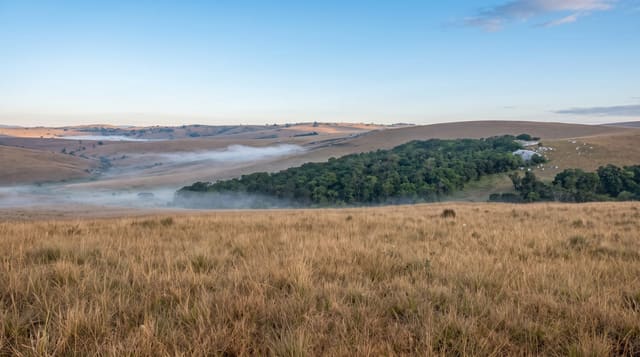
Kgalagadi was formed in 2000 by merging South Africa's Kalahari Gemsbok park with Botswana's Gemsbok park, making it the first formally declared transfrontier conservation area in Africa - about 38,000 square kilometres with no fence on the international boundary and animals moving freely across. The landscape is red dunes and thornveld, cut by the dry beds of the Nossob and Auob rivers, which flow perhaps once a generation but hold underground water that supports boreholes; the game roads follow those beds and the animals concentrate along them. Black-maned Kalahari lions are the signature, along with cheetah on the open pans, leopard, brown hyena and raptors in numbers - this is one of the best raptor destinations in Africa. Distances are large, camps are far apart, and unfenced wilderness camps put you in the desert with nothing but a windbreak.
History
The Kalahari Gemsbok National Park was set up on 31 July 1931, mainly to protect migrating gemsbok from poaching, and in 1948 the Bechuanaland Protectorate and the Union of South Africa agreed informally on a shared conservation area. The park covers 38,000 square kilometres, about three quarters of it in Botswana, and its name means place of thirst (Wikipedia, Kgalagadi Transfrontier Park).
What you'll find
- The black-maned lions - the Kalahari's distinctive lions along the dry riverbeds.
- The two dry rivers - Nossob and Auob beds where boreholes concentrate the game.
- The transfrontier design - no fence with Botswana, the first such park in Africa.
- The raptors - one of the strongest birds-of-prey destinations on the continent.
When to go
March to May and September to October. Four to five days - it is too far for less.
Good to know
It is remote: about 250 kilometres of road from Upington, much of it gravel, with no fuel between. Summer temperatures pass forty-five degrees and winter nights drop below zero. Roads are corrugated and hard on tyres. Camps book out a year ahead for peak periods.
Nearby
Upington and the Orange River are south-east; the Botswana side shares the park.
Key facts
Source: Wikidata, item Q859385, read on 18 October 2026.
What to pack for Kgalagadi Transfrontier Park
Chosen from what this place is for. Tap a kit for the full checklist.
- Broken-in walking shoes or boots - Grip and ankle support matter more than looks; never hike in brand-new boots. Find on Amazon
- Head torch + spare batteries - Hands-free light is essential; caves are truly dark. Find on Amazon
- Binoculars - The single best wildlife tool - even a compact pair transforms a sighting. Find on Amazon
- Loose, light, long clothing - Covering up beats bare skin in the desert - and locals dress this way for a reason. Find on Amazon
Some links on this page are Amazon affiliate links - if you buy through them we may earn a small commission at no extra cost to you.
All packing kitsPlan your trip
Where to start if Kgalagadi Transfrontier Park is going on the list.
Booking links on this page are affiliate links - if you book through them we may earn a small commission at no extra cost to you. It never changes what we write about a place.
Opening times, ticket prices and seasonal closures change - check the official source before you go: official site.