Addo Elephant National Park
A malaria-free Eastern Cape reserve with one of the densest elephant populations anywhere, plus lion, buffalo and a stretch of coast and marine life.
Updated 22 October 2026
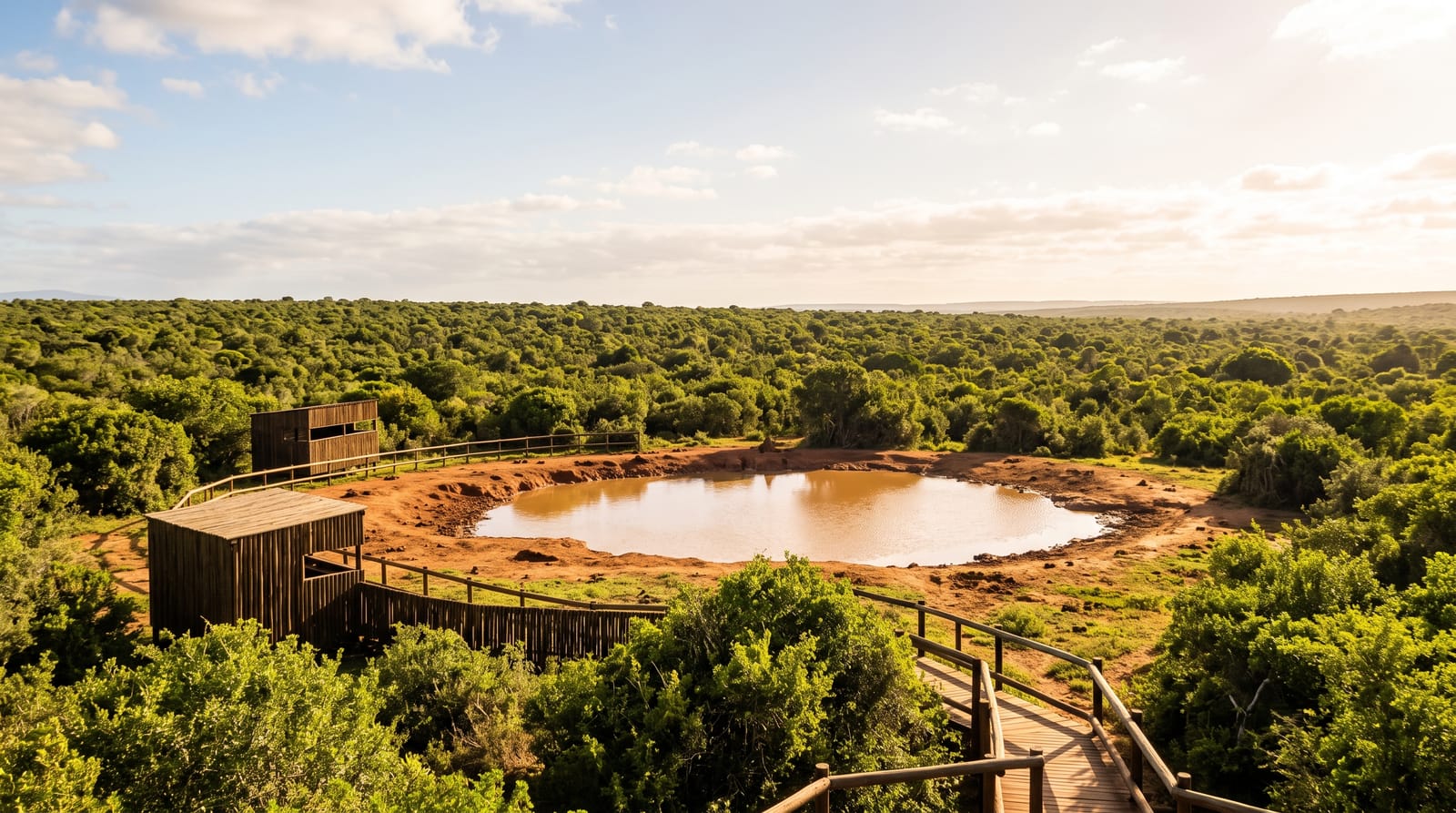
AI illustration
Addo Elephant National Park, in the Eastern Cape near Gqeberha, was created to save a last handful of elephants that had survived the region's hunting, and it has become a great conservation success, now home to hundreds of them, so that sightings of large breeding herds gathering at waterholes are almost guaranteed. It has grown into one of South Africa's largest parks, extending from the dense thickets where the elephants browse up into the mountains and down to the coast, and it holds the rest of the Big Five, lion, buffalo, leopard and rhino, along with the flightless dung beetle it asks drivers to look out for. Crucially, Addo is malaria-free, which makes it an easy, family-friendly alternative to the northern reserves, and it can be explored on a self-drive or on guided game drives. With its coastal and marine sections, it even lays claim to a Big Seven, adding whales and great white sharks offshore.
History
The local elephants had been nearly wiped out when, in 1925, Deneys Reitz as Minister for Lands had the area proclaimed a sanctuary, and it became a national park in 1931. There were 22 elephants by 1954, eland arrived in 1957 and six Kalahari lions and the first hyaenas in 2003; the park now has over 600 elephants and has grown to take in Woody Cape and a marine reserve with St Croix and Bird Islands (Wikipedia, Addo Elephant National Park).
The landscape
- The elephant herds - large breeding herds gathering at the waterholes.
- The Big Five - lion, buffalo, leopard and rhino alongside the elephants.
- Self-drive game viewing - exploring the reserve in your own car on good roads.
- The wider park - the mountain and coastal sections and their different wildlife.
When to go
Game viewing is good year-round, but the drier winter months of May to October concentrate animals at waterholes and thin the bush, making them easier to see; summer is greener and hotter. Early morning and late afternoon are the best times for a drive. Being malaria-free, it suits any season and families.
Before you go
It is elephant-rich but, being smaller and busier near the main camp than the vast northern parks, sightings of the big cats are far less certain, so set expectations towards elephants and general game rather than a guaranteed Big Five. The main rest-camp area can feel busy with self-drivers. It is a long way from Cape Town, best combined with the Garden Route and the Eastern Cape rather than visited on its own.
Nearby
The Garden Route runs west along the coast; Gqeberha and its beaches are an hour south.
Key facts
Source: Wikidata, item Q353318, read on 18 October 2026.
What to pack for Addo Elephant National Park
Chosen from what this place is for. Tap a kit for the full checklist.
- Broken-in walking shoes or boots - Grip and ankle support matter more than looks; never hike in brand-new boots. Find on Amazon
- Reef-safe sunscreen - High SPF that will not bleach the coral you are swimming over. Find on Amazon
- Binoculars - The single best wildlife tool - even a compact pair transforms a sighting. Find on Amazon
- Layers + a waterproof shell - Mountain weather turns fast; a packable rain jacket saves the day. Find on Amazon
Some links on this page are Amazon affiliate links - if you buy through them we may earn a small commission at no extra cost to you.
All packing kitsPlan your trip
Where to start if Addo Elephant National Park is going on the list.
Booking links on this page are affiliate links - if you book through them we may earn a small commission at no extra cost to you. It never changes what we write about a place.
Opening times, ticket prices and seasonal closures change - check the official source before you go: official site.


