Sopoćani and Stari Ras
A thirteenth-century monastery whose frescoes are counted among the finest of the European Middle Ages.
Updated 18 October 2026
AI illustration
UNESCO World Heritage
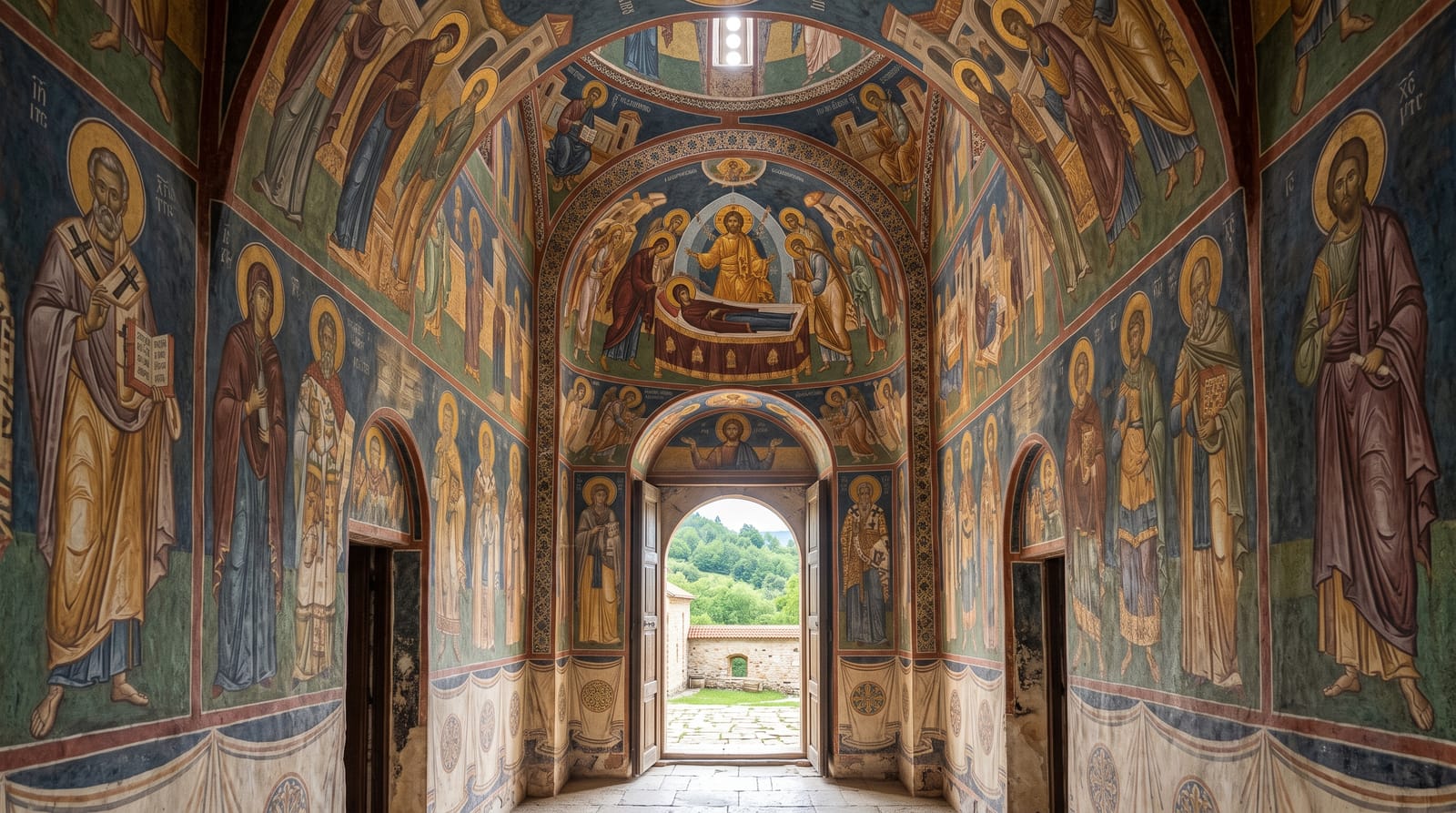
Sopoćani was founded around 1260 by the Serbian king Uroš I, and the frescoes painted in its church shortly afterwards are regularly described by art historians as among the highest achievements of thirteenth-century European painting, with a monumentality and command of the human figure that art in the West did not reach for decades. The Dormition of the Virgin on the west wall is the celebrated composition. The monastery survived being burned and roofless for two centuries, which makes the state of the paintings remarkable. It forms part of a UNESCO listing with Stari Ras, the ruined medieval capital nearby, and the Church of St Peter, a small ninth-century structure that is among the oldest in the country.
History
Remains of fortifications and early churches of the 4th to 6th centuries match the account of the historian Procopius that the Roman castellum of Arsa in Dardania was refortified under Justinian I; an earthquake around 518 did great damage, and both hillforts, Gradina-Postenje and Gradina-Pazarište, were abandoned early in the 7th century as Avars raided and Slavs settled. Around 880 Ras lay on the frontier between Serbia and Bulgaria, and newer research holds that it was a Bulgarian border district in the 9th and 10th centuries, until Basil II retook it for Byzantium in 1016-1018. The fortress is first mentioned around 1127 and the city in 1200, a charter of 1186 is the first to call the Serbian state Raška after it, and Ras became one of the first and main capitals of medieval Serbia; the market below it later gave rise to Novi Pazar (Wikipedia, Stari Ras).
Highlights
- The Dormition fresco - the west wall composition, the monastery's masterpiece.
- The church interior - thirteenth-century painting across the walls and vaults.
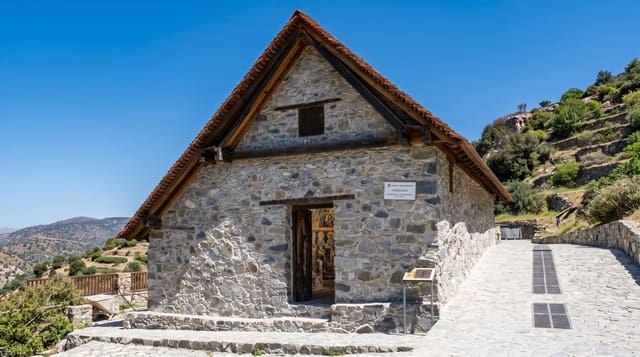
- Church of St Peter - a ninth-century church on a hillside outside Novi Pazar.
- Đurđevi Stupovi - a twelfth-century monastery on a hill above the town.
When to go
May to October for the easiest travel. Services and monastic routine shape access hours, and dress requirements apply. Photography inside is usually restricted, and light levels are low by design.
Good to know
This is a working monastery, so quiet, modest dress and respect for services are expected rather than optional. Interior lighting is dim and photography is generally prohibited, which frustrates visitors who came for the frescoes. Public transport to the site is minimal; a taxi from Novi Pazar is the practical option.
Nearby
Novi Pazar's Ottoman old town is 15 km east; Studenica monastery lies north.
Key facts
Source: Wikidata, item Q917814, read on 18 October 2026.
What to pack for Sopoćani and Stari Ras
Chosen from what this place is for. Tap a kit for the full checklist.
- Comfortable walking shoes - Sightseeing means kilometres of pavement and cobbles daily. Find on Amazon
- Modest clothing - Shoulders and knees covered - the single most common requirement. Find on Amazon
- A slim anti-theft daypack - Zips that close properly; keep it in front in crowds and on transit. Find on Amazon
- A scarf or shawl - To cover the head or shoulders on entry; women especially at mosques. Find on Amazon
Some links on this page are Amazon affiliate links - if you buy through them we may earn a small commission at no extra cost to you.
All packing kitsPlan your trip
Where to start if Sopoćani and Stari Ras is going on the list.
Booking links on this page are affiliate links - if you book through them we may earn a small commission at no extra cost to you. It never changes what we write about a place.
Opening times, ticket prices and seasonal closures change - check the official source before you go: official site.