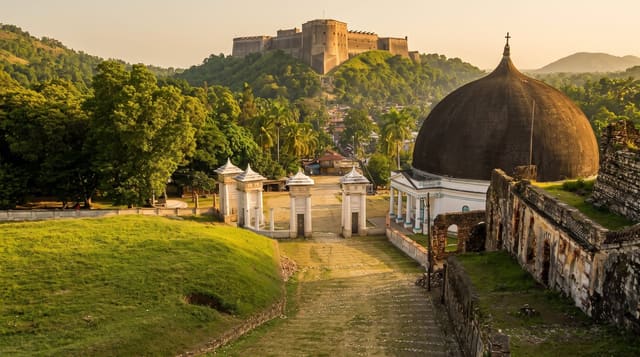
Kolomna Kremlin
A brick fortress of the 1520s where the Moskva meets the Oka, much of it dismantled for building material and only part surviving.
Updated 21 October 2026
Kolomna sits where the Moskva joins the Oka, which made it the southern gate of the Moscow lands, and the kremlin was rebuilt in brick between 1525 and 1531 on the model of the Moscow one - seventeen towers, walls up to twenty-one metres high and four and a half thick. It was never taken by storm. What reduced it was peace: once the frontier moved south the fortress lost its purpose, and from the eighteenth century townspeople quarried it for bricks, until Nicholas I banned the practice in 1826 - by which time much of the circuit had gone. Seven towers, one complete stretch of wall and two further sections survive, including the Marinkina tower, named for Marina Mniszech, who in local tradition was imprisoned and died in it. Inside the walls is a working old town of churches, wooden houses and lanes, with the Assumption cathedral, a convent, and museums of the local pastila confection and of blacksmithing.
What to look for
- The surviving walls - seven towers and three stretches of a 1520s brick circuit.
- The quarrying - much of the fortress taken for building material before 1826.
- The Marinkina tower - associated with Marina Mniszech's imprisonment.
- The old town - churches, wooden houses and lanes still inside the walls.
When to go
May to September. Half a day, longer with the town museums. Two hours by train from Moscow.
Before you go
Only part of the fortress survives - the rest was taken for bricks. The old town inside is lived in, not a museum. Museums are small and ticketed individually. Weekend crowds from Moscow in summer.
Nearby
Zaraysk kremlin is south; the Oka runs east.
What to pack for Kolomna Kremlin
Chosen from what this place is for. Tap a kit for the full checklist.
- Comfortable walking shoes - Sightseeing means kilometres of pavement and cobbles daily. Find on Amazon
- Modest clothing - Shoulders and knees covered - the single most common requirement. Find on Amazon
- A slim anti-theft daypack - Zips that close properly; keep it in front in crowds and on transit. Find on Amazon
- A scarf or shawl - To cover the head or shoulders on entry; women especially at mosques. Find on Amazon
Some links on this page are Amazon affiliate links - if you buy through them we may earn a small commission at no extra cost to you.
All packing kitsPlan your trip
Where to start if Kolomna Kremlin is going on the list.
Booking links on this page are affiliate links - if you book through them we may earn a small commission at no extra cost to you. It never changes what we write about a place.
Opening times, ticket prices and seasonal closures change - check the official source before you go: official site.