Piñones
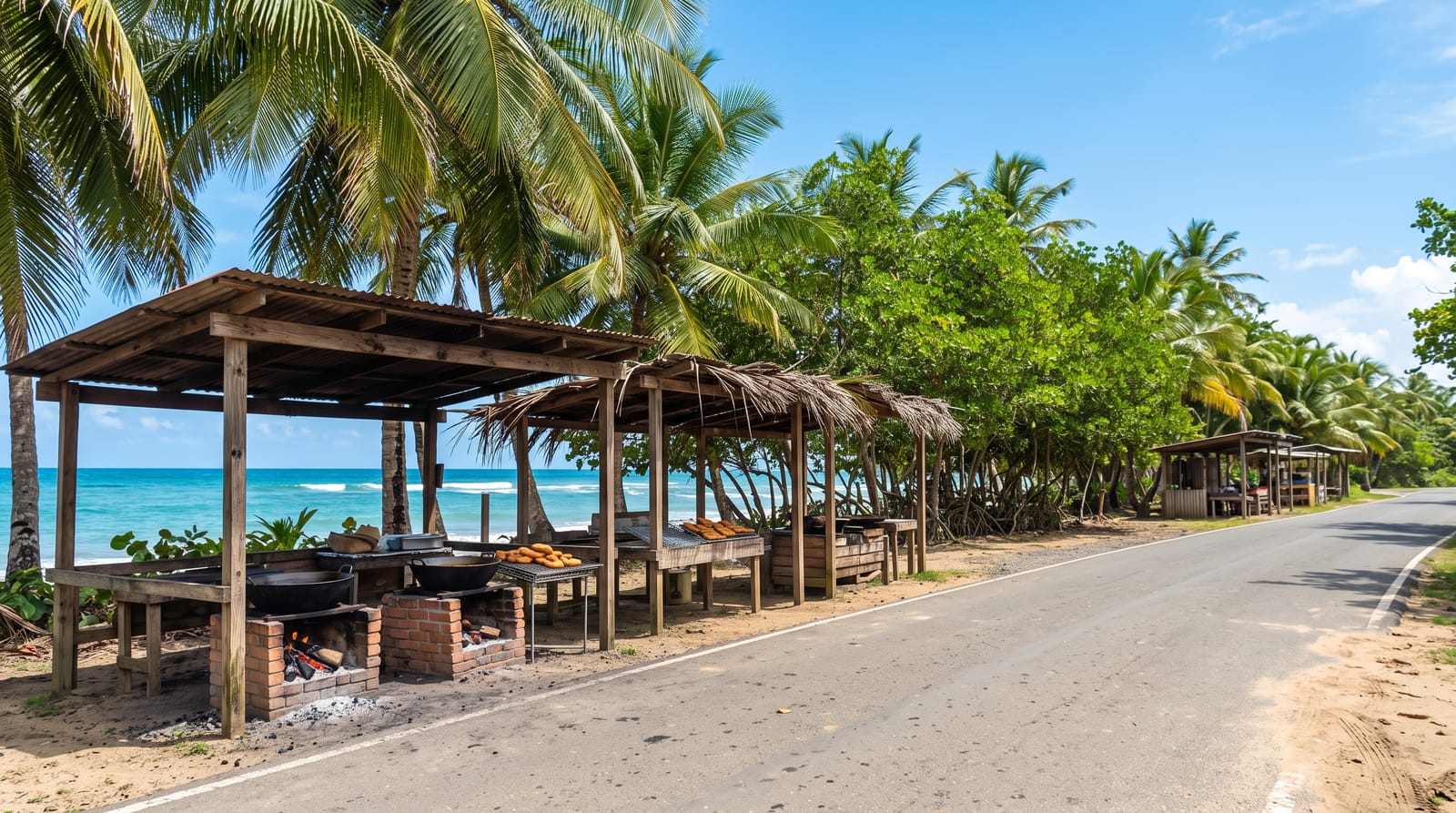
A coast road east of San Juan lined with wooden kiosks frying fritters over charcoal, backed by the island's largest mangrove forest.
Updated 2 September 2026
AI illustration
Just past the airport the coast road narrows and runs between the sea and a mangrove forest, and along it stand rows of open wooden kiosks that have been frying the same things for decades: alcapurrias of grated green banana and yautía stuffed with crab or beef, bacalaítos, flat salt cod fritters the size of a plate, pionono, and empanadillas, all cooked over charcoal and eaten standing up. This is Loíza, the town with the deepest West African roots on the island, and the food, like the bomba drumming, comes from that. Behind the kiosks the Piñones forest protects the largest mangrove stand in Puerto Rico, with a cycle path running through it.
Highlights
- Alcapurrias and bacalaítos - the fritters the road is known for.
- The charcoal kiosks - open wooden stands along the coast road.
- The mangrove forest - the island's largest, directly behind.
- The cycle path - a paved boardwalk route through the mangroves.
When to go
Year-round. Weekends are when the road is fullest and the music is loudest, with the busiest stretch on a Sunday afternoon; weekdays are calm and many kiosks still open. The mangrove path is best early before the heat.
Practical notes
It is a roadside eating strip, not a scenic destination, and the road is narrow with parking on the verge and traffic passing close. Weekend crowds and loud music are the norm. The frying is heavy and hygiene varies, so pick busy stands with high turnover. The beaches along here have strong currents and no lifeguards.
Nearby
Loíza town and its July festival are further east; Isla Verde is twenty minutes west.
What to pack for Piñones
Chosen from what this place is for. Tap a kit for the full checklist.
- Reef-safe sunscreen - High SPF that will not bleach the coral you are swimming over. Find on Amazon
- A reusable bag or container - For market produce and cutting down on packaging. Find on Amazon
- Quick-dry towel - A microfibre towel packs small and dries in minutes. Find on Amazon
- Wet wipes + hand sanitiser - Street food and washbasins do not always go together. Find on Amazon
Some links on this page are Amazon affiliate links - if you buy through them we may earn a small commission at no extra cost to you.
All packing kitsPlan your trip
Where to start if Piñones is going on the list.
Booking links on this page are affiliate links - if you book through them we may earn a small commission at no extra cost to you. It never changes what we write about a place.
Opening times, ticket prices and seasonal closures change - check the official source before you go: official site.