Crash Boat
A northwest beach named for the air force rescue boats once based here, with painted pilings underwater and fish shacks on the sand.
Updated 21 October 2026

AI illustration
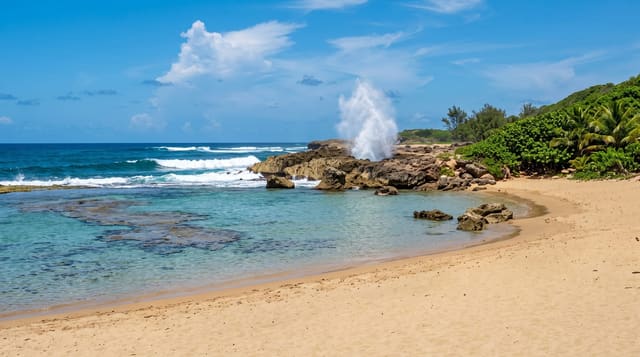
The beach takes its name from the crash rescue boats stationed here when the nearby airfield was in military use, and what remains of their pier is the reason divers and snorkellers come: rows of concrete and timber pilings standing in clear water, painted in bright colours above the surface and grown over with sponge and coral below, with schools of fish moving between them. The sand is a broad strip backed by kiosks selling fried fish, empanadillas and coconut water, and on a weekend the whole thing turns into a party. The water is generally calm in summer and can be big in winter, when the northwest coast picks up Atlantic swell.
The landscape
- The pilings - painted above water, grown over with coral below.
- Snorkelling and diving - fish among the pier structure in clear water.
- The kiosks - fried fish and empanadillas along the back of the beach.
- Sunset - straight into the sea off the northwest coast.
When to go
December to April is the dry season, though that is also when Atlantic swell is largest here; visibility for snorkelling is best on calm days from late spring to autumn. Weekends are loud and crowded, weekdays quiet.
What to expect
The pier remains include broken concrete and rebar; water shoes help. Currents around the pilings pick up in swell. Weekend crowds bring heavy music and the car park overflows onto the road. The beach is not especially scenic compared with the south coast; the draw is the water.
Nearby
Rincón and the surf coast are half an hour south; Aguadilla town is nearby.
Key facts
Source: Wikidata, item Q5182344, read on 18 October 2026.
What to pack for Crash Boat
Chosen from what this place is for. Tap a kit for the full checklist.
- Reef-safe sunscreen - High SPF that will not bleach the coral you are swimming over. Find on Amazon
- Your own mask + snorkel - A well-fitting mask is the single biggest comfort upgrade underwater. Find on Amazon
- Quick-dry clothing - Board shorts or synthetics that shrug off spray and dry fast. Find on Amazon
- Quick-dry towel - A microfibre towel packs small and dries in minutes. Find on Amazon
Some links on this page are Amazon affiliate links - if you buy through them we may earn a small commission at no extra cost to you.
All packing kitsPlan your trip
Where to start if Crash Boat is going on the list.
Booking links on this page are affiliate links - if you book through them we may earn a small commission at no extra cost to you. It never changes what we write about a place.
Opening times, ticket prices and seasonal closures change - check the official source before you go: official site.