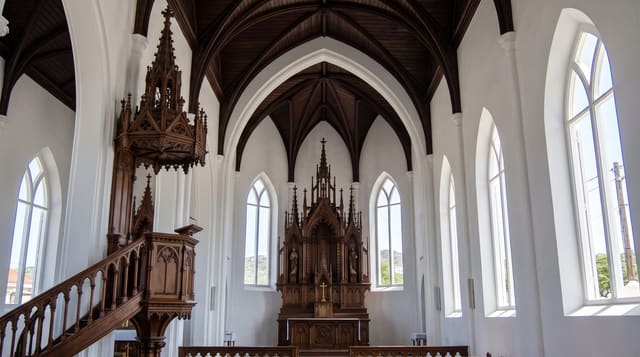
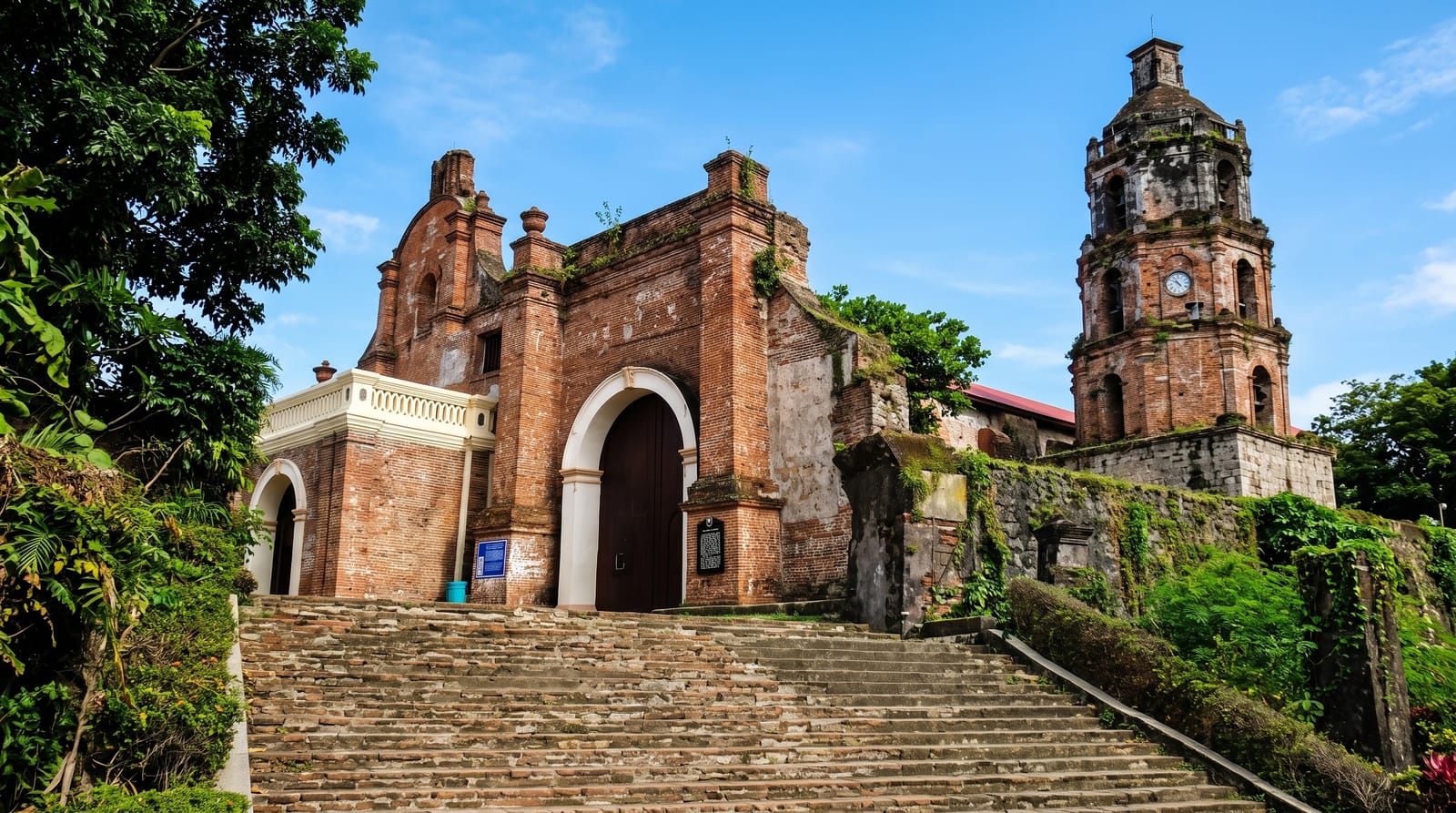
Convent of Christ, Tomar
A Templar castle turned convent, with a round oratory at its core and a Manueline window carved into ropes, corals and knots.
Updated 18 October 2026

AI illustration
UNESCO World Heritage
The convent grew out of a Templar castle founded in the 12th century, and its oldest part is the Charola, a round oratory on the plan of eastern pilgrimage churches, painted and gilded inside with the walls closing around a central octagon. When the order was reorganised in Portugal as the Order of Christ, the round church became the chancel of a new Manueline nave, and the west end was given the window that everyone comes for: a mass of carved rope, cork floats, seaweed, coral and armillary spheres, the ocean rendered in limestone. Beyond it lie eight cloisters of different centuries, from Gothic to a severe Renaissance double storey. UNESCO listed the complex in 1983.
History
The Knights Templar built the castle in the 12th century, and their Grand Master Gualdim Pais completed an oratory in one of its angles around 1160; the round church was raised in the second half of that century, modelled, like some other Templar churches, on the Dome of the Rock in Jerusalem, and in 1190 the castle held out against the armies of the caliph Abu Yusuf al-Mansur, as a plaque by the entrance records. After the Templar order was suppressed, Pope John XXII, at the request of King Denis, created the Order of Christ on 14 March 1319, which took over the Templars' members and assets in Portugal, and in 1357 Tomar became its seat. Under Prince Henry the Navigator, its head from 1417 to 1450, two cloisters were built, and Manuel I, master of the order from 1484 and king from 1495, ordered a sacristy linking the choir with the Chapel of São Jorge; the castle and convent became a World Heritage Site in 1983 (Wikipedia, Convent of Christ (Tomar)).
What to look for
- The Charola - the round Templar oratory, painted and gilded around a central octagon.
- The chapter house window - the carved Manueline window of ropes, coral and spheres.
- The Main Cloister - a Renaissance double storey with spiral stairs in the corners.
- The castle walls - the 12th-century enclosure and keep on the hill above Tomar.
When to go
Spring and autumn for the hill walk up from town and clear light on the west front. Mornings beat the coach circuit from Fatima. The Charola is dim by design, so a bright day helps. If the Festa dos Tabuleiros is on, expect the town below to be full and accommodation booked out.
Things to know
The famous window is high up, partly obscured by a later building against the wall, and smaller in reality than photographs suggest - most people expect more. The complex is large and repetitive after the third cloister. The uphill approach in summer heat is a slog, and parking at the top is limited.
Nearby
Tomar's riverside old town lies below, with the Pegoes aqueduct and Almourol castle close by.
Key facts
Source: Wikidata, item Q736692, read on 18 October 2026.
What to pack for Convent of Christ, Tomar
Chosen from what this place is for. Tap a kit for the full checklist.
- Comfortable walking shoes - Sightseeing means kilometres of pavement and cobbles daily. Find on Amazon
- Modest clothing - Shoulders and knees covered - the single most common requirement. Find on Amazon
- A slim anti-theft daypack - Zips that close properly; keep it in front in crowds and on transit. Find on Amazon
- A scarf or shawl - To cover the head or shoulders on entry; women especially at mosques. Find on Amazon
Some links on this page are Amazon affiliate links - if you buy through them we may earn a small commission at no extra cost to you.
All packing kitsPlan your trip
Where to start if Convent of Christ, Tomar is going on the list.
Booking links on this page are affiliate links - if you book through them we may earn a small commission at no extra cost to you. It never changes what we write about a place.
Opening times, ticket prices and seasonal closures change - check the official source before you go: official site.