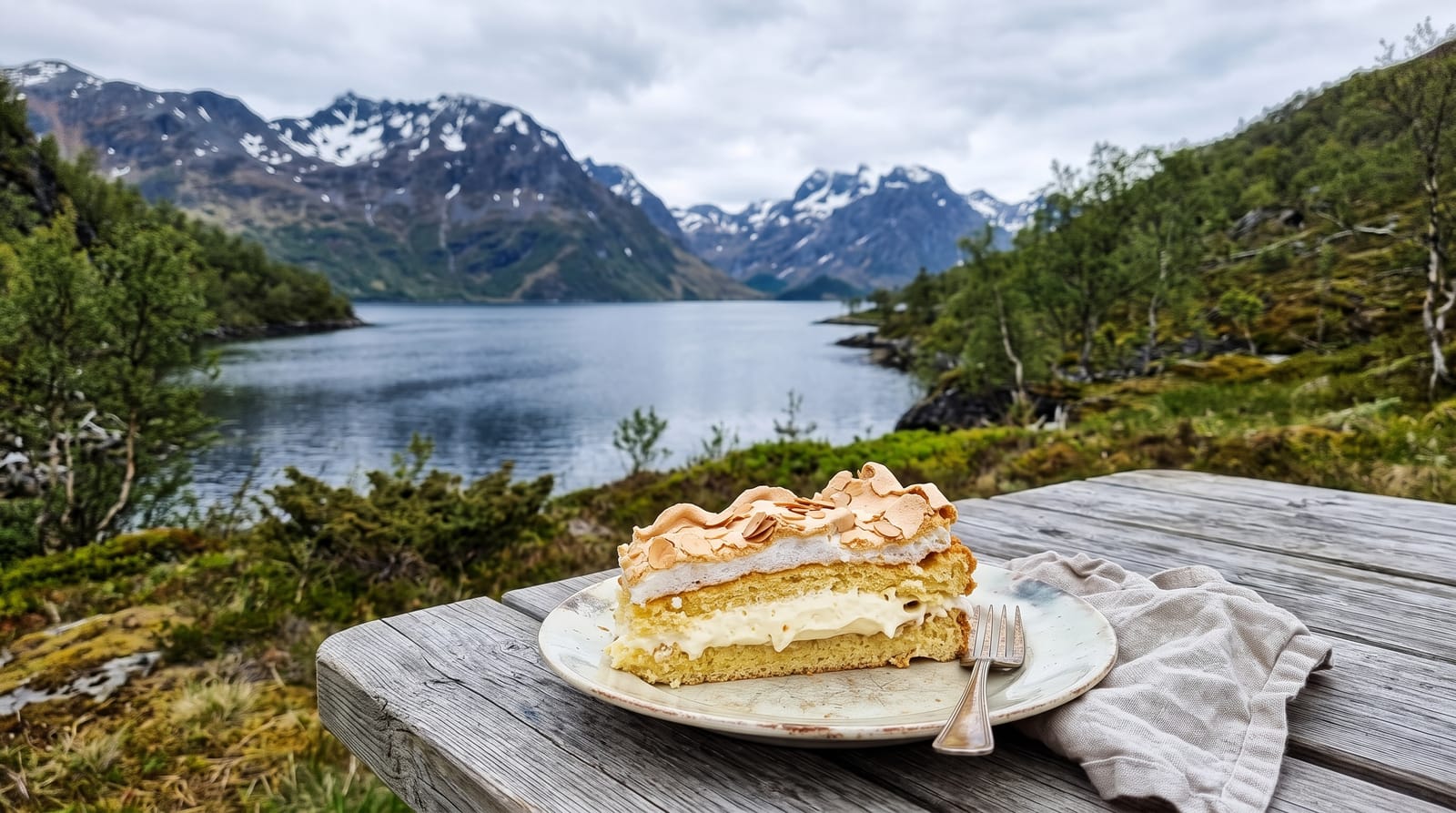
Sekacz
A spit-roasted layer cake with jagged spikes, built up one ladle at a time over an open fire.
Updated 29 August 2026
Sekacz is made by turning a wooden or metal spit over a fire or heat source and ladling a rich batter of eggs, butter, sugar and flour onto it in thin layers, letting each set before the next goes on; the batter runs and drips as it cooks, so the finished cake has irregular spikes and, when cut across, visible growth rings like a tree - hence the name, from sek, a knot or branch. A large one takes hours and uses dozens of eggs. It belongs to Podlasie and the borderland with Lithuania and Belarus, where the same cake is called sakotis and raguolis, and the question of whose it is has been the subject of a genuine cross-border dispute over protected names. It keeps for weeks, which is why it is a wedding, Christmas and Easter cake and why it travels to fairs across the country. It is very sweet and very rich.
Highlights
- Layers built on a spit - ladled on one at a time and set over heat.
- Jagged spikes - formed by batter dripping as the spit turns.
- Growth rings in the slice - the layers visible when cut across.
- A shared borderland cake - known as sakotis and raguolis east of here.
When to go
All year; strongest at Christmas and Easter. An hour.
Good to know
It is extremely rich and dry-crumbed - a small slice goes a long way. Industrial versions sold at fairs are noticeably worse than bakery ones. Whole cakes are expensive because of the egg count.
Nearby
Bialystok, Suwalki and the Podlasie markets are where to find it made properly.
What to pack for Sekacz
Chosen from what this place is for. Tap a kit for the full checklist.
- A reusable bag or container - For market produce and cutting down on packaging. Find on Amazon
- Wet wipes + hand sanitiser - Street food and washbasins do not always go together. Find on Amazon
Some links on this page are Amazon affiliate links - if you buy through them we may earn a small commission at no extra cost to you.
All packing kitsPlan your trip
Where to start if Sekacz is going on the list.
Booking links on this page are affiliate links - if you book through them we may earn a small commission at no extra cost to you. It never changes what we write about a place.
Opening times, ticket prices and seasonal closures change - check the official source before you go: official site.