Lubiaz Abbey
One of the largest monastery buildings in the world, mostly empty, with a painted Prince's Hall inside a 220-metre front.
Updated 22 October 2026
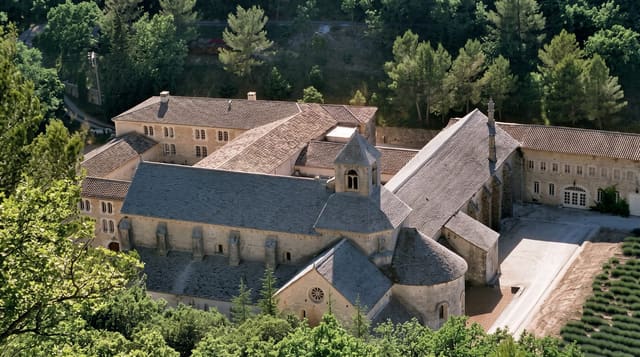
The Cistercian abbey at Lubiaz has a main facade two hundred and twenty-three metres long and a floor area that puts it among the largest monastic complexes anywhere - the figure usually quoted is around three hundred rooms. It was founded in 1163 and rebuilt on this scale in the seventeenth and eighteenth centuries when Silesian Cistercian houses were extremely rich. Then it stopped: dissolved by Prussia in 1810, put to a long series of other uses - a stud, a hospital and a psychiatric institution among them - stripped of its furnishings, and left largely empty. What is restored and open is the Prince's Hall, a two-storey ceremonial room with ceiling painting by Christian Philipp Bentum and marble columns, and the summer refectory. The rest is bare shell under long-term conservation, and walking it is the point: enormous corridors with nothing in them. Michael Willmann, the Silesian baroque painter, worked and is buried here.
History
Duke Bolesław I the Tall invited Cistercian monks from Pforta to Lubiąż, the first of their order in Silesia; building began in 1163, and the foundation charter was drawn up in 1175. Around 1200 the abbey church was rebuilt as the first Brick Gothic building in the region, Bolesław was buried under its high altar in 1201, and the abbey grew into the most important monastery in Silesia, founding six daughter houses (Wikipedia, Lubiąż Abbey).
Highlights
- A 223-metre facade - among the largest monastery buildings in the world.
- The Prince's Hall - two storeys, marble columns, painted ceiling.
- Empty corridors - most of the complex a bare shell after two centuries of other uses.
- Willmann's abbey - the Silesian baroque painter worked and is buried here.
When to go
April to October. Half a day.
Good to know
Most of the building is unrestored and closed; the visit covers a small fraction of it. Interiors are cold and bare. Visits are guided and seasonal. The church is generally not part of the standard route.
Nearby
Wroclaw is fifty-five kilometres south-east; Trzebnica is north-east.
Key facts
Source: Wikidata, item Q1775543, read on 18 October 2026.
What to pack for Lubiaz Abbey
Chosen from what this place is for. Tap a kit for the full checklist.
- Comfortable walking shoes - Sightseeing means kilometres of pavement and cobbles daily. Find on Amazon
- Modest clothing - Shoulders and knees covered - the single most common requirement. Find on Amazon
- A slim anti-theft daypack - Zips that close properly; keep it in front in crowds and on transit. Find on Amazon
- A scarf or shawl - To cover the head or shoulders on entry; women especially at mosques. Find on Amazon
Some links on this page are Amazon affiliate links - if you buy through them we may earn a small commission at no extra cost to you.
All packing kitsPlan your trip
Where to start if Lubiaz Abbey is going on the list.
Booking links on this page are affiliate links - if you book through them we may earn a small commission at no extra cost to you. It never changes what we write about a place.
Opening times, ticket prices and seasonal closures change - check the official source before you go: official site.